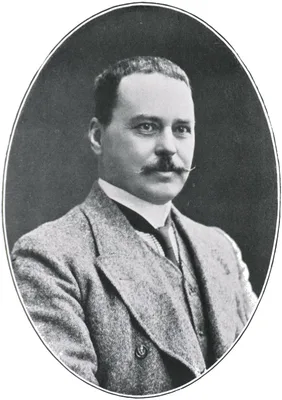
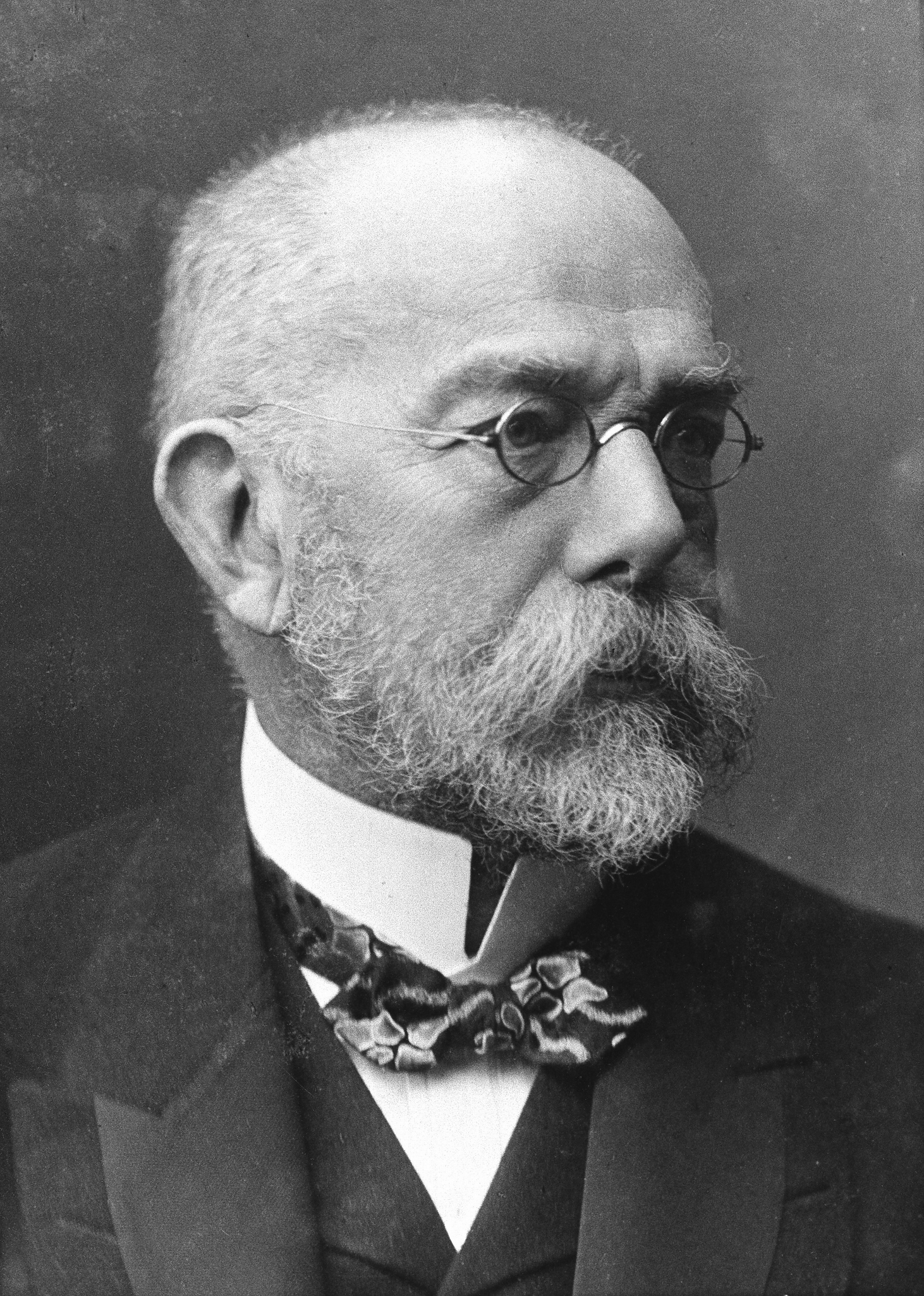
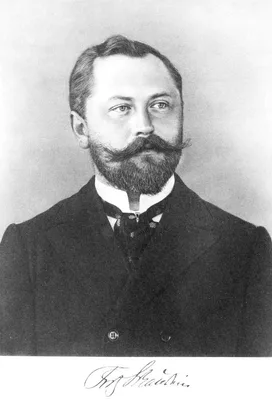
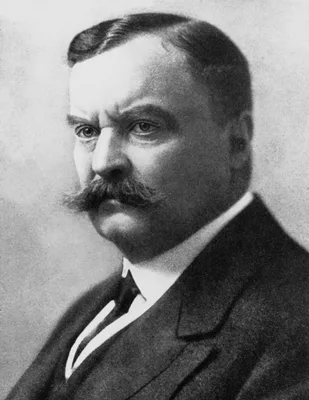
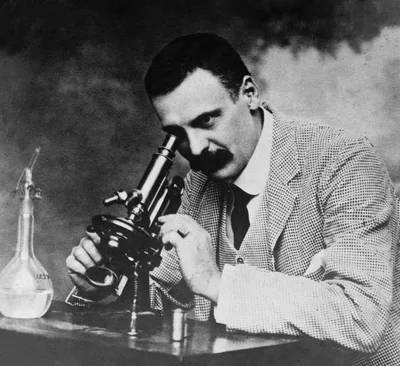
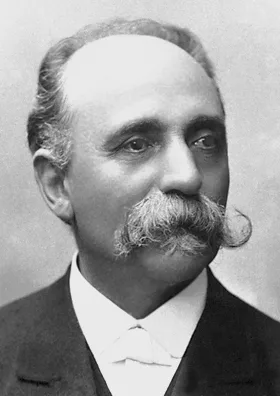
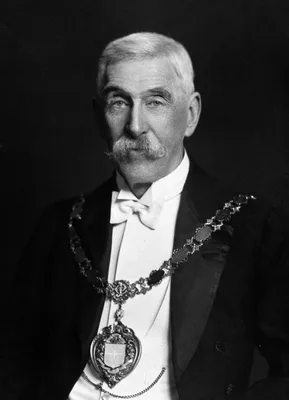
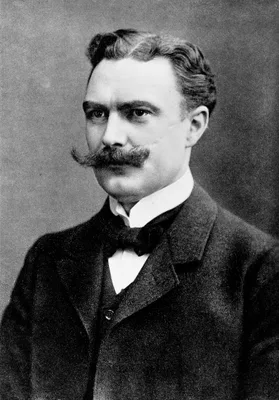
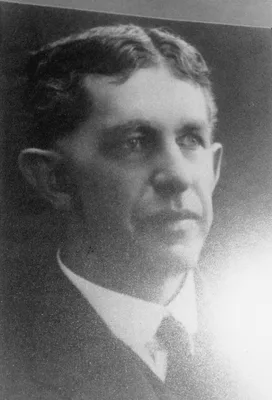
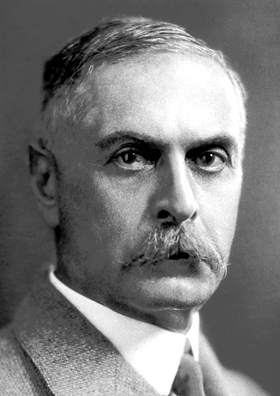
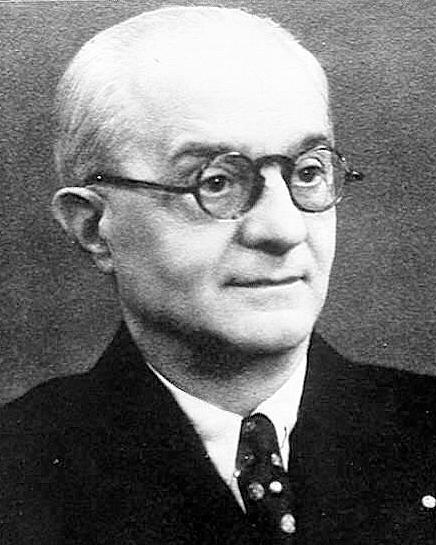
1902 ROSS, Sir Ronald (1857 – 1932)
Mosquito brigades and how to organise them.
Digital facsimile from the Internet Archive at this link.
GMN 9260 · https://historyofmedicine.com/id/11442
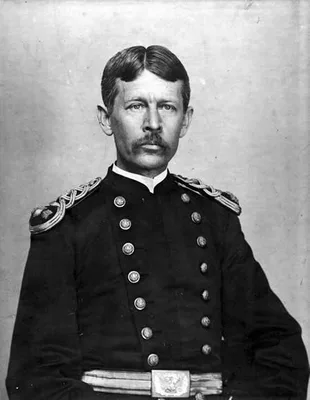
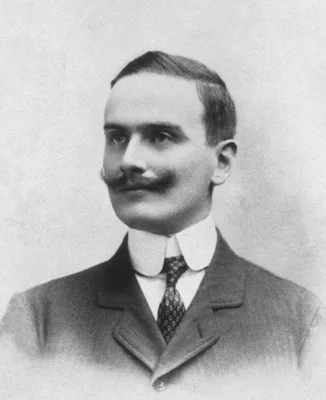
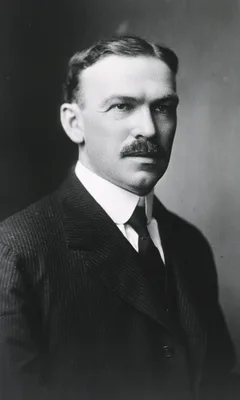
1902 REED, Walter (1851 – 1902)
Recent researches concerning the etiology, propagation, and prevention of yellow fever, by the United States Army Commission.
By 1902 Reed knew that the infectious agent of yellow fever was smaller than bacteria, though he did not specifically call it a virus. "In 1898, the passage of an animal pathogen through a Chamberland filter was repor…
GMN 11860 · https://historyofmedicine.com/id/14064
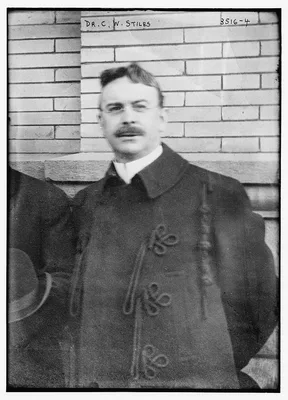
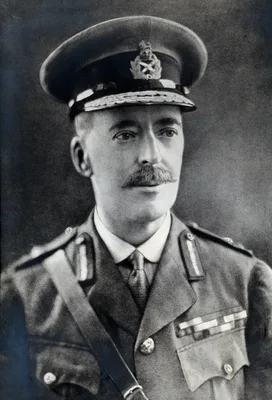
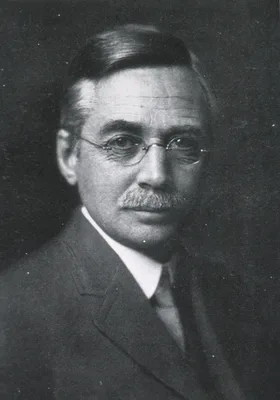
1902 STILES, Charles Wardell (1867 – 1941)
The significance of recent American cases of hookworm disease (Uncinariasis or Anchylostomiasis) in man.
In this paper Stiles fully characterized and extensively illustrated the American hookworm parasite that he first described in No. 5363. This species and the Schistosoma are the pathogenic organisms that can penetrate…
GMN 12114 · https://historyofmedicine.com/id/14323
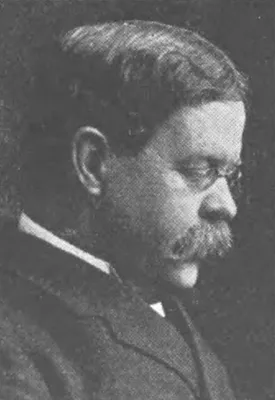
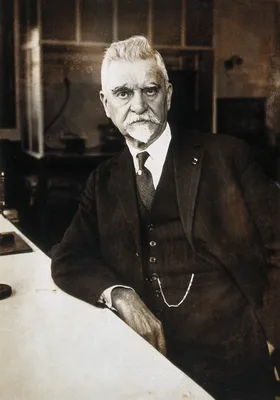
1902 SEDGWICK, William Thompson (1855 – 1921)
Principles of sanitary science and the public health, with special reference to the causation and prevention of infectious diseases.
Digital facsimile of the 1902 first edition from the Hathi Trust at this link.
GMN 12263 · https://historyofmedicine.com/id/14480
1903 STEFANSKY, W. K.
Eine Lepraähnliche Erkrankung der Haut und der Lymphdrtüsen bei Wanderratten.
Murine leprosy described.
GMN 2436.2 · https://historyofmedicine.com/id/2905
1903 –1904 METCHNIKOFF, Élie [MECHNIKOV] (1845 – 1916); ROUX, Pierre Paul Émile (1853 – 1933)
Études expérimentales sur la syphilis.
Metchnikoff and Roux successfully transmitted syphilis from man to the higher apes. Although not the first to do this, they recorded much new information concerning the disease.
GMN 2398 · https://historyofmedicine.com/id/3347
1903 KOCH, Robert Heinrich Hermann (1843 – 1910)
Die Bekämpfung des Typhus.
The prophylactic measures for the control of typhus suggested by Koch have been adopted almost everywhere.
GMN 5040 · https://historyofmedicine.com/id/5814
1903 NEGRI, Adelchi (1876 – 1912)
Contributo alio studio dell’ eziologia della rabia.
Discovery of the “Negri bodies” in rabies, the size of which makes viewing possible with a light microscope, and allows prompt microscopic diagnosis. German translation in Z. Hyg. InfektKr., 1903, 43, 507-28. Even tho…
GMN 5484 · https://historyofmedicine.com/id/6388
1903 LEISHMAN, Sir William Boog (1865 – 1926)
On the possibility of the occurrence of trypanosomiasis in India.
An organism found by Leishman in 1900 was later described by him as possibly a trypanosome. C. Donovan found the same organism in blood in July 1903. The name Leishmania donovani (Leishman-Donovan bodies) was later at…
GMN 5295 · https://historyofmedicine.com/id/6442
1903 MARCHOUX, Émile (1862 – 1943); ET AL
La fièvre jaune.
Yellow fever convalescent serum employed. With A. T. Salimbeni and P. L. Simond.
GMN 5459 · https://historyofmedicine.com/id/7561
1903 SCHAUDINN, Fritz Richard (1871 – 1906)
Studien über krankheitserregende Protozoen. II. Plasmodium vivax (Grassi & Feletti), der Erreger des Tertianfiebers beim Menschen.
Confirmation of the work of Ross and of Grassi.
GMN 5254 · https://historyofmedicine.com/id/7913
1903 CASTELLANI, Aldo (1877 – 1971)
On the discovery of a species of trypanosoma in the cerebrospinal fluid of cases of sleeping sickness.
While in Uganda, Castellani discovered T. gambiense in human cerebrospinal fluid. A paper in Notes Rec. roy. Soc., 1973, 23, 93-110, discounts Castellani’s claim that although he first discovered trypanosomes in the c…
GMN 5276 · https://historyofmedicine.com/id/8585
1903 –1919 BRUCE, Sir David (1855 – 1931); NABARRO, David N.
Reports of the Sleeping Sickness Commission of the Royal Society, 1903-1912. 17 pts.
Bruce and D.N. Nabarro were sent to Africa by the Royal Society to study sleeping sickness, and in their report they showed that the tsetse fly was the vector of trypanosomiasis. They also found that Gambia fever and …
GMN 5277 · https://historyofmedicine.com/id/8587
1903 WRIGHT, James Homer (1871 – 1928)
Protozoa in a case of tropical ulcer (Delhi sore).
Wright found Leishmania tropica in Delhi sore. He was unaware of Borovskii’s paper (No. 5294).
GMN 5297 · https://historyofmedicine.com/id/8607
1903 DONOVAN, Charles (1863 – 1951)
On the possibility of the occurrence of typanosomiasis in India.
Leishimania donovani, independently discovered by two British medical officers William Boog Leishman in Netley, England, and Donovan in Madras, India, in 1903. However, the correct taxonomy was provided by Ronald Ross…
GMN 5296 · https://historyofmedicine.com/id/8972
1903 –1929 GOLGI, Camillo (1844 – 1926)
Opera Omnia. Volume I: Istologia normale—1870-1883 (Con 21 Tavole e ritratto); Volume II: Istologia normale—1883-1902 (Con 21 tavole); Volume III: Patologia generale e isto-patologia—1868-1894 (Con 9 Tavole). Volume IV: Scritti su argomenti varii.
Limited to 325 copies, including material not previously published.
GMN 7338 · https://historyofmedicine.com/id/9509
1903 LIOSNER, S. (1876 – )
Du masque opératoire. Thèse presentée et publiquement soutenue à la Faculté de Médecine du Montpellier....
The medical thesis on medical and surgical masks by a woman medical student at Montpellier, who, as indicated on the title page, was born in Witebsk, Russia in 1876. She was also characterized as "Mlle." The thesis in…
GMN 13019 · https://historyofmedicine.com/id/15269
1903 GORGAS, William Crawford (1854 – 1920)
Notes on the treatment of yellow fever at Las Animas Hospital, the hospital of the Sanitary Department, during the epidemic of 1900 at Havana, Cuba.
In 1901 Gorgas was sent to Havana to undertake a special campaign against the yellow fever mosquito Aëdes aegypti. His methods of sanitation were so successful that in three months yellow fever was practically eradica…
GMN 13923 · https://historyofmedicine.com/id/16217
1904 POWER, Frederick Belding (1853 – 1927); GORNALL, Frank Howorth
The constituents of chaulmoogra seeds.
Hydnocarpus wightiana or Chaulmoogra is a tree in the Achariaceae family. The oil from seeds of Hydnocarpus wightiana or Chaulmoogra, a tree in the Achariaceae family, was widely used in Indian medicine and Chinese tr…
GMN 2437 · https://historyofmedicine.com/id/2907
1904 ROST, Ernest Reinhold (1872 – )
The cultivation of the Bacillus leprae.
Rost cultivated the leprosy bacillus, and he prepared leprolin, formerly used in treating leprosy.
GMN 2438 · https://historyofmedicine.com/id/2909
1904 CHIARI, Hans (1851 – 1916)
Ueber die syphilitischen Aortenerkrankungen.
GMN 2815 · https://historyofmedicine.com/id/3489
1904 SABOURAUD, Raymond Jacques Adrien (1864 – 1938)
Surla radiothérapie des teignes.
Sabouraud’s method of radiological treatment of ringworm.
GMN 4004 · https://historyofmedicine.com/id/5099
1904 LEISHMAN, Sir William Boog (1865 – 1926)
Note on the nature of the parasitic bodies found in tropical splenomegaly.
GMN 5298 · https://historyofmedicine.com/id/6473
1904 ROGERS, Sir Leonard (1868 – 1962)
Note on the occurrence of Leishman–Donovan bodies in “cachexial fevers” including kala-azar.
Rogers demonstrated the Leishman–Donovan bodies in kala-azar. See also the same journal, 1904, 2, 645-50. At about the same time Bentley reported similar findings in India.
GMN 5299 · https://historyofmedicine.com/id/6478
1904 ROSS, Philip Hedgeland (1876 – 1929); MILNE, Arthur Dawson (1867 – 1932)
“Tick fever”.
Ross and Milne discovered the causative agent in the African variety of relapsing (tick) fever.
GMN 5317 · https://historyofmedicine.com/id/6608
1904 KATSURADA, Fujiro (1867 – 1946)
The aetiology of a parasitic disease (in Japanese)
First description of Schistosoma japonicum. Translation in Kean (No. 2368.1), p. 518.
GMN 5349.1 · https://historyofmedicine.com/id/6829
1904 SYMMERS, William St Clair (1863 – 1937)
Note on a new form of liver cirrhosis due to the presence of the ova of Bilharzia haematobia.
“Symmers’s fibrosis”, pipe stem fibrosis of the liver, occurring in cases of certain forms of schistosomiasis.
GMN 5349.2 · https://historyofmedicine.com/id/6832
1904 MAGRATH, George Burgess (1870 – 1938); BRINCKERHOFF, Walter Remsen (1875 – 1911)
On experimental variola in the monkey.
Inoculation of smallpox into the monkey. An earlier report of successful inoculation by W. Zuelzer (Zbl. med. Wiss., 1874, 12, 82) is not generally accepted.
GMN 5429.1 · https://historyofmedicine.com/id/7391
1904 LAVERAN, Charles Louis Alphonse (1845 – 1922); MESNIL, Félix (1868 – 1938)
Trypanosomes et trypanosomiases.
Laveran and Mesnil discovered that trypanosomes could be maintained indefinitely in rats and mice by serial passage.
GMN 5278 · https://historyofmedicine.com/id/8590
1904 HAMMURABI, King of Babylon (-1792 – -1750); HARPER, Robert Francis (1864 – 1914)
The code of Hammurabi, King of Babylon about 2000 BCE. Autographed text, transliteration, translation, glossary, index of subjects, lists of proper names, signs, numerals, corrections, and erasures, with map, frontispiece, and photograph of text by Robert Francis Harper.
The Code of Hammurabi was found among the cuneiform tablets of the library of Ashurbanipal. It is now in the Louvre. It was first published in Scheil, "Textes élamites-sémitiques. Deuxième série: accompagné de 20 plan…
GMN 1 · https://historyofmedicine.com/id/8605
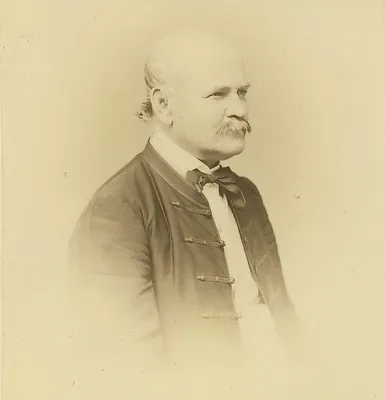
1905 SEMMELWEIS, Ignaz Philipp (Ignác Fülöp) (1818 – 1865); GYÖRY, Tibor (1869 – 1938)
Semmelweis’ gesammelte Werke. Heraugegeben aus zum Theil aus dem Ungarischen Übersetzt von Tiberius von Gyory.
An annotated edition and translation, including the texts of Semmelweis’s works on puerperal fever as a septicemia (No. 6275) and on the etiology of puerperal sepsis (No. 6277) as well as other gynecological papers an…
GMN 82.1 · https://historyofmedicine.com/id/1381
1905 HOFFMANN, Erich (1868 – 1959); SCHAUDINN, Fritz Richard (1871 – 1906)
Vorläufiger Bericht über das Vorkommen von Spirochaeten in syphilitischen Krankheitsprodukten und bei Papillomen.
On March 3, 1905, Schaudinn discovered the causal organism of syphilis Spirochaeta pallida, in serum obtained from a genital lesion by Hoffmann. Schaudinn later renamed the spirochete Treponema pallidum.
GMN 2399 · https://historyofmedicine.com/id/3349
1905 –1907
REPORTS of the Commission appointed by the Admiralty, the War Office, and the Civil Government of Malta, for the investigation of Mediterranean fever, under the supervision of an advisory committee of the Royal Society. 7 pts.
The important findings of the Mediterranean Fever Commission are summarized in Topley & Wilson’s Bacteriology,1975, p. 2173; probably the most valuable was that of T. Zammit, who showed goat’s milk to be the main sour…
GMN 5102 · https://historyofmedicine.com/id/6032
1905 CASTELLANI, Aldo (1877 – 1971)
On the presence of spirochaetes in two cases of ulcerated parangi (yaws).
Castellani demonstrated in scrapings of yaws tissue a spirochaete, T. pertenue, later found to be the causal organism. He thus finally established it as a distinct organism from the syphilis spirochaete. Preliminary n…
GMN 5306 · https://historyofmedicine.com/id/6557
1905 WELLMANN, Frederick Creighton (1871 – 1960)
On a spirochaete found in yaws papules.
Independently of Castellani (No. 5306) Wellmann discovered Treponema pertenue. "In addition to being an author, Wellman was also a doctor of tropical medicine, scientist, administrator, artist, educator, spy, and engi…
GMN 5307 · https://historyofmedicine.com/id/6559
1905 DUTTON, Joseph Everett (1877 – 1905); TODD, John Lancelot (1876 – 1949)
The nature of tick fever in the eastern part of the Congo Free State.
Independently of Ross and Milne, Dutton and Todd demonstrated relapsing fever in monkeys conveyed by infected ticks, Omithodorus moubata. The organism was named Sp. (now Borrelia) duttoni. Both Dutton and Todd contrac…
GMN 5318 · https://historyofmedicine.com/id/6610
1905 –1911 LOOSS, Arthur (1861 – 1923)
The anatomy and life history of Agchylostoma duodenale Dub. A. monograph. 2 pts.
Vols. 3 and 4 of Records of the School of Medicine, Cairo. In 1898 Looss discovered that hookworm larvae can penetrate the skin. His monograph epitomized all knowledge of the condition to 1911.
GMN 5365 · https://historyofmedicine.com/id/6987
1905 –1906 TYZZER, Ernest Edward (1875 – 1965)
The histology of the skin lesions in varicella.
Tyzzer was first to recognize inclusion bodies in varicella.
GMN 5440 · https://historyofmedicine.com/id/7464
1905 HEKTOEN, Ludvig (1863 – 1951)
Experimental measles.
Experimental human transmission of measles.
GMN 5446 · https://historyofmedicine.com/id/7484
1905 CRAIG, Charles Franklin (1872 – 1950)
Intracorpuscular conjugation in the malarial plasmodia and its significance.
Demonstration of the existence of malarial carriers.
GMN 5255 · https://historyofmedicine.com/id/7914
1905 THOMAS, Harold Wolferstan (1875 – 1931); BREINL, Anton (1880 – 1944)
Report on trypanosomes, trypanosomiasis, and sleeping sickness, being an experimental investigation into their pathology and treatment.
Thomas and Breinl discovered that arsanilic acid, was more potent in the treatment of laboratory trypanosomiasis than arsenic in inorganic form. As a crystalline powder it was introduced medically as Atoxyl. Thomas an…
GMN 5279 · https://historyofmedicine.com/id/8592
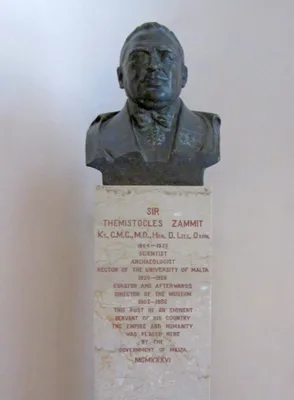
1905 ZAMMIT, Themistocles (1864 – 1935)
A preliminary note on the susceptibility of goats to Malta fever.
Zammit discovered that contaminated goat milk was the vector for transmission to humans of the Malta fever bacterium, Brucellosis melitensis. At the time goat milk was a primary source of milk in Malta and other parts…
GMN 10780 · https://historyofmedicine.com/id/12976
1906 JOCHMANN, Georg (1874 – 1915)
Versuche zur Serodiagnostik und Serotherapie der epidemischen Genickstarre.
First attempts at the serum treatment of cerebrospinal meningitis.
GMN 4682 · https://historyofmedicine.com/id/955
1906 BERTARELLI, Ernesto (1873 – 1957)
Ueber die Transmission der Syphilis auf das Kaninchen. Vorläufiger Bericht.
Transmission of syphilis to rabbits.
GMN 2399.1 · https://historyofmedicine.com/id/3351
1906 LANDSTEINER, Karl (1868 – 1943); MUCHA, Viktor (1877 – 1919)
Zur Technik der Spirochaetenuntersuchung.
Dark field method of diagnosis for presence of T. pallidum.
GMN 2400 · https://historyofmedicine.com/id/3357
1906 LEVADITI, Constantin (1874 – 1953)
A propos de l’impregnation au nitrate d’argent des spirochètes sur coupes.
Levaditi’s method of staining T. pallidum.
GMN 2401 · https://historyofmedicine.com/id/3359
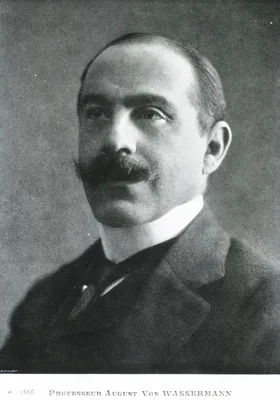
1906 WASSERMANN, August von (1866 – 1925); ET AL
Eine serodiagnostische Reaktion bei Syphilis.
The “Wassermann reaction”, a specific diagnostic blood test for syphilis, and a modification of the complement-fixation reaction of Bordet and Gengou. With A. Neisser and C. Bruck.
GMN 2402 · https://historyofmedicine.com/id/3363
1906 REUTER, Karl
Ueber Spirochaeta pallida in der Aortenwand bei Hellerscher Aortitis.
Treponema pallidum first discovered in the diseased aorta.
GMN 2824 · https://historyofmedicine.com/id/3531
1906 RICKETTS, Howard Taylor (1871 – 1910)
Infection, immunity and serum therapy.
GMN 2564 · https://historyofmedicine.com/id/3678
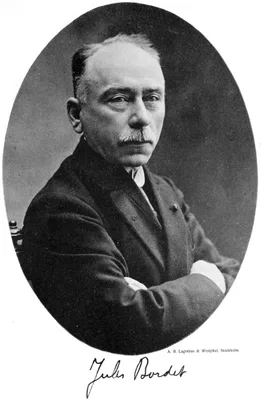
1906 BORDET, Jules Jean Baptiste Vincent (1870 – 1961); GENGOU, Octave (1875 – 1957)
Le microbe de la coqueluche.
The cocco-bacillus Haemophilus pertussis, commonly regarded as the causal organism of whooping cough, was at first named “Bordet–Gengou bacillus” after its discoverers. It has later renamed Bordetella pertussis.
GMN 5087 · https://historyofmedicine.com/id/5968