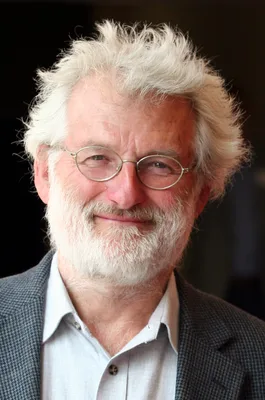
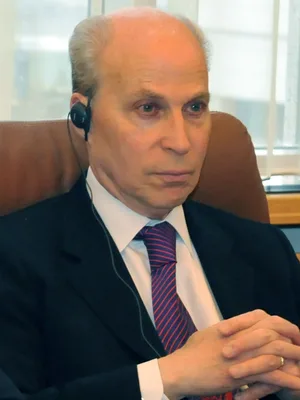
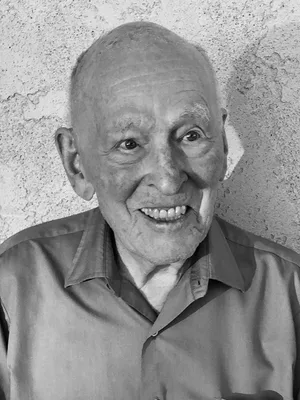
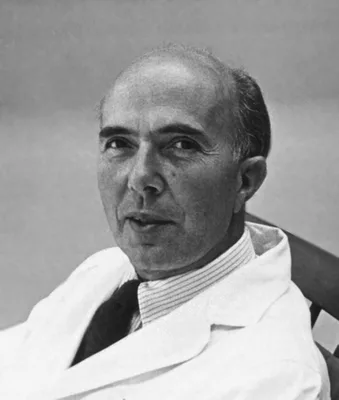
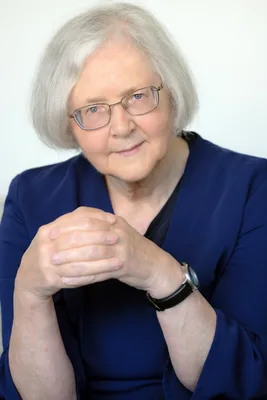
1967 PTASHNE, Mark (1940 – )
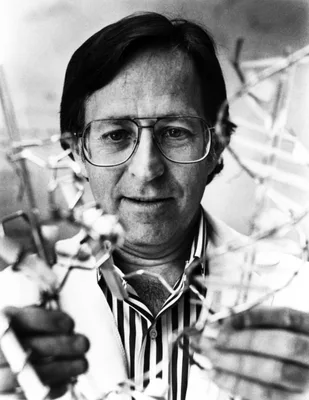
Specific binding of the λ phage repressor to λ DNA.
Ptashne was the first to demonstrate specific binding between protein and DNA. Abstract for the paper: "Genetic experiments show that a group of genes may be switched off by the product of a regulator gene, called a r…
GMN 13988 · https://historyofmedicine.com/id/16291
1968 PERUTZ, Max Ferdinand (1914 – 2002)
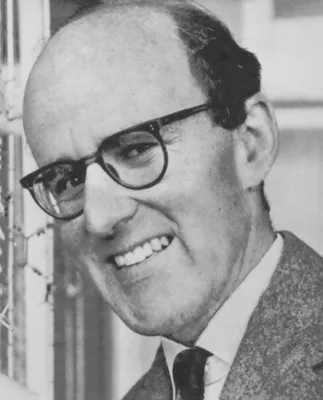
Three-dimensional Fourier synthesis of horse oxyhaemoglobin at 2.8Å resolution: The atomic model.
Thirty years after beginning his research on hemoglobin Perutz solved the Fourier synthesis of hemoglobin at 2.8Å (high resolution) and built an atomic model of the molecule. With Hilary Muirhead, J. M. Cox & L. C. G.…
GMN 6913 · https://historyofmedicine.com/id/9078
1968 LEHMANN, Hermann (1910 – 1985); PERUTZ, Max Ferdinand (1914 – 2002)
Molecular pathology of human haemoglobin.
Perutz opened up "the field of 'molecular pathology,' relating a structural abnormality to a disease" (Aaron Klug, "Max Perutz 1914-2002," Science 295 ([2002] 2383). Specifically Perutz showed that hemoglobin molecule…
GMN 6916 · https://historyofmedicine.com/id/9081
1968 WATSON, James Dewey (1928 – )
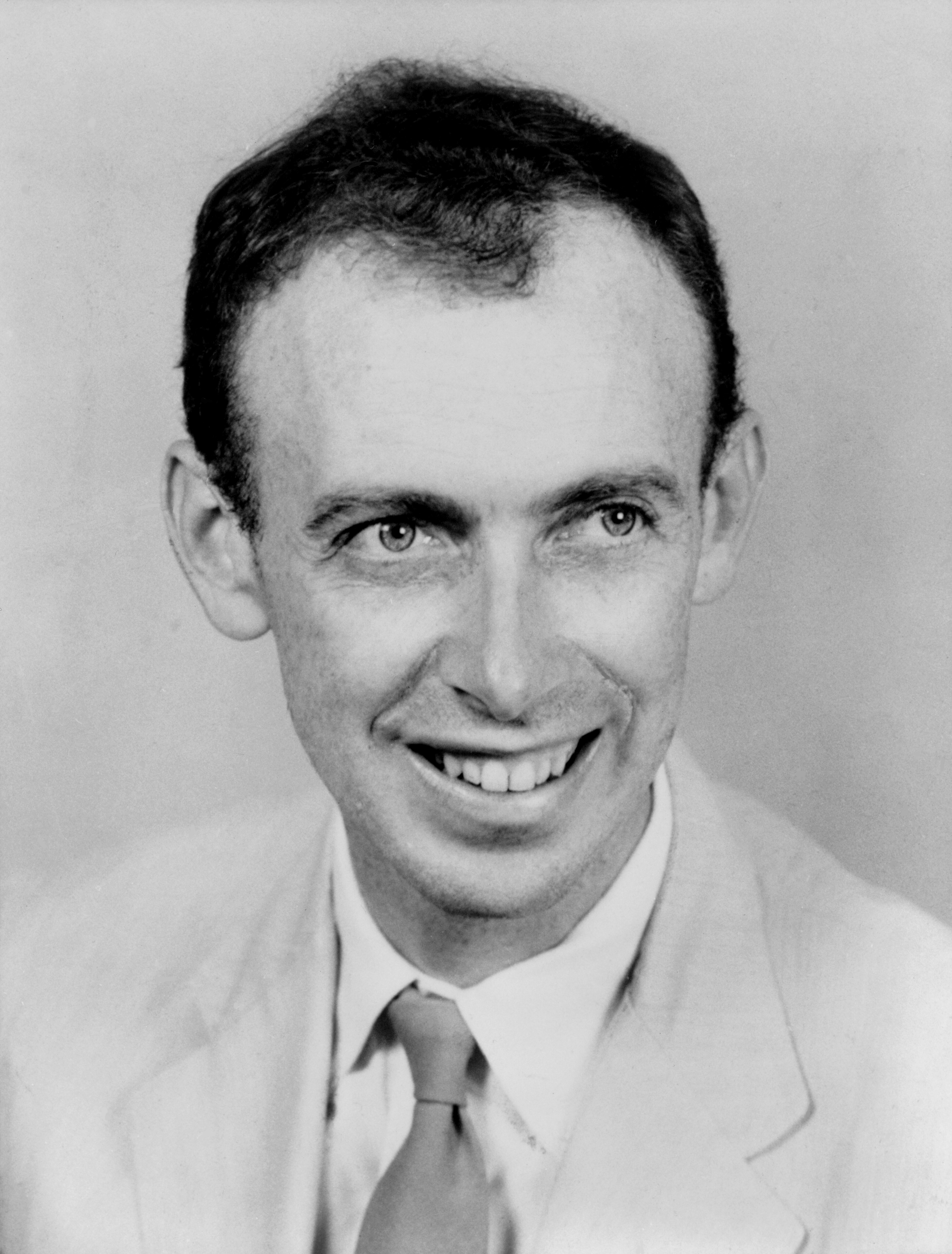
The double helix. A personal account of the discovery of the structure of DNA.
Vivid first hand account of the discovery, renowned for its candor. See also the Norton Critical Edition of The double helix with supporting material, edited by Gunther Stent (1980), and The annotated and illustrated …
GMN 7139 · https://historyofmedicine.com/id/9306
1968 WATSON, James Dewey (1928 – )
The double helix.
Portions of Watson's famous memoir appeared in the January and February issues of the Atlantic Monthly prior to their publication in book form in the Spring of 1968. (Thanks to Juan Weiss for this reference.)
GMN 12027 · https://historyofmedicine.com/id/14235
1968 ARBER, Werner (1929 – ); LINN, Stuart M.
Host specificity of DNA produced by Escherichia coli, X. In vitro restriction of phage FD replicative form.
Order of authorship in the original publication: Linn, Arber. Arber announced the discovery, with proof, of the first restriction endonuclease (restriction enzyme or restrictase)."These enzymes are found in bacteria a…
GMN 12028 · https://historyofmedicine.com/id/14236
1968 KIMURA, Motoo (Kimura Motō) (1924 – 1994)
Evolutionary rate at the molecular level.
Using complex mathematics, Motoo Kimura calculated that genomes constantly undergo a remarkably high number of mutations per unit of time. He wrote, "Calculating the rate of evolution in terms of nucleotide substituti…
GMN 13551 · https://historyofmedicine.com/id/15828
1968 KLUG, Sir Aaron (1926 – 2018); DEROSIER, David J.
Reconstruction of three-dimensional structures from electron micrographs.
Klug and deRosier invented methods for two-dimensional and three-dimensional digital image processing of electron microscope images. The latter method provided the theory behind the development of computed tomography …
GMN 13935 · https://historyofmedicine.com/id/16231
1968 OKAZAKI, Tsuneko (1933 – ); OKAZAKI, Reiji (1930 – 1975); ET AL
Mechanism of DNA chain growth, I. Possible discontinuity and unusual secondary structure of newly synthesized chains.
The Okazakis discovered what became known as Okazaki fragments, short sequences of DNA nucleotides (approximately 150 to 200 base pairs long in eukaryotes) which are synthesized discontinuously and later linked togeth…
GMN 13987 · https://historyofmedicine.com/id/16290
1969 BROCK, Thomas Dale (1926 – ); FREEZE, Hudson
Thermus aquaticus gen. n. and sp. n., a nonsporulating extreme thermophile.
Discovery of Thermus aquaticus, a species of bacteria that can tolerate high temperatures. This is one of several thermophilic bacteria that belong to the Deinococcus–Thermus group, and the source of the heat-resistan…
GMN 7967 · https://historyofmedicine.com/id/10143
1969 BECKWITH, Jonathan Roger (1935 – ); SHAPIRO, James Alan (1943 – ); ERON, Lawrence (1944 – ); MACHATTIE, Lorne; IHLER, Garret; IPPEN, Karen
Isolation of pure lac operon DNA.
Order of authorship in the original publication: Shapiro, MacHattie, Eron, Ihler, Ippen, Beckwith. Beckwith led the research group that in 1969 isolated the first gene from an organism, specifically a gene from a bact…
GMN 13971 · https://historyofmedicine.com/id/16273
1969 LIPMANN, Fritz Albert (1899 – 1986); TAO, Mariano (1938 – 2022)
Isolation of adenyl cyclase from Escherichia coli.
Lipmann and Tao isolated, purified, and characterized biochemically an enzyme which they called "adenyl cyclase." They stated that this enzyme is responsible for producing "cyclic AMP" in E. coli. Digital facsimile fr…
GMN 14142 · https://historyofmedicine.com/id/16456
1970 BALTIMORE, David (1938 – )
Viral RNA-dependent DNA polymerase: RNA-dependent DNA polymerase in virions of RNA tumour viruses.
In 1970 Baltimore and Temin discovered that certain viruses that have their genes in the form of RNA can copy the RNA "backward" into DNA in infected cells. The enyzme, reverse transcriptase, enables the manufacture o…
GMN 2660.22 · https://historyofmedicine.com/id/3429
1970 TEMIN, Howard Martin (1934 – 1994); MIZUTANI, Satoshi
RNA-dependent DNA polymerase in virions of Rous sarcoma virus.
Discovery of reverse transcriptase. "In 1969, Temin and a postdoctoral fellow, Satoshi Mizutani, began searching for the enzyme that was responsible for the phenomenon of viral RNA being transferred into proviral DNA.…
GMN 2660.23 · https://historyofmedicine.com/id/3432
1970 SMITH, Hamilton Othanel (1931 – ); KELLY, T. J.
A restriction endonuclease from Hemophilus influenzae. II. Base sequence of the recognition site.
Discovery of the first type II restriction enzyme (HindII). Smith shared the 1978 Nobel Prize in Physiology or Medicine with Werner Arber and Daniel Nathans "for the discovery of restriction enzymes and their applicat…
GMN 6889 · https://historyofmedicine.com/id/9053
1971 NATHANS, Daniel (1928 – 1999)
Specific cleavage of simian virus 40 DNA by restriction endonuclease of Hemophilus influenzae.
Nathans showed that the restriction enzyme discovered by Hamilton Smith cleaved SV40 DNA into 11 specific pieces. Nathans and his student Kathleen Danna wrote: "The availability of pieces of SV40 DNA from specific sit…
GMN 6890 · https://historyofmedicine.com/id/9054
1971 BOYER, Herbert Wayne (1936 – )
DNA restriction and modification mechanisms in bacteria.
In this single author paper Boyer isolated, characterized and named the enzyme that Arber No. 12028 had observed and described in terms of its basic action on DNA. Boyer called it the “fi R-factor restriction endonucl…
GMN 12029 · https://historyofmedicine.com/id/14237
1971 EDMONDS, Mary P. (1922 – 2005); NAKAZATO, Hiroshi; VAUGHAN, Maurice H.
Polyadenylic acid sequences in the heterogeneous nuclear RNA and rapidly-labeled polyribosomal RNA of HeLa cells: Possible evidence for a precursor relationship.
Edmonds discovered the poly-A tails on eukaryotic mRNA. The addition of a poly(A) tail to an RNA transcript, typically a messenger RNA (mRNA), is called polyadenylation. Poly(A)polymerase was first identified in 1960 …
GMN 13973 · https://historyofmedicine.com/id/16276
1972 JACKSON, David Archer (1942 – ); SYMONS, Robert Henry (1934 – 2006); BERG, Paul (1926 – )
Biochemical method for inserting new genetic information into DNA of simian virus 40: Circular SV40 DNA molecules containing Lambda phage genes and the galactose operon of Escherichia coli.
First recombinant DNA molecules generated. Digital facsimile from PubMedCentral at this link. In 1980 Berg was awarded half of the Nobel Prize in Chemistry "for his fundamental studies of the biochemistry of nucleic a…
GMN 257.3 · https://historyofmedicine.com/id/8713
1972 MERTZ, Janet E. (1949 – ); DAVIS, Ronald Wayne (1941 – )
Cleavage of DNA by R1 restriction endonuclease generates cohesive ends.
Order of authorship in the original publication: Mertz, Davis. Mertz discovered that DNA ends generated by cutting with the EcoRI restriction enzyme are “sticky”, permitting any two such DNAs to be readily “recombined…
GMN 12030 · https://historyofmedicine.com/id/14238
1973 LOBBAN, Peter E.; KAISER, Armin Dale (1927 – )
Enzymatic end-to-end joining of DNA molecules.
"The idea of recombinant DNA was first proposed by Peter Lobban, a graduate student of Prof. Dale Kaiser in the Biochemistry Department at Stanford University Medical School" (Wikipedia article recombinant DNA, access…
GMN 257.4 · https://historyofmedicine.com/id/8714
1973 COHEN, Stanley Norman (1935 – ); CHANG, Annie C.Y. (1936 – ); HELLING, Robert Bruce (1936 – 2006); BOYER, Herbert Wayne (1936 – )
Construction of biologically functional bacterial plasmids in vitro.
Cohen, Boyer and associates developed the first practical method for cloning genes, by the formation of recombinant plasmids which can be used to infect plasmid-free bacteria. The authors demonstrated that if DNA is f…
GMN 257.5 · https://historyofmedicine.com/id/8715
1973 RICH, Alexander (1924 – 2015); ROSENBERG, John M.; SEEMAN, Nadrian C.; ET AL
Double helix at atomic resolution.
Order of authorship in the original publication: Rosenberg, Seeman,...Rich. This paper was the first confirmation of the double-helix structure at atomic resolution. See also: Roberta Ogilvie Day, Nadrian C. Seeman,..…
GMN 13956 · https://historyofmedicine.com/id/16256
1974 OLBY, Robert Cecil (1933 – )
The path to the double helix: The discovery of DNA.
A well-documented history of molecular biology.
GMN 258.9 · https://historyofmedicine.com/id/8726
1974 BRENNER, Sydney (1927 – 2019); SULSTON, Sir John Edward (1942 – 2018)
The DNA of CAENORHABDITIS ELEGANS.
Digital facsimile from PubMedCentral at this link.
GMN 9942 · https://historyofmedicine.com/id/12130
1974 COHEN, Stanley Norman (1935 – ); CHANG, Annie C.Y. (1936 – )
Genome construction between bacterial species in vitro: Replication and expression of staphylococcus plasmid genes in Escherichia coli.
Creation of the first transgenic organism: expression of Staphylococcus aureus genes in Escherichia coli. Digital facsimile from pnas.org at this link.
GMN 10047 · https://historyofmedicine.com/id/12236
1974 COHEN, Stanley Norman (1935 – ); CHANG, Annie C.Y. (1936 – )
Genome construction between bacterial species in vitro: Replication and expression of staphylococcus plasmid genes in Escherichia coli.
Confirmation of the success of methods outlined in No. 257.5. Abstract: "Genes carried by EcoRI endonuclease-generated fragments of Staphylococcus plasmid DNA have been covalently joined to the E. coli antibiotic-resi…
GMN 10963 · https://historyofmedicine.com/id/13159
1974 KORNBERG, Roger David (1947 – )
Chromatin structure: A repeating unit of histones and DNA.
While a postdoctoral fellow working with Aaron Klug and Francis Crick at the MRC in the 1970s, Kornberg discovered the nucleosome as the basic protein complex packaging chromosomal DNA in the nucleus of eukaryotic cel…
GMN 13948 · https://historyofmedicine.com/id/16247
1974 BOYER, Paul Delos (1918 – 2018)
"Conformational Coupling in Biological Energy Transductions." In L. Ernster et al. (eds.), Dynamics of Energy-Transducing Membranes, pp. 289-301.
In 1997 Boyer shared the Nobel Prize in Chemistry with John Walker and Jens C. Skou “for their elucidation of the enzymatic mechanism underlying the synthesis of adenosine triphosphate (ATP).” The Nobel Prize committe…
GMN 14315 · https://historyofmedicine.com/id/16640
1975 DULBECCO, Renato (1914 – 2012)
From the molecular biology of oncogenic DNA viruses to cancer. Les Prix Nobel en 1975, pp. 172-80.
In 1975 Dulbecco shared the Nobel Prize in Physiology or Medicine with David Baltimore and Howard Martin Temin "for their discoveries concerning the interaction between tumour viruses and the genetic material of the c…
GMN 2660.27 · https://historyofmedicine.com/id/3440
1975 PHILLIPS, James Charles (1933 – ); WLODAWER, Alexander; HODGSON, Keith O. (1947 – ); ET AL
Application of synchrotron radiation to protein crystallography: Preliminary results.
First report on the application of synchrotron radiation to protein crystallography. Order of authorship in the original publication: Phillips, Wlodwawer..., Hodgson. Digital facsimile from pnas.org at this link. "Syn…
GMN 14006 · https://historyofmedicine.com/id/16311
1975 HENDERSON, Richard (1945 – ); UNWIN, Peter Nigel Tripp
Three-dimensional model of purple membrane obtained by electron microscopy.
The invention of Cryogenic electron microscopy (cryo-EM). The novel technique was achieved by "by applying the method to tilted specimens, and using the principles put forward by De Rosier and Klug (GM - 13935), for t…
GMN 14182 · https://historyofmedicine.com/id/16497
1976 VARMUS, Harold Eliot (1942 – ); BISHOP, John Michael (1936 – ); STEHELIN, Dominique (1943 – 2019); VOGT, Peter K. (1932 – )
DNA related to the transforming gene(s) of avian sarcoma viruses is present in normal avian DNA.
Discovery of the first “oncogene. In 1989 Varmus and Bishop shared the Nobel Prize for in Physiology or Medicine "for their discovery of the cellular origin of retroviral oncogenes."
GMN 2660.28 · https://historyofmedicine.com/id/3441
1976 CHIEN CHANG, Alice; EDGAR, David B.; TRELA, John M.
Deoxyribonucleic acid polymerase from the extreme thermophile Thermus aquaticus.
The authors showed that the heat resistant bacteria Thermus aquaticus discovered by Thomas Brock contained a vital polymerase enzyme that had evolved in this bacteria to allow it to metabolize and survive in exception…
GMN 11104 · https://historyofmedicine.com/id/13300
1976 CARBON, John B.; CLARKE, Louise B.
A colony bank containing synthetic Col El hybrid plasmids representative of the entire E. coli genome.
First description of a "complete" genomic library. This paper includes the Carbon-Clarke equation used for calculating the number of clones required when constructing a clone library to ensure a given probability (usu…
GMN 13972 · https://historyofmedicine.com/id/16275
1976 FURUICHI, Yashiro; SHATKIN, Aaron J. (1934 – 2012)
Reovirus messenger RNA contains a methylated, blocked 5'-terminal structure: m7G(5')ppp(5')GmpCp.
Furuichi, working in Shatkin's laboratory, discovered that the viral mRNAs synthesized in vitro by the virion-associated RNA polymerase of reovirus contain a unique 5′-terminal structure m7GpppNm or cap. The precise b…
GMN 13976 · https://historyofmedicine.com/id/16279
1976 GELLERT, Martin Frank (1929 – ); MIZUUCHI, Kiyoshi; O'DEA, Mary H.; NASH, Howard A. (1937 – 2011)
DNA gyrase: An enzyme that introduces superhelical turns into DNA (Escherichia coli / ATP-dependent reaction / superhelix density).
Order of authorship in the original publication: Gellert, Mizuuchi, O'Dea, Nash. Discovery of DNA gyrase, the first type II topoisomerase to be discovered. "It is the only type II enzyme to retain its historical name.…
GMN 13978 · https://historyofmedicine.com/id/16281
1977 PORTUGAL, Franklin H.; COHEN, Jack S.
A century of DNA: A history of the discovery of the structure and function of the genetic substance.
GMN 258.10 · https://historyofmedicine.com/id/8727
1977 SANGER, Frederick (1918 – 2013)
DNA sequencing with chain-terminating inhibitors.
Sanger and colleagues developed methods for rapid sequencing of long sections of DNA molecules. Sanger’s method, and that developed by Gilbert and Maxam, made it possible to read the nucleotide sequence for entire gen…
GMN 6883 · https://historyofmedicine.com/id/9047
1977 SANGER, Frederick (1918 – 2013)
The nucleotide sequence of bacteriophage phi-X174.
Sanger and colleagues sequenced the first whole DNA genome—that of bacteriophage phi-X174 (5375 bases)
GMN 6884 · https://historyofmedicine.com/id/9048
1977 GILBERT, Walter (1932 – ); MAXAM, Allan M. (1942 – )
A new method for sequencing DNA.
The Gilbert-Maxam method for sequencing DNA. This paper is available from PNAS at this link. In 1980 Gilbert shared the 1980 Nobel Prize in Chemistry with Frederick Sanger and Paul Berg. Berg received half of the priz…
GMN 6926 · https://historyofmedicine.com/id/9091
1977 SULSTON, Sir John Edward (1942 – 2018); HORVITZ, Howard Robert (1947 – )
Post-embryonic cell lineages of the nematode Caenorhabditis elegans.
Complete map of the nematode's neurons. Sulston and Horvitz tracked every non-gonadal cell division that occurred during larval development, and published a complete description of these lineages in 1977.
GMN 9938 · https://historyofmedicine.com/id/12126
1977 BOYER, Herbert Wayne (1936 – ); ITAKURA, Keiichi (1942 – ); HIROSE, Tadaaki; CREA, Roberto; BOLÍVAR ZAPATA, Francisco Gonzalo (1948 – ); ET AL
Expression in Escherichia coli of a chemically synthesized gene for the hormone somatostatin.
Order of authorship in the original paper: Itakura, Hirose, Crea..., Bolivar, Boyer. Synthesis of the gene for somatostatin (growth hormone-inhibiting hormone (GHIH). This was the first demonstration of a foreign gene…
GMN 10964 · https://historyofmedicine.com/id/13160
1977 CHOW, Louise Tsi (1943 – ); GELINAS, Richard E.; BROKER, Thomas R.; ROBERTS, Richard John Sir (1943 – )
An amazing sequence arrangement at the 5' ends of adenovirus 2 messenger RNA.
Discovery of introns. In 1993 Roberts shared the Nobel Prize in Physiology or Medicine with Phillip A. Sharp "for their discoveries of split genes." It was frequently suggested that Chow deserved a share of that prize…
GMN 11043 · https://historyofmedicine.com/id/13239
1977 BERGET, Susan M.; MOORE, Claire; SHARP, Philip Allen (1944 – )
Spliced segments at the 5' terminus of adenovirus 2 late mRNA.
Discovery of introns simultaneously with Roberts, Chow, Broker (No. 11043). Sharp's electron microscopist, Berget, visualized the introns in the electron microscope. James D. Watson took note of the profound significa…
GMN 11044 · https://historyofmedicine.com/id/13240
1977 BOYER, Herbert Wayne (1936 – ); BETLACH, Mary C.; RODRIGUEZ, Raymond L.; BOLÍVAR ZAPATA, Francisco Gonzalo (1948 – ); ET AL
The construction of molecular cloning vehicles. II. A multipurpose cloning system.
Order of authorship in the original publication Bolivar, Rodriguez, Betlach...Boyer...The authors describe the composition and molecular construction of pBR-322 (named after Bolivar and Rodriguez) and call it "the mos…
GMN 12031 · https://historyofmedicine.com/id/14239
1977 GILMAN, Alfred Goodman (1941 – 2015); ROSS, Elliot M.
Resolution of some components of adenylate cyclase necessary for catalytic activity.
Goodman shared the 1994 Nobel Prize in Physiology or Medicine with Martin Rodbell "for their discovery of G-proteins and the role of these proteins in signal transduction in cells." In this paper Goodman and Ross show…
GMN 14143 · https://historyofmedicine.com/id/16457
1978 GALL, Joseph Grafton (1928 – ); BLACKBURN, Elizabeth Helen (1948 – )
A tandemly repeated sequence at the termini of the extrachromosomal ribosomal RNA genes in Tetrahymena.
In 1975–1977, Blackburn, working as a postdoctoral fellow at Yale University with Gall, discovered the unusual nature of telomeres, with their simple repeated DNA sequences composing chromosome ends.
GMN 8387 · https://historyofmedicine.com/id/10564
1978 LEAR, John
Recombinant DNA: The untold story.
GMN 9720 · https://historyofmedicine.com/id/11907
1978 ZAMECNIK, Paul Charles (1912 – 2009); STEPHENSON, Mary Louise (1921 – 2009)
Inhibition of Rous sarcoma virus replication and cell transformation by a specific oligodeoxynucleotide (tridecamer deoxyribonucleotide/hybridization competitor/hybridon).
Zamecnick and Stephenson reported the first example of specific inhibition of gene expression by an oligonucleotide when they demonstrated that a short oligonucleotide inhibited Rous sarcoma virus replication in cell …
GMN 13969 · https://historyofmedicine.com/id/16271