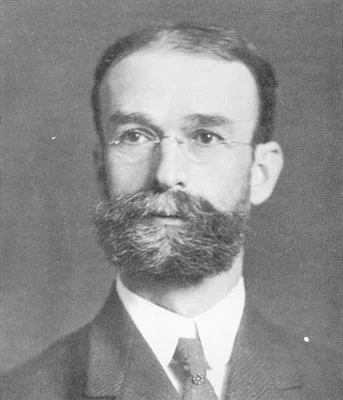
1889 SMITH, Theobald (1859 – 1934)
Preliminary observations on the microorganism of Texas fever.
First report on the discovery of a Babesia, cause of Babesiosis. Smith first observed the microscopic organism in the summer of 1886, but mentioned Babes's work in this paper, perhaps resulting in Babes being credited…
GMN 10885 · https://historyofmedicine.com/id/13081
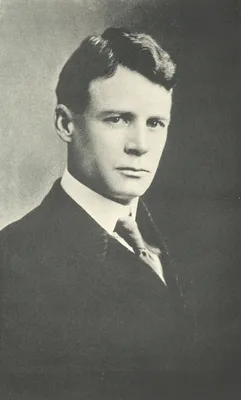
1893 SMITH, Theobald (1859 – 1934); KILBORNE, Frederick Lucius (1858 – 1936)
Investigations into the nature, causation and prevention of Texas or Southern cattle fever.
U.S. Bureau of Animal Industry, Bulletin No. 1. Discovery of the parasite of Texas cattle fever, Pyrosoma bigeminum, and proof that its transmission is due to the cattle tick, Boöphilus bovis. This was the first demon…
GMN 5529 · https://historyofmedicine.com/id/6646
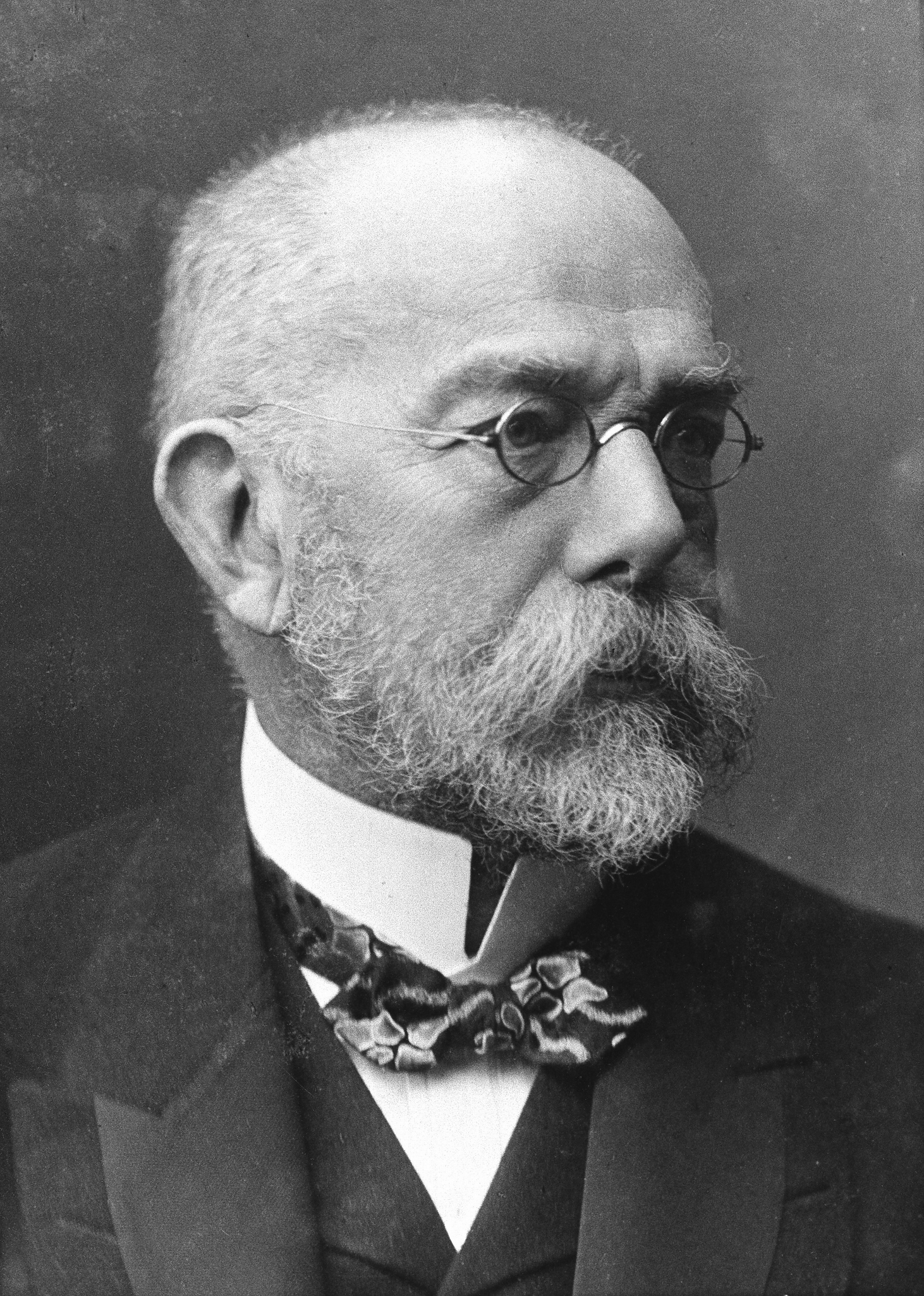
1898 KOCH, Robert Heinrich Hermann (1843 – 1910)
Reise-Bericht über Rinderpest, Bubonenpest in Indien und Afrika, Tsetse-oder Surrakrankheit, Texasfieber, tropische Malaria, Schwarzwasserfieber.
GMN 2457 · https://historyofmedicine.com/id/2986
1904 ROSS, Philip Hedgeland (1876 – 1929); MILNE, Arthur Dawson (1867 – 1932)
“Tick fever”.
Ross and Milne discovered the causative agent in the African variety of relapsing (tick) fever.
GMN 5317 · https://historyofmedicine.com/id/6608
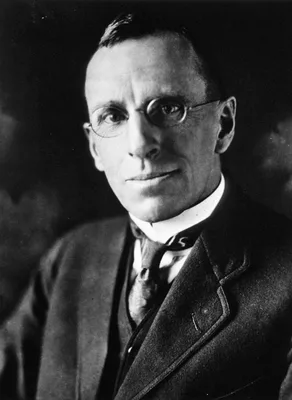
1905 DUTTON, Joseph Everett (1877 – 1905); TODD, John Lancelot (1876 – 1949)
The nature of tick fever in the eastern part of the Congo Free State.
Independently of Ross and Milne, Dutton and Todd demonstrated relapsing fever in monkeys conveyed by infected ticks, Omithodorus moubata. The organism was named Sp. (now Borrelia) duttoni. Both Dutton and Todd contrac…
GMN 5318 · https://historyofmedicine.com/id/6610
1906 RICKETTS, Howard Taylor (1871 – 1910)
The transmission of Rocky Mountain spotted fever by the bite of the wood-tick (Dermacentor occidentalis).
Ricketts (who himself died of typhus) demonstrated that the wood tick Dermacentor andersoni is a vector of Rocky Mountain spotted fever.
GMN 5378 · https://historyofmedicine.com/id/7054
1909 RICKETTS, Howard Taylor (1871 – 1910)
A micro-organism which apparently has a specific relationship to Rocky Mountain spotted fever. A preliminary report.
Description of the causal organism, in blood smears.
GMN 5379 · https://historyofmedicine.com/id/7059
1910 RICKETTS, Howard Taylor (1871 – 1910); WILDER, Russell Morse (1885 – 1959)
The relation of typhus fever (tabardillo) to Rocky Mountain spotted fever.
Ricketts and Wilder differentiated Rocky Mountain spotted fever and typhus.
GMN 5380 · https://historyofmedicine.com/id/7064
1910 CONOR, Alfred Leon Joseph (1870 – 1914); BRUCH, A
Une fièvre éruptive observée en Tunisie.
First description of fievre boutonneuse, a form of tick-borne typhus found in Tunisia.
GMN 5383 · https://historyofmedicine.com/id/7084
1911 MCCOY, George Walter (1876 – 1952)
A plague-like disease of rodents.
Tularemia first recorded (in rodents).
GMN 5173 · https://historyofmedicine.com/id/6269
1912 MCCOY, George Walter (1876 – 1952); CHAPIN, Charles Willard (1877 – )
Further observations on a plague-like disease of rodents with a preliminary note on the causative agent, Bacterium tularense.
Isolation of Pasteurella tularensis, causal organism in tularemia.
GMN 5174 · https://historyofmedicine.com/id/6273
1912 TODD, John Lancelot (1876 – 1949)
Does a human tick-borne disease exist in British Columbia?
Report on the first cases of "tick paralysis", a potentially lethal disease treatable by removing the tick. Follow-up paper by Todd: "Tick bite in British Columbia," Canad. med. Assoc. J., 2 (1912) 1118-1119. Unlike m…
GMN 10921 · https://historyofmedicine.com/id/13117
1914 WHERRY, William Buchanan (1875 – 1936); LAMB, Benjamin Harrison (1889 – 1955)
Infection of man with Bacterium tularense
Wherry and Lamb were first to isolate P. tularensis from lesions in man.
GMN 5175 · https://historyofmedicine.com/id/6279
1919 WOLBACH, Simeon Burt (1880 – 1954)
Studies on Rocky Mountain spotted fever.
In his important aetiological and pathological studies of Rocky Mountain spotted fever, Wolbach mentioned the causal agent Dermacentroxenus rickettsi.
GMN 5391 · https://historyofmedicine.com/id/7147
1925 FRANCIS, Edward (1872 – 1957)
Tularemia
Francis demonstrated the transmission of tularemia to man from rodents through insects, particularly the deerfly. He gave the disease its present name; it is also called “Francis’s disease” by some writers.
GMN 5176 · https://historyofmedicine.com/id/6281
1930 OHARA, Hachiro
Ueber Identität von “Yato-Byo” (Ohara’s disease) und “Tularämie”, sowie ihren Erreger.
In Japan tularemia is known as “Ohara’s disease”.
GMN 5177 · https://historyofmedicine.com/id/6284
1930 BECKER, Frederick Edward (1888 – )
Tick-borne infections in Colorado. I. The diagnosis and management of infections transmitted by the wood tick.
Becker first clearly described Colorado tick fever as a separate entity and suggested that the causal organism was transmitted by the tick, Dermacentor andersoni.
GMN 5538.3 · https://historyofmedicine.com/id/6722
1932 FOSHAY, Lee (1896 – 1960)
Tularemia: Accurate and earlier diagnosis by means of the intradermal reaction.
Skin test for the diagnosis of tularemia. Digital facsimile from Jstor at this link.
GMN 5178 · https://historyofmedicine.com/id/6288
1932 FOSHAY, Lee (1896 – 1960)
Serum treatment of tularemia.
Foshay devised a serum for the treatment of tularemia.
GMN 5179 · https://historyofmedicine.com/id/6292
1939 ZILBER, Lev Aleksandrovich (Alexandrovich) (1894 – 1966)
Vesennij (vesenne-letnij) endemiceskij klescevoj encefalit. [Vernal (verno-aestival) endemic tick-borne encephalitis.]
Isolation of the virus of spring–summer (Russian Far East) encephalitis.
GMN 4660.1 · https://historyofmedicine.com/id/785
1946 FOSHAY, Lee (1896 – 1960); PASTERNACK, A. Bernard (1916 – )
Streptomycin treatment of tularemia.
GMN 5180 · https://historyofmedicine.com/id/6293
1950 FLORIO, Lloyd Joseph (1910 – 1975); ET AL
Colorado tick fever. Isolation of the virus from Dermacentor andersoni in nature and a laboratory study of the transmission of the virus in the tick.
Isolation of the virus of Colorado tick fever. With M. S. Miller and E. R. Mugrage.
GMN 5546.1 · https://historyofmedicine.com/id/6766
1957 ŠKRABALO, Zdenko (1929 – 2014); DEANOVIC, Z.
Piroplasmosis in man: Report on a case.
Order of authorship in the original paper was Škrabalo, Deanovic. First report of a case of babesiosis in a human, in this case an immunocompromised patient in Zagreb, (now Croatia). Piroplasmosis is another term for …
GMN 10886 · https://historyofmedicine.com/id/13082
1962 MCLEAN, Donald M.; MCQUEEN, Joan; PETITIE, H. Elizabeth; ET AL
Powassan virus: Field investigations in Northern Ontario, 1959-1961.
The authors isolated a virus from the brain of a child who died of encephalitis in Powassan, Ontario, and named it the Powassan virus. They posited a tick vector and possible rodent natural hosts. (Thanks to Juan Weis…
GMN 10920 · https://historyofmedicine.com/id/13116
1970 HOOGSTRAAL, Harry (1917 – 1986)
Bibliography of ticks and tickborne diseases from Homer (about 800 B.C.) to 31 December, 1969. Vol. 1.
Digital facsimile from Washington State University Digital Collections at this link.
GMN 5546.8 · https://historyofmedicine.com/id/6788
1970 WESTERN, Karl A.; BENSON, Gordon D.; GLEASON, Neva N.; ET AL
Babesiosis in a Massachusetts resident.
Order of authorship in the original paper was Western, Benson, Gleason. First report of babesiosis in a non-immuncompromised patient, confirming the potential wide spread of this tick-transmitted illness. (Thanks to J…
GMN 10887 · https://historyofmedicine.com/id/13083
1976 STEERE, Allen Caruthers; MALAWISTA, Stephen Evan (1934 – 2013); SNYDMAN, David R.
A cluster of arthritis in children and adults in Lyme, Connecticut.
The first publication on Lyme Disease. Abstract from the Proceedings of the 40th Annual Scientific Session of the American Rheumatism Association. Order of authorship in the original paper was Steere, Malawista, Snydm…
GMN 10781 · https://historyofmedicine.com/id/12977
1978 STEERE, Allen Caruthers; MALAWISTA, Stephen Evan (1934 – 2013); BRODERICK, Thomas F.
Erythema chronicum migrans and Lyme arthritis: Epidemiologic evidence for a tick vector.
The authors showed that a tick was the insect vector for Lyme disease. The tick (the "Deer Tick") is named lxodes dammini. Order of authorship in the original paper was Steere, Broderick, and Malawista. (Thanks to Jua…
GMN 10783 · https://historyofmedicine.com/id/12979
1979 SPIELMAN, Andrew (1930 – 2006); CLIFFORD, Carlton M.; PIESMAN, Joseph; ET AL
Human babesiosis on Nantucket Island, USA: Description of the vector, Ixodes dammini, N. Sp. (Acarina: Ixodidae)
Order of authorship in the original paper was Spielman, Clifford, Piesman. The authors identified and described the insect vector of Babesiosis. This was a new species; the same species causes Lyme disease. (Thanks to…
GMN 10888 · https://historyofmedicine.com/id/13084
1982 BURGDORFER, Willy (1925 – 2014); BARBOUR, Alan G.; HAYES, Stanley F.
Lyme disease - a tick-borne spirochetosis?
Discovery of the agent causing Lyme disease. Though the authors initially thought the disease might be a spirochetosis, the agent was attributed to a bacterium Borrelia burgdorferi, named for Burgdorfer who discovered…
GMN 10782 · https://historyofmedicine.com/id/12978
1987 MAEDA, Koichi; MARKOWITZ, Norman; HAWLEY, Robert C.; ET AL
Human infection with Ehrlichia canis, a leukocytic rickettsia.
Order of authorship in the original publication: Maeda, Markowitz, Hawley. First description of Ehrlichiosis in humans, description of the organism, and successful drug treatment with doxycycline. The pathogen was lat…
GMN 10899 · https://historyofmedicine.com/id/13095
1994 BAKKEN, Johan S.; DUMLER, John Stephen; CHEN, Sheng-Min; ET AL
Human granulocytic Ehrlichiosis in the Upper Midwest United States. A new species emerging?
Order of authorship in the original paper: Bakken, Dumler, Chen. First description of the Ehrlichia ewingii species of Ehrlichiosis (HGE) from a patient in Duluth, Minnesota, though the infectious agent was not yet na…
GMN 10901 · https://historyofmedicine.com/id/13097
1995 PERSING, David H.; HERWALDT, Barbara L.; GLASER, Carol; ET AL
Infection with a Babesia-like organism in Northern California.
Order of authorship in the original paper was Persing, Herwaldt, Glaser. First report of a Basisa duncani infection in humans (4 patients). The authors designated the infection as Babesia (WA1) strain transmitted by I…
GMN 10889 · https://historyofmedicine.com/id/13085
1995 PANCHOLI, Preeti; KOLBERT, Chris P.; MITCHELL, Paul D.; ET AL
Ixodes dammini as a potential vector of human granulocytic Ehrlichiosis.
Order of authorship in the original paper was Pancholi,Kolbert, Mitchell. The authors provided convincing evidence that the tick Ixodes dammini is a common vector for the transmission of HGE (Ehrlichia ewingii). (Than…
GMN 10902 · https://historyofmedicine.com/id/13098
1998 ROLAND, William E.; EVERETT, E. Dale; CYR, Tracy L.; ET AL
Ehrlichia chaffeensis in Missouri ticks.
Order of authorship in the original paper: Roland, Everett, Cyr. Using PCR, the authors demonstrated that the tick Amblyoma americanum (the Lone Star Tick) was the insect vector of Ehrlichia chaffeensis. Digital facsi…
GMN 10900 · https://historyofmedicine.com/id/13096
1999 BULLER, Richard; ARENS, Max; HMIEL, S. Paul; ET AL
Ehrlichia ewingii, a newly recognized agent of human Ehrlichiosis.
Order of authorship in the original publication: Buller, Arens, Hmiel. The authors confirmed that the agent of human granulocytic ehrlichiosis (HGE), is Ehrlichia ewingii, a pathogen carried by dogs and known in that …
GMN 10903 · https://historyofmedicine.com/id/13099
2011 PRITT, Bobbi S.; SLOAN, Lynn M.; JOHNSON, Diep K. Hoang; ET AL
Emergence of a new pathogenic Ehrlichia species, Wisconsin and Minnesota, 2009.
Order of authorship in the original publication: Pritt, Sloan, Johnson. Discovery of a new species of Ehrlichia, initially denoted as "Wisconsin and Minnesota, 2009," that was not related to E. chaffeensiis or E. ewin…
GMN 10904 · https://historyofmedicine.com/id/13100
2011 YU, Xue-Jie; LIANG, Mi-Fang; ZHANG, Shou-Yin; ET AL
Fever with thrombocytopenia associated with a novel Bunyavirus in China.
Order of authorship in the original paper: Yu, Liang, Zhang. Discovery of a new virus, suspected by the authors to be tick-borne. The authors named the virus, "severe fever with thrombocytopenia syndrome virus" (SFTSV…
GMN 10918 · https://historyofmedicine.com/id/13114
2012 MCMULLAN, Laura K.; FOLK, Scott; KELLY, Aubree J.; ET AL
A new phlebovirus associated with severe febrile illness in Missouri.
Order of authorship in the original paper: McMullan, Folk, Kelly. Discovery of a new Phlebovirus, which the authors name the "Heartland virus" and with high probability that Amblyoma is the tick vector. Digital facsim…
GMN 10915 · https://historyofmedicine.com/id/13111
2015 PRITT, Bobbi S.; JOHNSON, Diep K. Hoang; SCHIFFMAN, Elizabeth K.; DAVIS, Jeffrey P.; ET AL
Human infection with Ehrlichia muris-like pathogen, United States, 2007-2013.
Order of authorship in the original publication: Johnson, Schiffman, Davis, Pritt. The authors, found some commonality in this pathogen, originally designated generally as "Wisconsin and Minnesota, 2009" with the mous…
GMN 10905 · https://historyofmedicine.com/id/13101
2015 KOSOY, Olga L.; LAMBERT, Amy J.; HAWKINSON, Dana J.; STAPLES, Jennifer Erin; ET AL
Novel thogotovirus associated with febrile illness and death, United States, 2014.
Order of authorship in the original paper: Kosoy, Lambert, Hawkinson, Staples. Discovery of a new tick-borne Thogotovirus named by the authors "Bourbon virus" after Bourbon County, Kansas. (Thanks to Juan Weiss for th…
GMN 10917 · https://historyofmedicine.com/id/13113
2015 LUO, Li-Mei; ZHAO, Li; WEN, Hong-Ling; ET AL
Haemaphysalis longicornis ticks as reservoir and vector of severe fever with thrombocytopenia syndrome virus in China.
Order of authorship in the original paper: Luo, Zhao, Wen. Discovery that the tick H longicornis can transmit the SFTSV transstadially and transovarially, and could potentially be both the reservoir and vector of the …
GMN 10919 · https://historyofmedicine.com/id/13115
2016 PRITT, Bobbi S.; JOHNSON, Diep K. Hoang; MEAD, Paul S.; ET AL
Identification of a novel pathogenic Borrelia species causing Lyme borreliosis with unusually high spirochaetemia: A descriptive study.
Order of authorship in the original publication: Pritt, Mead, Johnson. Discovery of Lyme Borreliosis or Borrelia mayonii, a new variant of B. burgdorferi. (Thanks to Juan Weiss for this reference and its interpretation.)
GMN 10922 · https://historyofmedicine.com/id/13118
2017 PRITT, Bobbi S.; SLOAN, Lynn M.; ALLERDICE, Michelle E. J.; ET AL
Proposal to reclassify Ehrlichia muris as Ehrlichia muris subsp. muris subsp. nov. and description of Ehrlichia muris subsp. eauclairensis subsp. nov., a newly recognized tick borne pathogen of humans.
Order of authorship in the original publication: Pritt, Allderdice, Sloan. By extremely complex genotyping methods and fine electron microscopic analysis of the organism, the authors showed that the infectious agent i…
GMN 10906 · https://historyofmedicine.com/id/13102
2019 WANG, Ze-Dong; WANG, Bo; WEI, Feng; ET AL
A new segmented virus associated with human febrile illness in China.
Order of authorship in the original paper: Wang, Ze-Dong; Wang, Bo; Wei, Feng. Discovery of a new tick-borne virus that the authors name the "Alongshan virus" (ALSV) in the family Flaviridae. Digital facsimile from ne…
GMN 10916 · https://historyofmedicine.com/id/13112