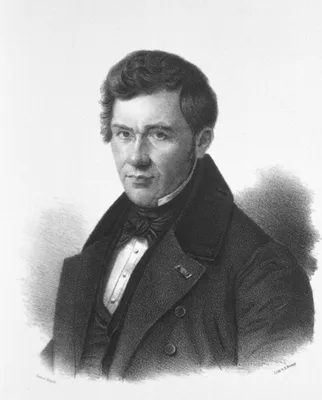
1473 STEINHÖWEL, Heinrich (Steinhäuel or Steinheil) (1412 – 1482)
Büchlein der Ordnung (Pest Regiment)
Steinhöwel was a Swabian author, humanist, and translator who was much inspired by the Italian Renaissance. His translations of medical treatises and fiction were an important contribution to early Renaissance Humanis…
GMN 5114 · https://historyofmedicine.com/id/6079
c. 1474 VELASCUS DE TARENTA (VALESCO,VALASCUS) (1382 – 1426)
De epidemia et peste.
One of the earliest works written on public health, and one of the earliest printed medical books. It was first printed in Arnaldus de Villanova’s De arte cognoscendi venena (Padua, 1473; Mantua, 1473). Above is the f…
GMN 5113 · https://historyofmedicine.com/id/6077
1478 –1482 JACME, Jean [Johannes Jacobi] ( – 1384)
Tractatus de pestilentia.
The most widely disseminated of all plague tracts from the time of the Black Death, of which 33 printed editions appeared in the 15th century. A French rhymed version appeared in 1476, but this version is very differe…
GMN 5115 · https://historyofmedicine.com/id/6082
1480 BERNARD DE GORDON, (Bernardus de Gordonio) (1250 – 1330)
Practica, seu Lilium medicinae.
Includes descriptions of plague, tuberculosis, scabies, epilepsy, anthrax, and leprosy. ISTC No. ib00447000.
GMN 8369 · https://historyofmedicine.com/id/10546
1483 JACME, Jean [Johannes Jacobi] ( – 1384)
Regimen contra pestilentiam [English] Treatise on the Pestilence.
The earliest medical work printed in English. It was published without printer's name or date, but has been attributed to the press of William Machlinia, in London, and estimated to have been published in 1483."Althou…
GMN 6812 · https://historyofmedicine.com/id/8975
1491 KETHAM, Johannes de [Johannes von Kirchheim] ( – 1490); TOSSIGNANO, Pietro da (PETRUS DE TUSSIGNANO) (1350 – 1401)
Fasciculus medicinae. Add: Petrus de Tussignano: Consilium pro peste evitanda.
A collection of short medical treatises which circulated widely in manuscript, some as early as the 13th century, and was perhaps attributed by the printers to its former owner, Johannes von Kirchheim, a professor of …
GMN 363 · https://historyofmedicine.com/id/322
1493 –1494 MONDINO DE LUZZI, [MUNDINUS] (1270 – 1326); KETHAM, Johannes de [Johannes von Kirchheim] ( – 1490); TOSSIGNANO, Pietro da (PETRUS DE TUSSIGNANO) (1350 – 1401); MANILIO, Sebastiano (Sebastianus Manilius); MORSIANUS, Petrus Andreas ( – 1501)
Fascicolo di medicina. Tr: Sebastianus Manilius. Add: Petrus de Tussignano: Consilium pro peste evitanda. Mundinus: Anatomia (Ed: Petrus Andreas Morsianus).
This Italian translation contains an entirely new and more extensive series of woodcuts and additional text. The dramatically improved and more realistic illustrations, which were reproduced in the numerous later edit…
GMN 363.1 · https://historyofmedicine.com/id/327
1548 ALEXANDER OF TRALLES [ἈΛΈΞΑΝΔΡΟΣ Ὁ ΤΡΑΛΛΙΑΝΌΣ; ALEXANDER TRALLIANUS] (525 – 605); RHAZES [MUHAMMAD IBN ZAKARIYĀ AL-RĀZĪ (PERSIAN: محمد زکریای رازی ] (854 – 925); GOUPYL, Jacques (Goupil) (1525 – 1564)
Alexandrū Trallianū Iatrū Biblia Dyokaideka. Alexandri Tralliani medici libri XII. Rhazae De pestilentia libellus ex Syrorum lingua in Graecam translatus. Edited by Jacques Goupil.
First edition of the Greek text of the works of Alexander of Tralles, together with an edition of Rhazes on the plague. Both texts were edited by Jacques Goupil. The work was issued by the distinguished scholar printe…
GMN 11111 · https://historyofmedicine.com/id/13307
1603
True bill of the vvhole number that hath died at London.
BILL OF MORTALITY
The collection, recording, and publishing of medical statistics in the form of Bills of Mortality began in England as a result of the epidemic of plague in 1592-93. The earliest surviving copy of the Bills of Mortalit…
GMN 6821 · https://historyofmedicine.com/id/8984
1646 DIEMERBROECK, Ysbrand van (Isbrand) (1609 – 1674)
De peste libri quatuor, truculentissimi morbi historiam ratione et experientiâ confirmatum exhibentes.
English translation, 1722. Digital facsimile of the Amsterdam 1665 edition revised and expanded by the author from Google Books at this link.
GMN 5117 · https://historyofmedicine.com/id/6084
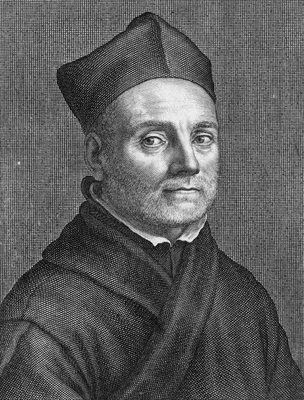
1658 KIRCHER, Athanasius (1602 – 1680)
Scrutinium physico-medicum contagiosae luis, quae pestis dicitur.
Kircher, a Jesuit scholar and polymath, not specifically trained in medicine, was probably the first to employ the microscope in investigating the cause of disease. He mentioned that the blood of plague patients was f…
GMN 2528.1 · https://historyofmedicine.com/id/3487
1665
London’s dreadful visitation, or, a collection of all the Bills of Mortality for the present year: beginning the 27th of December 1664, and ending the 19th of December following…By the Company of Parish Clerks of London.
BILLS OF MORTALITY
This is a valuable statistical record of the great plague of 1665. (No. 6052 in the Bibliotheca Osleriana.)
GMN 5119 · https://historyofmedicine.com/id/8855
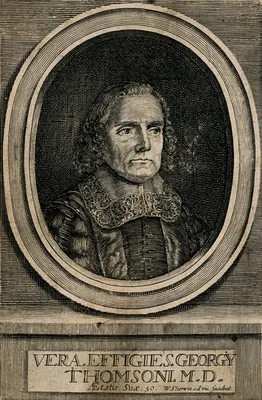
1665 THOMSON, George (1619 – 1676)
Loimologia: A consolatory advice, and some brief observations concerning the present pest.
Thomson was one of the few physicians who remained in London to treat patients during the plague of 1665. Digital facsimile from Google Books at this link.
GMN 13275 · https://historyofmedicine.com/id/15541
1666 THOMSON, George (1619 – 1676)
Loimotomia, or, The pest anatomized in these following particulars, Viz. 1. The material cause of the pest, 2. The efficient cause of the pest, 3. The subject part of the pest, 4. The signs of the pest, 5. An historical account of the dissections of a pestilential body by the author, and the consequences thereof, 6. Reflections and observations on the fore-said dissection, 7. Directions preservative and curative against the pest: Together with the authors apology against the calumnies of the Galenists, and a word to Mr. Nath. Hodges, concerning his late Vindiciae medicinae.
One of the earliest books that illustrated human dissection for a contagious disease. Digital text available from Early English Books Online at this link.
GMN 13276 · https://historyofmedicine.com/id/15542
1667 VINCENT, Thomas (1634 – 1678)
Gods terrible voice in the city of London wherein you have the narration of the two late dreadful judgements of plague and fire, inflicted by the Lord upon that city; the former in the year 1665. The latter in the year 1666
This edition of a plague tract by English puritan minister Thomas Vincent was the first medical or biological publication in North America. It was issued by printer Samuel Green, using a press in Cambridge, Massachuse…
GMN 6823 · https://historyofmedicine.com/id/8986
1672 HODGES, Nathaniel (1629 – 1688)
Λοιμόλόγια sive pestis nuperae apud populum Londinensem grassantis narratio historica.
Best medical record of the Great Plague of 1665. Hodges was physician to the City of London and the medical hero of the great epidemic. English translation by John Quincy, 1720: Loimologia, or, An historical account o…
GMN 5121 · https://historyofmedicine.com/id/6095
1677 HASEIAH, Laurentius [HASEIAC]
De postrema Melitensi lue praxis historica.
This work, recording the epidemic of plague in Malta in 1675-76, was the first medical work published by a Maltese.
GMN 5122 · https://historyofmedicine.com/id/8856
1694 ARRIETA, Filippo de
Raguaglio historico del contaggio occorso nella provincia di Bari negli anni 1690, 1691 e 1692.
Arrieta published two very early disease maps in this work showing locations of plague in the province of Bari, Italy, and his employment of troops to isolate those areas. Digital facsimile from the Internet Archive a…
GMN 10455 · https://historyofmedicine.com/id/12648
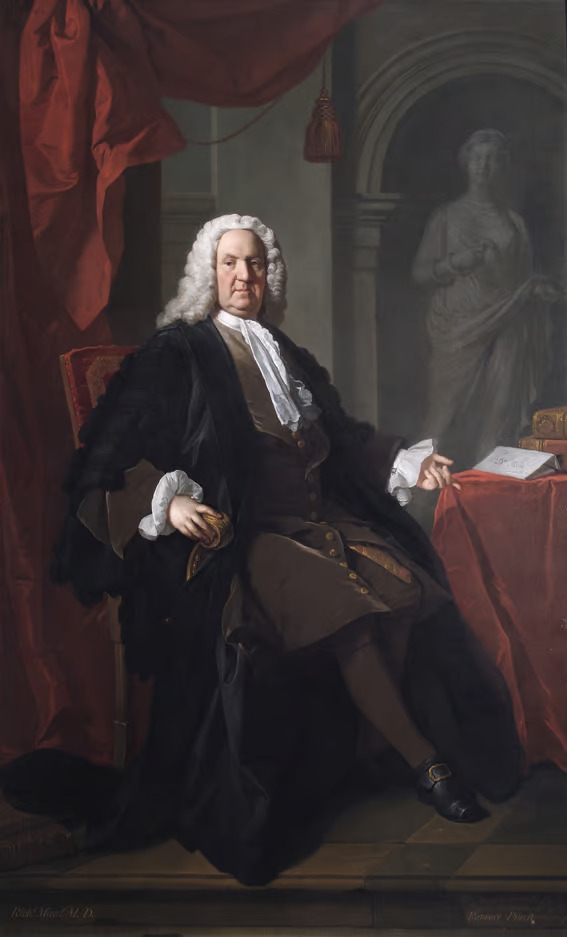
1720 MEAD, Richard (1673 – 1754)
A short discourse concerning pestilential contagion, and the methods to be used to prevent it.
In 1719 Mead was asked for advice concerning an outbreak of plague in Marseilles, and replied with the above tract of 59 pages, which has been called the first epidemiological report produced by a physician at the com…
GMN 5123 · https://historyofmedicine.com/id/6107
1721 BECKETT, William
A Collection of Very Valuable and Scarce Pieces relating to the last Plague in the year 1665. viz. I. Orders drawn up and published by the Lord Mayor and Aldermen of the City of London to prevent the spreading of the infection. II. An account of the first rise, progress, symptoms and cure of the Plague, being the substance of a letter from Doctor Hodges to a person of quality. III. Necessary directions for the prevention for cure of the plague, with divers remedies of small charge by the College of Physicians. IV. Reflections on the Weekly Bills of Mortality, so far as they relate to all the plagues which have happend in London from the year 1592 to the Great Plague in 1665, and some other particular diseases. With a preface shewing the usefulness of this collection: some errors of Dr. Mead, and his misrepresentations of Dr. Hodges and some authors. To which is added An Account of the plague at Naples in 1656, etc. [Compiled by William Beckett.].
Attributed to William Beckett by OCLC. Digital facsimile of the 1721 second edition from the Internet Archive at this link.
GMN 9521 · https://historyofmedicine.com/id/11707
1721 GAUDEREAU, Martin (1663 – 1743)
Relation des différentes espèces de peste qui reconnaissent les orientaux, des précautions & des remèdes qu'ils prennent pour empêcher la communication & le progrès; et ce que nous devons faire à leur exemple pour nous en préserver, & nous en guérir.
Gaudereau worked as a missionary in Turkey, Armenia, Persia, and India, facing plague outbreaks several times. In Turkey he almost succumbed to the plague, himself, but was cured using local remedies. These remedies a…
GMN 10651 · https://historyofmedicine.com/id/12844
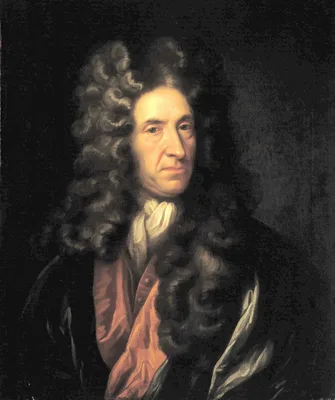
1722 DEFOE, Daniel (1660 – 1731)
A journal of the plague year: Being observatrions or memorials, of the most remarkable occurrences, as well publick as private, which happened in London during the last great visitation in 1665. Written by a citizen who continued all the while in London. Never made publick before.
Though he may be most widely remembered as a novelist--especially for Robinson Crusoe, Defoe was an English trader, writer of non-fiction as well as fiction, journalist, pamphleteer and spy. This book is an account of…
GMN 10199 · https://historyofmedicine.com/id/12388
1755 WESZPRÉMI, Stefan (1723 – 1799)
Tentamen de inoculandi peste.
Weszprémi proposed preventive inoculation against plague.
GMN 5124 · https://historyofmedicine.com/id/6111
1755 INGRAM, Dale (1710 – 1793)
An historical account of the several plagues that have appeared in the world since the year 1346. With an enquiry Into the present prevailing opinion, that the plague is a contagious distemper, capable of being transported in merchandize, from one country to another. In which the absurdity of such notions is exposed, and the arguments that have been made use of to support them, refuted. To which are added a particular account of the yellow fever, shewing its periodical appearance to be similar to the plague. Also observations on Dr Mackenzie's letters; read before the Royal Society on this subject. And an abstract of Capt. Isaac Clemens's voyage in the Sloop Fawey, from their arrival in the Mould of Algiers, to the sinking of her, on a supposition that the plague was on board her. Taken from his log-book
Digital facsimile from Google Books at this link.
GMN 10510 · https://historyofmedicine.com/id/12703
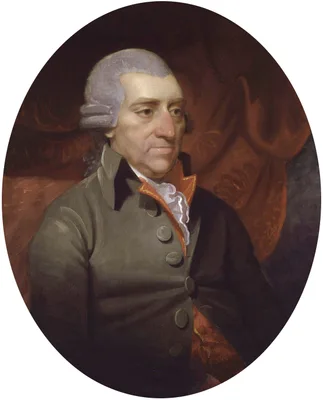
1789 HOWARD, John (1726 – 1790)
An account of the principle lazarettos in Europe. With various papers relative to the plague: Together with further observations on some foreign prisons and hospitals and additional remarks on the present state of those in Great Britain and Ireland.
Following on his work for the improvement of the conditions in prisons, Howard travelled extensively in Europe, carrying out an elaborate investigation into the conditions of hospitals. Digital facsimile of the second…
GMN 1601 · https://historyofmedicine.com/id/1721
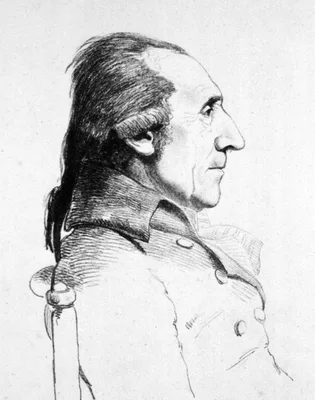
1791 RUSSELL, Patrick (1727 – 1805)
A treatise of the plague: Containing an historical journal, and medical account, of the plague, at Aleppo, in the years 1760, 1761, and 1762.
Digital facsimile from the Internet Archive at this link.
GMN 9522 · https://historyofmedicine.com/id/11708
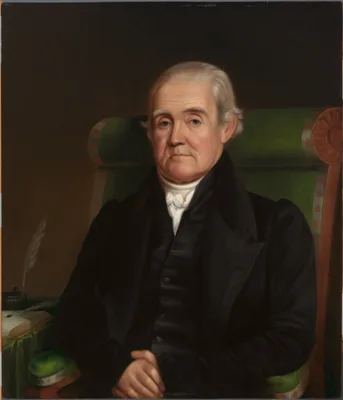
1799 WEBSTER, Noah (1758 – 1843)
A brief history of epidemic and pestilential diseases. 2 vols.
“The best general summary of epidemiological opinion at the beginning of the nineteenth century; and few works surpass it as a compendium of earlier speculations in this field”. (Winslow). A great linguist, Webster wa…
GMN 1675.1 · https://historyofmedicine.com/id/2338
1801 HEBERDEN, William Jr. (1767 – 1845)
Observations on the increase and decrease of different disease, and particularly of the plague.
Heberden observed that the number of deaths from dysentery sharply decreased over the 18th century, but that deaths attributed to apoplexy increased. Digital facsimile from the Internet Archive at this link.
GMN 8372 · https://historyofmedicine.com/id/10549
1801 ASSALINI, Paolo (1759 – 1846)
Observations sur la maladies appelée peste, le flux dissentérique, l'ophtalmie d'Égypte, et les moyens de s'en préserver. Avec des notions sur la fièvre jaune de Cadix, et les projet et plan d'un hôpital, pour le traitement maladies épidémiques et contagieuses.
At the time of publication Assalini, a military surgeon with Napoleon, characterized himself on the title page as "Docteur en Médecine et Chirugien de 1re classe de la Garde des Consuls..." Digital facsimile from well…
GMN 12053 · https://historyofmedicine.com/id/14261
1803 WITTMAN, William
Travels in Turkey, Asia-Minor, Syria, and across the desert into Egypt during the years 1799, 1800, and 1801, in company with the Turkish Army, and the British Military Mission.To which are annexed, observations on the plague, and on the diseases prevalent in Turkey, and a meteorological journal.
Wittman described the plague and other epidemics that afflicted both the Ottoman and British armies. In the Appendix he provided medical suggestions for treatment, together with a history of the plague. Digital facsim…
GMN 7367 · https://historyofmedicine.com/id/9539
1817 MACLEAN, Charles (1760 – 1824)
Results of an investigation, respecting epidemic and pestilential diseases; including researches in the Levant, concerning the plague. 2 vols.
"From 1815 to 1817 Maclean travelled in Spain, Turkey, and the Levant, and he studied the plague at the Greek Pest Hospital at Constantinople, in the service of the Levant Company. His experiences in the Levant and in…
GMN 8816 · https://historyofmedicine.com/id/10994
1821 TULLY, James D.
The history of plague, as it has lately appeared in the islands of Malta, Gozo, Corfu, Cephalonia, &c. detailing specific contagion of that disease, with particulars of the means adeopted for its eradication.
Concerns the Maltese plague,. 1813-1814. Digital facsimile from the Internet Archive at this link.
GMN 12757 · https://historyofmedicine.com/id/15003
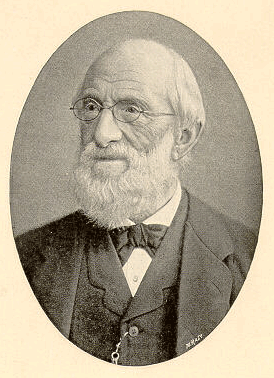
1865 HIRSCH, August (1817 – 1894); HECKER, Justus Friedrich Karl (1795 – 1850)
Die grossen Volkskrankheiten des Mittelalters. Historischpathologische Untersuchungen. Von J. F. K. Hecker. Gesammelt und in erweiteter Bearbeitung hrsg. von A. Hirsch.
A collection of essays on the Black Death, the dancing mania, and the English sweat, published 1832-34 and later in a collective English edition, The epidemics of the Middle Ages, 2 pts., London, 1833-35; reprinted 18…
GMN 1678 · https://historyofmedicine.com/id/2353
1882 PFEIFFER, Ludwig (1842 – 1921); RULAND, C
Pestilentia in nummis.
A study of medals and tokens relating to epidemics of plague and other infectious diseases.
GMN 5132 · https://historyofmedicine.com/id/6140
1884 LECHNER, Karl
Die grosse Sterben in Deutschland in den Jahren 1348 bis 1351 und die folgenden Pestepidemien bis zum Schluss des 14. Jahrhunderts.
Digital facsimile from the Internet Archive at this link.
GMN 9237 · https://historyofmedicine.com/id/11419
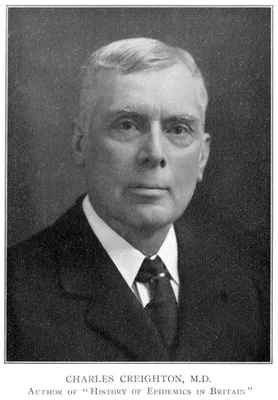
1891 –1894 CREIGHTON, Charles (1847 – 1927)
A history of epidemics in Britain. Vol. 1: From A. D. 664 to the extinction of plague. Vol. 2: From the extinction of plague to the present time.
A classical contribution to modern epidemiology, of which Creighton may be said to have been the founder. Reprinted with new introductory material, 1965. Digital facsimile from the Internet Archive at this link.
GMN 1680 · https://historyofmedicine.com/id/2363
1894 BOGHURST, William (1631 – 1685); PAYNE, Joseph Frank (1840 – 1910)
Loimographia. An account of the great plague of London in the year 1665
This work was written in 1666 and first published as above. Boghurst, an apothecary, did good work during the great plague; in his book he differentiated plague from typhus. Payne’s introduction to the book contains s…
GMN 5120 · https://historyofmedicine.com/id/6092
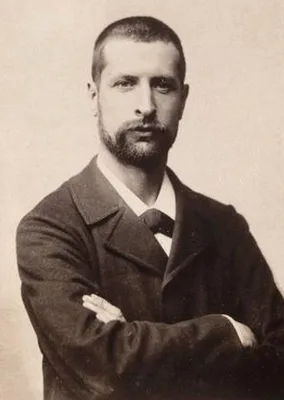
1894 YERSIN, Alexandre Émile Jean (1863 – 1943)
La peste bubonique à Hong-Kong.
Yersin discovered the plague bacillus Pasteurella (Yersinia) pestis, isolating it from excised buboes. He published the first account of this organism. Preliminary note in C. R. Acad. Sci. (Paris), 1894, 119, 356.
GMN 5125 · https://historyofmedicine.com/id/6113
1894 RENNIE, Alexander (1859 – 1940)
The plague in the East.
Rennie appears to be the first seriously to support the theory of transmission of the plague bacillus by rats and to present evidence in support of that theory.
GMN 5126 · https://historyofmedicine.com/id/6115
1895 YERSIN, Alexandre Émile Jean (1863 – 1943); CALMETTE, Léon Charles Albert (1863 – 1933); BORREL, Amédée (1867 – 1936)
La peste bubonique. By Alexandre Yersin with L.C.A. Calmette and A. Borrel.
Successful inoculation of animals with anti-plague vaccine.
GMN 5127 · https://historyofmedicine.com/id/6116
1897 OGATA, Masanori (1852 – 1919)
Ueber die Pestepidemie in Formosa.
Ogata considered the flea (principally Xenopsylla cheopis) to be the principal, if not the sole, vector of bubonic plague infection.
GMN 5128 · https://historyofmedicine.com/id/6130
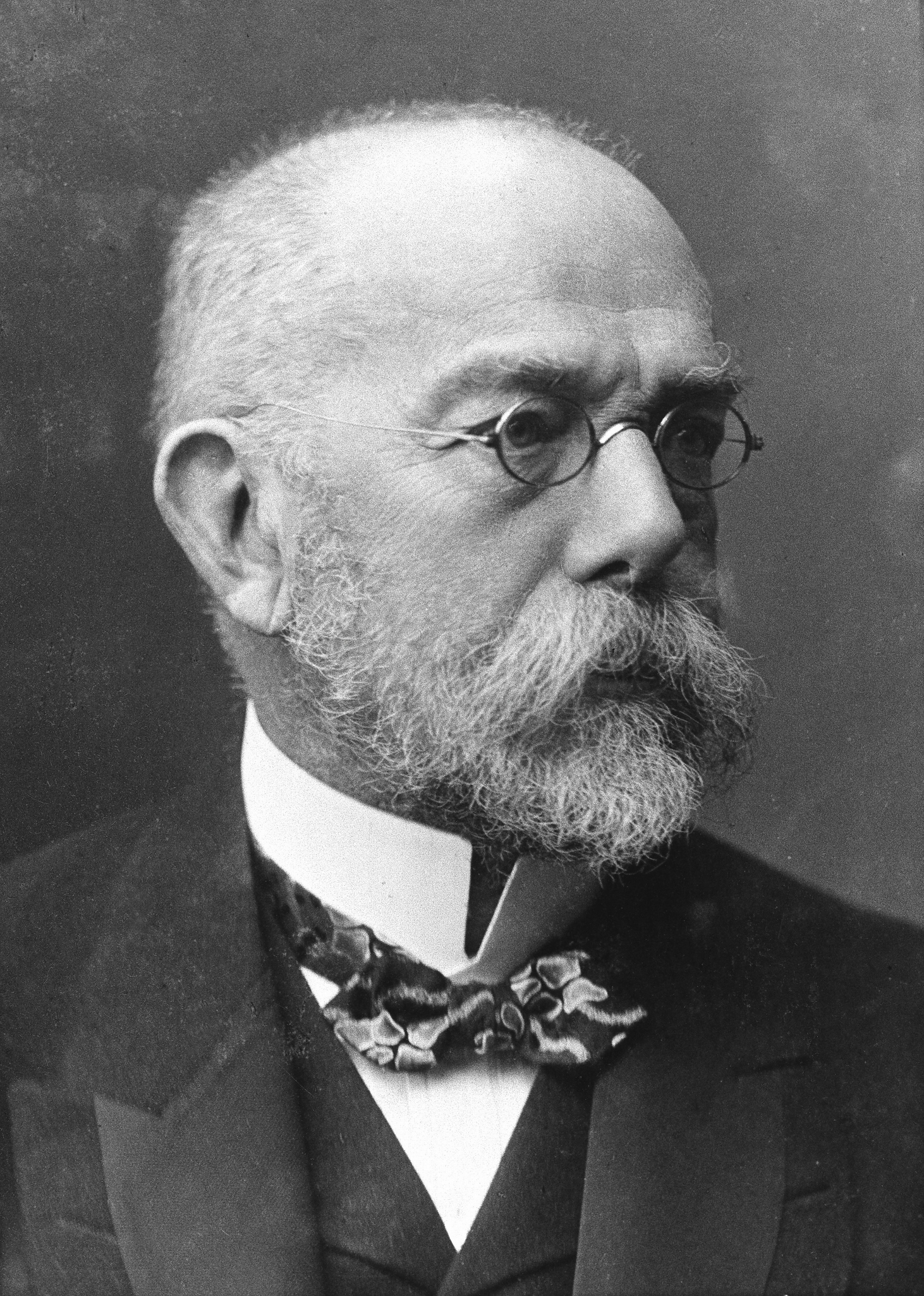
1898 KOCH, Robert Heinrich Hermann (1843 – 1910)
Reise-Bericht über Rinderpest, Bubonenpest in Indien und Afrika, Tsetse-oder Surrakrankheit, Texasfieber, tropische Malaria, Schwarzwasserfieber.
GMN 2457 · https://historyofmedicine.com/id/2986
1898 SIMOND, P. L.
La propagation de la peste.
Simond provided substantial evidence to support Ogata that fleas transmitted plague from rat to man.
GMN 5128.1 · https://historyofmedicine.com/id/6132
1898 –1900 GHON, Anton (1866 – 1936); ALBRECHT, Heinrich; MÜLLER, Hermann Franz (1866 – 1898)
Über die Beulenpest in Bombay im Jahre 1897. Gesamtbericht von der Kaiserlichen Akademie der Wissenschaften in Wien zur Studium der Beulenpest nach Indien entsendeten Commission. 2 vols. in 3.
Müller died at the age of 32 as a result of exposure to this plague.
GMN 11394 · https://historyofmedicine.com/id/13593
1901 HEITZ, Paul
Pestblätter des XV. Jahrhunderts. Hrsg. von P. Heitz, mit einleitendem Text von W.L. Scheiber.
GMN 5135 · https://historyofmedicine.com/id/8859
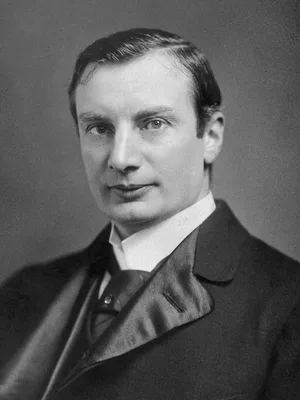
1906 HAFFKINE, Waldemar Mordecai Wolff (1860 – 1930)
Les inoculations antipesteuses.
Haffkine developed an anti-bubonic plague vaccine (killed bouillon cultures), for use in man.
GMN 5129 · https://historyofmedicine.com/id/6133
1908 –1912 STICKER, Georg (1860 – 1960)
Abhandlungen aus der Seuchengeschichte und Seuchenlehre. Pt. 1: Die Pest. Pt. 2: Die Cholera. 2 vols. in 3.
GMN 1681 · https://historyofmedicine.com/id/2368
1909 TODD, Frank Morton
Eradicating plague in San Francisco. Report of the Citizen's Health Committee and an account of its work. With brief descriptions of the measures taken, copies of ordinances in aid of sanitation, articles by sanitarians on the nature of plague and the best means of getting rid of it, facsimiles of circulars issued by the committee and a list of subscribers to the health fund. March 31, 1909. Prepared by Frank Morton Todd, historian for the Committee.
Digital facsimile from the Internet Archive at this link.
GMN 10406 · https://historyofmedicine.com/id/12599
1911 GAFFAREL, Paul Louis Jacques (1843 – 1920); DURANTY, Marquis de
La peste de 1720 à Marseille et en France d’après des documents inédits.
GMN 5137 · https://historyofmedicine.com/id/6149
1912 STRONG, Richard Pearson (1872 – 1948)
Report of the International Plague Conference held at Mukden [Shenyang], April, 1911.
Report on the epidemic of pneumonic plague that raged in Manchuria and north China during the winter months of 1910-11, causing the death of nearly 50,000 people. This was the first outbreak of epidemic pneumonic plag…
GMN 12582 · https://historyofmedicine.com/id/14821