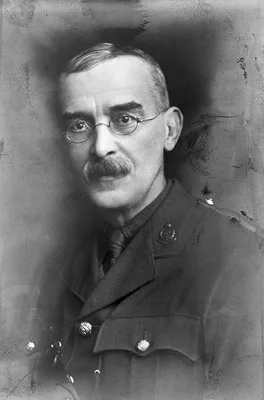
1803 WINTERBOTTOM, Thomas Masterman (1765 – 1859)
An account of the native Africans in the neighbourhood of Sierra Leone; to which is added, an account of the present state of medicine among them. 2 vols.
In his travels in Africa, Winterbottom, physician to the Colony of Sierra Leone (now Republic of Sierra Leone) on the west coast of Africa, saw sleeping sickness, which he described in vol. 2, pp. 29-31, as a species …
GMN 5266 · https://historyofmedicine.com/id/8561
1857 LIVINGSTONE, David (1813 – 1873)
Missionary travels and researches in South Africa.
Livingstone gave an accurate account of the tsetse fly Glossina morsitans and of the disease in cattle following its bite (see pp. 80-83; picture of the tsetse fly on p. 571). In his time the bite of the fly was thoug…
GMN 5269 · https://historyofmedicine.com/id/8570
1858 LIVINGSTONE, David (1813 – 1873)
Arsenic as a remedy for the tsetse bite.
Livingstone was probably the first to administer arsenic for the treatment of “nagana”, a disease of horses caused by trypanosomes. This followed a suggestion by James Braid. Digital facsimile from PubMedCentral at th…
GMN 5270 · https://historyofmedicine.com/id/8572
1895 BRUCE, Sir David (1855 – 1931)
Preliminary report on the tsetse fly disease or nagana, in Zululand.
In 1895 Bruce found that nagana, the tsetse fly disease of Zululand, was due to a trypanosome (T. brucei). He described a hematozoon in the blood of the affected animals that had not been previously described. Digital…
GMN 5273 · https://historyofmedicine.com/id/8580
1896 BRUCE, Sir David (1855 – 1931)
Further report on the tsetse fly disease or nagana, in Zululand.
In this more-detailed follow-up to his "preliminary" paper of 1895 published in Durban, South Africa, Bruce provided definitive proof that the Trypanosoma was the cause of nagana, and the tsetse fly was the vector of …
GMN 11077 · https://historyofmedicine.com/id/13273
1902 DUTTON, Joseph Everett (1877 – 1905)
Preliminary note upon a trypanosome occurring in the blood of man.
Dutton was the first to recognize human trypanosomiasis. He saw Forde’s patient (see No. 5274) and named the trypanosome T. gambiense. Sleeping sickness itself has been referred to as “Dutton’s disease”. The first ann…
GMN 5275 · https://historyofmedicine.com/id/8584
1903 CASTELLANI, Aldo (1877 – 1971)
On the discovery of a species of trypanosoma in the cerebrospinal fluid of cases of sleeping sickness.
While in Uganda, Castellani discovered T. gambiense in human cerebrospinal fluid. A paper in Notes Rec. roy. Soc., 1973, 23, 93-110, discounts Castellani’s claim that although he first discovered trypanosomes in the c…
GMN 5276 · https://historyofmedicine.com/id/8585
1903 –1919 BRUCE, Sir David (1855 – 1931); NABARRO, David N.
Reports of the Sleeping Sickness Commission of the Royal Society, 1903-1912. 17 pts.
Bruce and D.N. Nabarro were sent to Africa by the Royal Society to study sleeping sickness, and in their report they showed that the tsetse fly was the vector of trypanosomiasis. They also found that Gambia fever and …
GMN 5277 · https://historyofmedicine.com/id/8587
1904 LAVERAN, Charles Louis Alphonse (1845 – 1922); MESNIL, Félix (1868 – 1938)
Trypanosomes et trypanosomiases.
Laveran and Mesnil discovered that trypanosomes could be maintained indefinitely in rats and mice by serial passage.
GMN 5278 · https://historyofmedicine.com/id/8590
1905 THOMAS, Harold Wolferstan (1875 – 1931); BREINL, Anton (1880 – 1944)
Report on trypanosomes, trypanosomiasis, and sleeping sickness, being an experimental investigation into their pathology and treatment.
Thomas and Breinl discovered that arsanilic acid, was more potent in the treatment of laboratory trypanosomiasis than arsenic in inorganic form. As a crystalline powder it was introduced medically as Atoxyl. Thomas an…
GMN 5279 · https://historyofmedicine.com/id/8592
1906 NICOLLE, Maurice (1862 – 1932); MESNIL, Félix (1868 – 1938)
Traitement des trypanosomiases par les “couleurs de benzidine”.
Introduction of trypan-blue in the treatment of trypanosomiasis. Second paper by Mesnil and Nicolle.
GMN 5280 · https://historyofmedicine.com/id/6339
1907 EHRLICH, Paul (1854 – 1915)
Chemotherapeutische Trypanosomen-Studien.
The first account of induced microbial drug resistance. Ehrlich encountered induced drug resistance in microbes while researching arsenical preparations as cures for sleeping sickness and other trypanosome-caused illn…
GMN 5281 · https://historyofmedicine.com/id/6342
1909 KLEINE, Friedrich Karl (1861 – 1950)
Positive Infektionsversuche mit Trypanosoma brucei durch Glossina palpalis.
Glossina was believed to transmit Trypanosoma mechanically to the new host until Kleine showed that the latter undergoes a developmental cycle in Glossina. English translation in Kean (No. 2268.1).
GMN 5283.1 · https://historyofmedicine.com/id/6347
1909 LEVADITI, Constantin (1874 – 1953)
Le mécanisme d’action des dérivés arsenicaux dans les trypanosomiases.
A study of the action of atoxyl and arsacétine.
GMN 5284 · https://historyofmedicine.com/id/6349
1909 THIMM, C. A.
Bibliography of trypanosomiasis.
Subject index…with additional references and corrections, 1910.
GMN 5289.2 · https://historyofmedicine.com/id/6376
1910 STEPHENS, John William Watson (1865 – 1946); FANTHAM, Harold Benjamin (1875 – 1937)
On the peculiar morphology of a trypanosome from a case of sleeping sickness and the possibility of its being a new species.
T. rhodesiense discovered.
GMN 5285 · https://historyofmedicine.com/id/6351
1958 WIJERS, D. J. B.
Factors that may influence the infection rate of Glossina palpalis with Trypanomosoma gambiense. 1. The age of the fly at the time of the infected feed.
Wijers showed that the tsetse fly is infected during its first or second blood meal, but not afterwards, information of considerable importance in determining the criteria for the transmission of trypanosomiasis.
GMN 5289.1 · https://historyofmedicine.com/id/6373
1967 LANGLANDS, Bryan Wooleston (1928 – 1989)
The sleeping sickness epidemic of Uganda 1900-1920: A study in historical geography.
GMN 10679 · https://historyofmedicine.com/id/12872
1992 LYONS, Maryinez
The colonial disease: A social history of sleeping sickness in colonial Zaire, 1900-1940.
GMN 9264 · https://historyofmedicine.com/id/11446
2005 BERRIMAN, Matthew; GHEDIN, Elodie (1967 – ); HERTZ-FOWLER, Christiane; ET AL
The genome of the African trypanosome Trypanosoma brucei.
Genome of the parasite that causes Sleeping Sickness. (Thanks to Juan Weiss for this reference and its interpretation.)
GMN 11339 · https://historyofmedicine.com/id/13537
2014 TSIAMIS, George; FALCHETTO, Marco; BRELSFOARD, Corey; ET AL
Presence of extensive Wolbachia symbiont insertions discovered in the genome of its host Glossina morsitans morsitans.
Order of authorship in the original publication: Brelsfoard, Tsiamis, Falchetto....The authors suggested that infection by Wolbachia may give a reproductive advantage to the fly that carries the parasite causing Sleep…
GMN 11341 · https://historyofmedicine.com/id/13539