1598 WATESON, George
The cures of the diseased, in remote regions. Preventing mortalitie, incident in forraine attempts, of the English nation.
This book is the earliest work in English devoted to tropical medicine. It discusses sunstroke, tabardilla (possibly typhus or yellow fever), prickly heat, dysentery, erysipelas and scurvy. Facsimile reproduction, wit…
GMN 2262 · https://historyofmedicine.com/id/2805
1623 ABREU, Aleixo de (1568 – 1630)
Tratado de las siete enfermedades, de la inflammacion universal del higado, zirbo, pyloron, y riñones, y de la obstrucion, de la satiriasi, de la terciana y febre maligna, y passion hipocondriaca. Lleva otros tres tratados, del mal de Loanda, del guzano, y de las fuentes y sedales.
The first important work on tropical diseases. Only six copies of the original edition of this book are known. It includes full accounts of malaria, typhoid, and scurvy, and the first accurate descriptions of yellow f…
GMN 2262.1 · https://historyofmedicine.com/id/2808
1624 SPIEGHEL, Adriaan van der [SPIGELIUS] (1578 – 1625)
De semitertiana libri quatuor.
First extensive account of malaria.
GMN 5229 · https://historyofmedicine.com/id/7857
1656 BADO, Sebastiano [Baldi, Baldo] (1610 – 1676)
Cortex Peruviae redivivus, profligator febrium, assertus ab impugnationibus Melippi Protimi ...
The first book on Peruvian bark or cinchona (chinchona) in the treatment of malaria.
GMN 7620 · https://historyofmedicine.com/id/9792
1663 BADO, Sebastiano [Baldi, Baldo] (1610 – 1676)
Anastasis corticis Peruviae, seu chinae defensio
A defence of the virtues of Jesuit's bark or Peruvian bark (cinchona, chinchona), the most celebrated specific remedy for malaria. It was obtained from the bark of several species of the genus Cinchona, of the Rubiace…
GMN 1826 · https://historyofmedicine.com/id/7875
1667 DU TERTRE, Jean Baptiste (1610 – 1687)
Histoire générale des Antilles habités par les Français. Tom. 1.
Du Tertre, a priest, described (pp. 81, 99, 423) the outbreaks of yellow fever at Guadeloupe in 1635, 1640, and 1648.
GMN 5450 · https://historyofmedicine.com/id/7513
1694 ROSA, João Ferreira da (Ferreyra da Rosa)
Trattado unico da constituiçam pestilencial de Pernambuco, offerecido a ElRey N.S. por ser servido ordenar por seu Governador aos Medicos da America, que assistem aonde ha este contagio, que o compusessem para se conferirem pelos Coripheos da Medicina aos dictames com que he trattada esta pestilencial febre.
The first scientific description of yellow fever in Brazil by the first European physician to treat the disease in Brazil, and perhaps in all of Latin America. It includes the description of the first autopsy of a yel…
GMN 8930 · https://historyofmedicine.com/id/11108
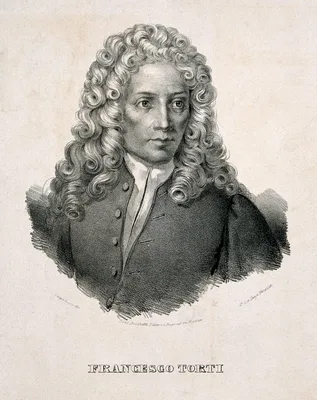
1712 TORTI, Francesco (1658 – 1741)
Therapeutice specialis ad febres quasdam pemiciosas, inopinato, ac repente lethales, una vera china china, peculiare methodo ministrata, sanabiles
Torti’s work finally established the specific nature of cinchona bark. His demonstration of its effectiveness in periodic over continuous fevers finally overthrew the doctrine of the common origin of all fevers. He is…
GMN 5231 · https://historyofmedicine.com/id/7866
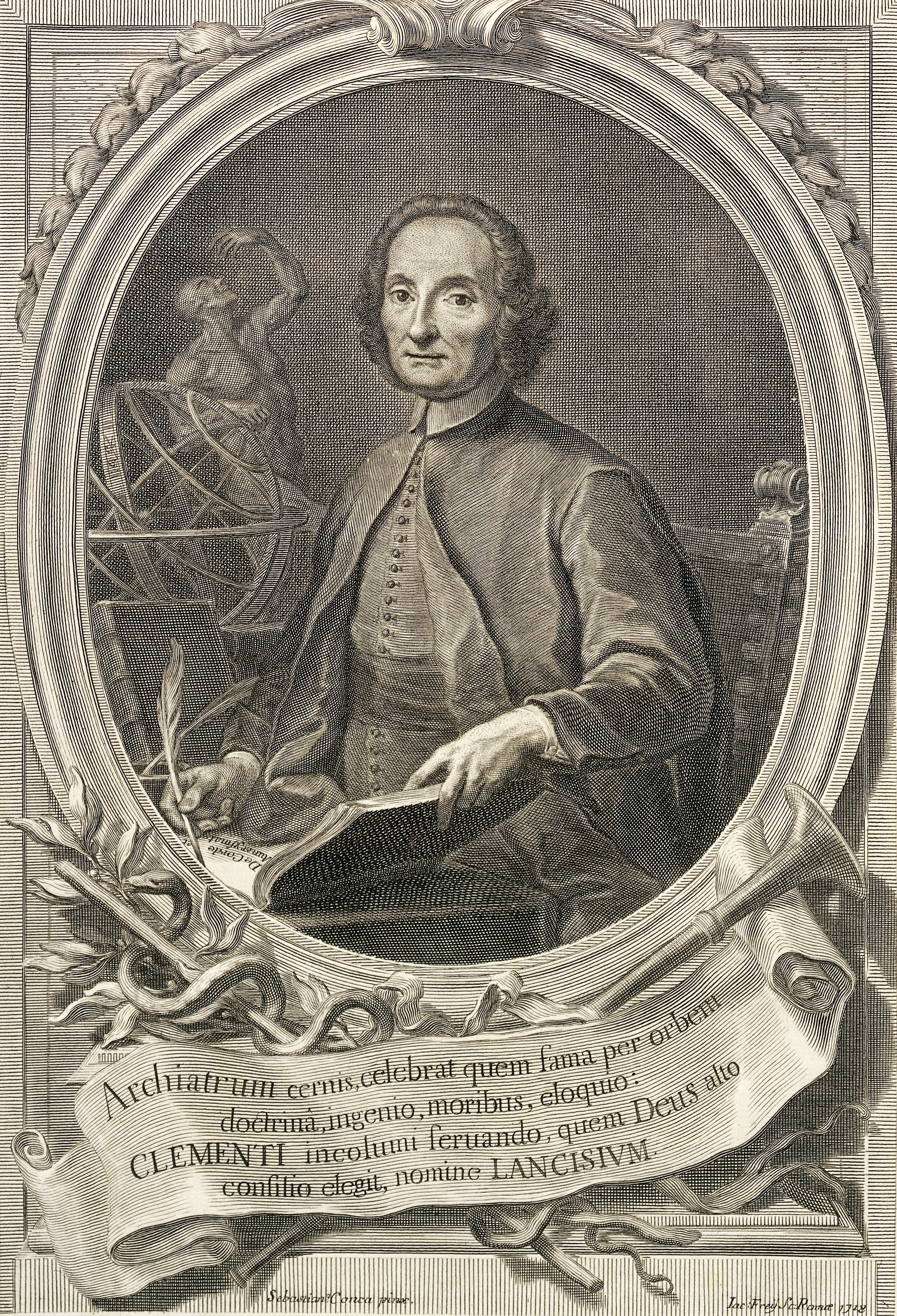
1717 LANCISI, Giovanni Maria (1654 – 1720)
De noxiis paludum effluviis, eorumque remediis.
Lancisi suggested that since malaria disappears after drainage it was due to some sort of poison emanating from marshes and possibly transmitted by mosquitoes. He planned a drainage scheme for marshy regions. His work…
GMN 5232 · https://historyofmedicine.com/id/7877
1755 INGRAM, Dale (1710 – 1793)
An historical account of the several plagues that have appeared in the world since the year 1346. With an enquiry Into the present prevailing opinion, that the plague is a contagious distemper, capable of being transported in merchandize, from one country to another. In which the absurdity of such notions is exposed, and the arguments that have been made use of to support them, refuted. To which are added a particular account of the yellow fever, shewing its periodical appearance to be similar to the plague. Also observations on Dr Mackenzie's letters; read before the Royal Society on this subject. And an abstract of Capt. Isaac Clemens's voyage in the Sloop Fawey, from their arrival in the Mould of Algiers, to the sinking of her, on a supposition that the plague was on board her. Taken from his log-book
Digital facsimile from Google Books at this link.
GMN 10510 · https://historyofmedicine.com/id/12703
1780 BYLON, David
Korte aantekening wegens eene algemeene ziekte, doorgaans genaamd knokkel-koorts.
Bylon described an epidemic of dengue which appeared in the Dutch East Indies in 1779, the first definite description of the disease. O. H. P. Pepper published a photographic reproduction of the article in Ann. med. H…
GMN 5469 · https://historyofmedicine.com/id/7605
1784 HENDY, James
A treatise on the glandular disease of Barbadoes: Proving it to be seated in the lymphatic system.
Digital facsimile from Google Books at this link.
GMN 13467 · https://historyofmedicine.com/id/15741
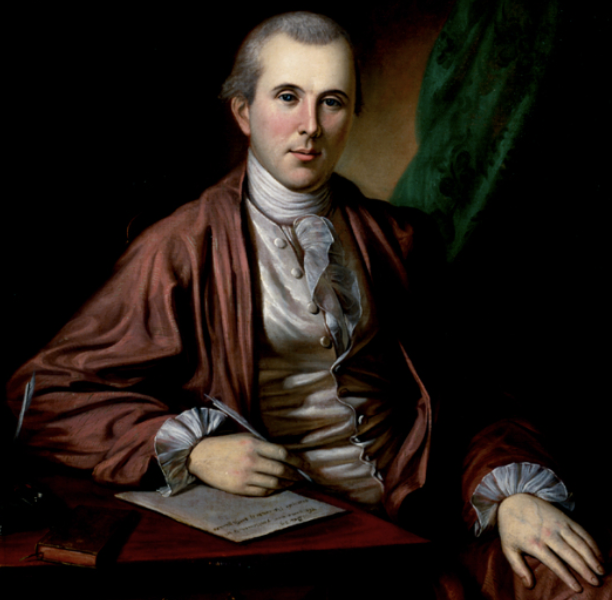
1789 RUSH, Benjamin (1745 – 1813)
An account of the bilious remitting fever. In his Medical inquiries and observations, 1, 104-21
One of the first important accounts of dengue (“breakbone fever”). Rush described the Philadelphia outbreak of 1780.
GMN 5470 · https://historyofmedicine.com/id/7607
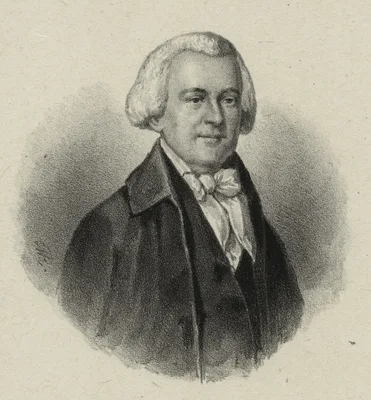
1793 CAREY, Mathew (1760 – 1839)
A short account of the malignant fever, lately prevalent in Philadelphia: With a statement of the proceedings that took place on the subject in different parts of the United States.
Carey was a Philadelphia publisher and economist rather than a physician. In this little book, which passed through four editions in a few months, Carey left a graphic description of the great yellow fever epidemic of…
GMN 5451 · https://historyofmedicine.com/id/7515
1793 CURRIE, William (1754 – 1828)
A description of the malignant, infectious fever prevailing at present in Philadelphia; with an account of the means to prevent infection, and the remedies and method of treatment, which have been found most successful.
Digital facsimile from the Internet Archive at this link.
GMN 5452 · https://historyofmedicine.com/id/7523
1794 RUSH, Benjamin (1745 – 1813)
An account of the bilious remitting yellow fever, as it appeared in the city of Philadelphia in the year 1793.
Benjamin Rush was the most eminent figure in Philadelphia medicine in his day. His description of the yellow fever epidemic of 1793 is classic. He did magnificent work in treating the sick during the epidemic and in p…
GMN 5453 · https://historyofmedicine.com/id/7528
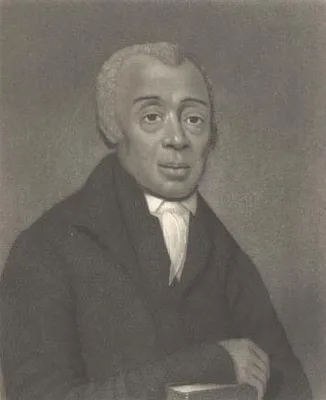
1794 JONES, Absolom (1746 – 1818); ALLEN, Richard (1760 – 1831); CLARKSON, Matthew (1733 – 1800)
A narrative of the proceedings of the black people during the late awful calamity in Philadelphia, in the year 1793: and a refutation of some censures thrown upon them in some late publications.
A refutation of slights by Matthew Carey in his Short account of the malignant fever, lately prevalent in Philadelphia (1793; No. 5451) to the important contributions of black people, many of whom served as nurses and…
GMN 5453.1 · https://historyofmedicine.com/id/7530
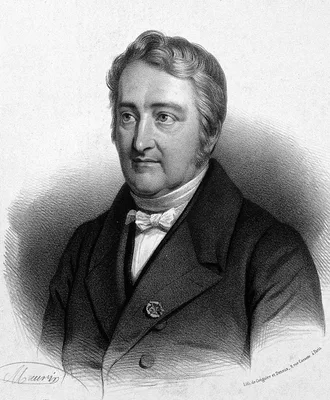
1794 DEVÈZE, Jean (1753 – 1829)
An enquiry into, and observations upon the causes and effects of the epidemic disease, which raged in Philadelphia from the month of August till towards the middle of December, 1793.
Text in English and French on facing pages. Digital facsimile from the Medical Heritage Library, Internet Archive at this link.
GMN 9387 · https://historyofmedicine.com/id/11570
1795 CHISHOLM, Colin (1755 – 1825)
An essay on the malignant pestilential fever introduced into the West Indian Islands from Boullam, on the coast of Guinea, as it appeared in 1793 and 1794.
Chisholm, "Surgeon to his Majesty's Ordnance in Grenada," was apparently the first to observe the mode of transmission of the Guinea worm, Dracunculus medinensis. Chishom was also one of the first to recognize that th…
GMN 5336.3 · https://historyofmedicine.com/id/6710
1797 SEAMAN, Valentine (1770 – 1817)
An inquiry into the cause of the prevalence of the yellow fever in New-York.
Includes four early plot maps; Seaman was one of the first to create maps that attempted to show the spread of contagious disease.
GMN 7687 · https://historyofmedicine.com/id/9859
1799 LINING, John (1708 – 1760)
A description of the American yellow fever, which prevailed at Charleston, in South Carolina, in the year 1748.
Digital facsimile from U.S. National Library of Medicine at this link.
GMN 10511 · https://historyofmedicine.com/id/12704
1801 ASSALINI, Paolo (1759 – 1846)
Observations sur la maladies appelée peste, le flux dissentérique, l'ophtalmie d'Égypte, et les moyens de s'en préserver. Avec des notions sur la fièvre jaune de Cadix, et les projet et plan d'un hôpital, pour le traitement maladies épidémiques et contagieuses.
At the time of publication Assalini, a military surgeon with Napoleon, characterized himself on the title page as "Docteur en Médecine et Chirugien de 1re classe de la Garde des Consuls..." Digital facsimile from well…
GMN 12053 · https://historyofmedicine.com/id/14261
1802 GILBERT, Nicolas-Pierre (1751 – 1814); TRABUC, Michel; BONAMY, Louis Esprey
Instruction des Officiers de Santé en Chef de l'Armée sur les maladies internes et externes des troupes à Sainte-Domingue, et sur leur traitement.
The date of this undated work has been inferred. The 40-page pamphlet issued during the early stages of the French expedition to the island, provided instructions by the chief medical officers of the army for medical …
GMN 13356 · https://historyofmedicine.com/id/15627
1803 GILBERT, Nicolas-Pierre (1751 – 1814)
Histoire médicale de l'Armée Française, a Saint-Domingue, en l'an dix; ou mémoire sur la fièvre jaune, avec un apperçu de la topographie médicale de cette colonie.
Digital facsimile from Google Books at this link.
GMN 9657 · https://historyofmedicine.com/id/11844
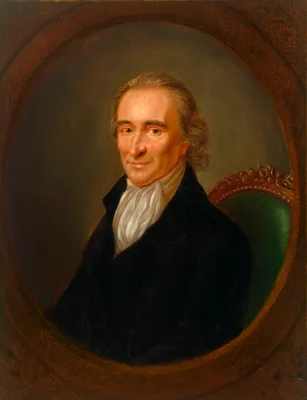
1807 PAINE, Thomas (1737 – 1809)
Of the cause of the yellow fever; and the means of preventing it in places not yet infected with it: Addressed to the Board of Health in America.
This 13-page pamphlet was probably the only medical publication by the English-born American political activist, philosopher, political theorist, and revolutionary, Thomas Paine. Paine's essay was first published in n…
GMN 12875 · https://historyofmedicine.com/id/15122
1814 CHARAULT, C. R.
Coup-d'oeil sur Saint-Domingue; observations sur le caractère des négres et sur la fièvre jaune; moyens de recouvrer cette colonie, et de se préserver des maladies qui y règnent.
Digital facsimile from patrimoines-martinique.org at this link.
GMN 8219 · https://historyofmedicine.com/id/10395
1819 PASCALIS OUVIERE, Felix (1762 – 1833)
A statement of the occurrences during a malignant yellow fever in the city of New-York, in the summer and autumnal months of 1819; and of the check given to its progress, by the measures adopted by the Board of Health. With a list of cases and names of sick persons, and a map of their places of residence within the infected and proscribed limits: With a view of ascertaining, by comparative arguments, whether the distemper was engendered by domestic causes, or communicated by human contagion from foreign ports.
Pascalis mapped this yellow fever outbreak using a method similar to Valentine Seaman, but with a more extensive and detailed list of cases. A condensation of his 60-page pamphlet with a reissue of his map appeared in…
GMN 10456 · https://historyofmedicine.com/id/12649
1820 PELLETIER, Pierre Joseph (1788 – 1842); CAVENTOU, Joseph Bienaimé (1795 – 1877)
Recherches chimique sur les quinquinas.
Isolation of quinine.
GMN 5233 · https://historyofmedicine.com/id/7879
1820 PARISET, Étienne (1770 – 1847); MAZET, André (1793 – 1821)
Observations sur la fièvre jaune, faites à Cadix, en 1819 par MM. Pariset et Mazet, docteurs en médecine de la Faculté de Paris, et rédigées par M. Pariset.
Pariset and Mazet distinguished themselves combating an outbreak of yellow fever in Spain. Pariset's colleague was apparently not involved with publication of the book, and died in a yellow fever outbreak in Barcelona…
GMN 8948 · https://historyofmedicine.com/id/11127
1822 HARDIE, James (1758 – 1826)
An account of the yellow fever which occurred in the city of New York, in the year 1822, to which is prefixed a brief sketch of the different pestilential diseases, with which this city was afflicted, in the years 1798, 1799, 1803 & 1805, with the opinion of several of our most eminent physicians, respecting the origin of the disease, its prevention and cure.To which is added a correct list of all the deaths by yellow fever during the late season.
Digital facsimile from the Internet Archive at this link.
GMN 9523 · https://historyofmedicine.com/id/11709
1825 HEUSTIS, Jabez Wiggins (1784 – 1841)
Medical facts and inquiries, respecting the causes, nature, prevention and cure of fever: more expressly in relation to the endemic fevers of summer and autumn in the southern states: Together with a history of the bilious remitting fever of Alabama, as it appeared in Cahawba and its vicinity in the summers and autumns of 1821 and 1822.
Digital facsimile from the U.S. National Library of Medicine at this link.
GMN 10518 · https://historyofmedicine.com/id/12711
1839 DICKSON, Samuel Henry (1798 – 1872)
On dengue; its history, pathology, and treatment.
GMN 5471 · https://historyofmedicine.com/id/7610
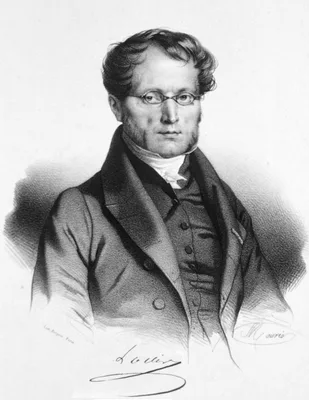
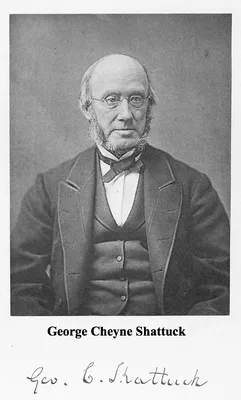
1839 TROUSSEAU, Armand (1801 – 1867); LOUIS, Pierre Charles Alexandre (1787 – 1872); SHATTUCK, George Cheyne (1813 – 1893)
Anatomical, pathological and therapeutic researches on the yellow fever of Gibraltar of 1828, by P. Ch. A. Louis. From observations taken by himself and M. Trousseau as memebers of the French Commission at Gibraltar. Translated from the manuscript by G. C. Shattuck.
The Translator's Introduction begins as follows: "The work now presented to the public has heretofore existed in manuscript only. Circumstances have delayed its publication in France, and some years may yet elapse bef…
GMN 12011 · https://historyofmedicine.com/id/14219
1839 SMITH, Ashbel (1805 – 1886)
An account of the yellow fever which appeared in the city of Galveston, Republic of Texas, in the autumn of 1839, with cases and dissections,
In 1839 Smith treated the victims of a yellow fever epidemic in Galveston while writing reports about the treatment of the disease in the Galveston News. As a result of this experience, he wrote the first treatise on …
GMN 13896 · https://historyofmedicine.com/id/16188
1842 BARTLETT, Elisha (1804 – 1855)
The history, diagnosis, and treatment of typhoid and of typhus fever: With an essay on the diagnosis of bilious remittent and of yellow fever.
Bartlett's book contains the first complete description of typhoid fever in English. In 1908 Osler wrote, "The chief interest of the work today lies in the remarkably accurate picture which is given of typhoid fever--…
GMN 10064 · https://historyofmedicine.com/id/12253
1843 MCWILLIAM, James Ormiston (1808 – 1862)
Medical history of the expedition to the Niger during the years 1841-42, comprising an account of the fever which led to its abrupt termination.
McWilliam included a history of yellow fever, pathology, description of symptoms, sequences, causes, treatment. He also described the state of medicine among the Africans. He specifically described the ventilation of …
GMN 10737 · https://historyofmedicine.com/id/12932
1844 SYDENHAM, Thomas (1624 – 1689); GREENHILL, William Alexander (1814 – 1894)
Thomae Sydenham, M. D., Opera omnia. Edidit Gulielmus Alexander Greenhill.
Sydenham has been called the “Father of English Medicine”. His reputation rests on his first-hand accounts of such conditions as the malarial fevers of his times, gout, scarlatina, measles, etc. A better edition of th…
GMN 63 · https://historyofmedicine.com/id/991
1844 SAPPINGTON, John S. (1776 – 1856)
The theory and treatment of fevers. Revised and corrected by Ferdinando Stith.
The first medical treatise published in Missouri and the first medical treatise published west of the Mississippi River. "John Sappington provided medical services, was a financial lender, and imported and exported go…
GMN 10446 · https://historyofmedicine.com/id/12639
1848 NOTT, Josiah Clark (1804 – 1873)
Yellow fever contrasted with bilious fever – reasons for believing it a disease sui generis – its mode of propagation – remote cause – probable insect or animalcular origin.
Nott advanced the theory that yellow fever was caused by minute animalcula. Reproduced in part in R. H. Major, Classic descriptions of disease, 3rd ed., 1945, p. 122.
GMN 5454 · https://historyofmedicine.com/id/7534
1849 MITCHELL, John Kearsley (1793 – 1858)
On the cryptogamous origin of malarious and epidemic fevers.
Although Hensinger in 1844 had suggested a parasite as the cause of malaria, Mitchell was the first to approach this theory in a scientific spirit. He was Professor of Medicine at Jefferson College, and the father of …
GMN 5234 · https://historyofmedicine.com/id/7880
1850 –1854 DRAKE, Daniel (1785 – 1852); SMITH, Samuel Hanbury (1810 – 1894); SMITH, Francis G.
A systematic treatise, historical, etiological, and practical, on the principal diseases of the interior valley of North America as they appear in the Causcasian, African, Indian, and Esquimaux varieties of Its population. 2 vols.
This classical contribution to the social / medical history of North America includes the most important work on the natural history of malaria published up to that time. Digital facsimile of vol. 1 from the Internet …
GMN 1777 · https://historyofmedicine.com/id/3345
1854 BEAUPERTHUY, Louis-Daniel (1807 – 1871)
Fiebre amarilla.
Beauperthuy was the first protagonist of the mosquito theory of the transmission of yellow fever. Reprinted in Beauperthuy’s La Obra, Caracas, 1963, pp. 260-70; French translation in Travaux scientifiques de Louis-Dan…
GMN 5454.1 · https://historyofmedicine.com/id/7539
1855 LA ROCHE, René (1795 – 1872)
Yellow fever, considered in its historical, pathological, etiological, and therapeutical relations: including a sketch of the disease as it has occurred in Philadelphia from 1699 to 1854, with an examination of the connections between it and the fevers known under the same name in other parts of temperate, as well as in tropical, regions. 2 vols.
The most important 19th century American monograph on yellow fever. La Roche’s work sketched the disease in its appearances from 1699 to 1854 at Philadelphia, which saw some of the worst yellow fever epidemics, and pr…
GMN 5454.2 · https://historyofmedicine.com/id/7545
1855 WEBB, Allan (1803 – 1863)
Elephantiasis orientalis, and especially elephantiasis genitalis in Bengal.
Digital facsimile from Google Books at this link.
GMN 8809 · https://historyofmedicine.com/id/10987
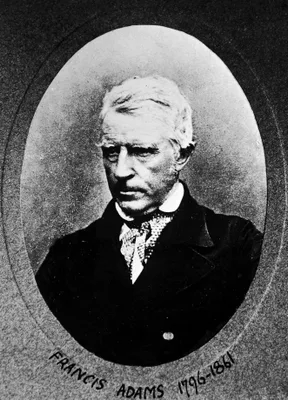
1856 ARETAEUS OF CAPPADOCIA, (Ἀρεταῖος Καππάδοκος) (80 – 140); ADAMS, Francis (1796 – 1861)
Тα ∑ωζομενα. The extant works of Aretaeus, the Cappadocian. Edited and translated by Francis Adams.
Aretaeus left many fine descriptions of disease; in fact Garrison ranks him second only to Hippocrates in this respect. In the printed editions of this bibliography, before the present online version, the Adams editio…
GMN 22 · https://historyofmedicine.com/id/8934
1863 DEMARQUAY, Jean Nicolas (1811 – 1875)
Note sur une tumeur des bourses contenant un liquide laiteux (galactocèle de Vidal) et renfermant de petits êtres vermiformes que l’on peut considérer comme les helminthes hèmatoïdes à l’étatd’embryon.
Description of the embryonic stage of Wuchereria bancrofti in hydrocele fluid.
GMN 5344.3 · https://historyofmedicine.com/id/6770
1868 WUCHERER, Otto Eduard Heinrich (1820 – 1873)
Noticiar preliminar sobre vermes de uma especie ainda nao descripta, encontrados na urina de doentes de hematuria intertropical no Brazil.
In 1866 Wucherer saw the embryo form of the filaria worm. Later the name Wuchereria bancrofti was applied to it. English translation in Kean (No. 2268.1).
GMN 5344.6 · https://historyofmedicine.com/id/6781
1874 BERENGER-FÉRAUD, Laurent Jean Baptiste (1832 – 1900)
De la fièvre bilieuse mélanurique des pays chauds comparée avec la fièvre jaune.
An important description of blackwater fever. Berenger-Féraud had experience with the disease in French West Africa.
GMN 5235 · https://historyofmedicine.com/id/7883
1877 MANSON, Sir Patrick (1844 – 1922)
Further observations on Filaria sanguinis hominis.
Manson showed that Wuchereria bancrofti, the cause of filarial elephantiasis in man, develops in, and is transmitted by, the Culex mosquito. This was the first proof that infective diseases are spread by animal vector…
GMN 5345.1 · https://historyofmedicine.com/id/6800
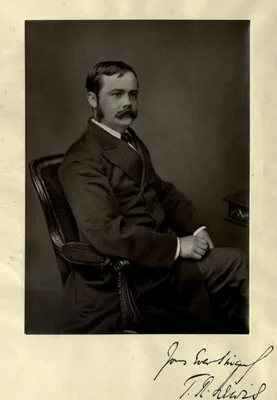
1877 LEWIS, Timothy Richards (1841 – 1886)
Filiaria sanguinis hominis - mature form.
Lewis made the critical connection/association of the worm, Filaria sanguinis,(Wuchereria bancrofti ) to Elephantiasis. This brief account appears to be a third person account summarizing Lewis's work written by an ed…
GMN 10787 · https://historyofmedicine.com/id/12983