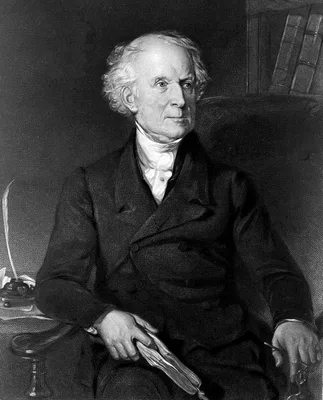
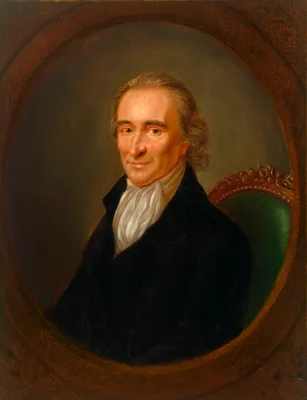
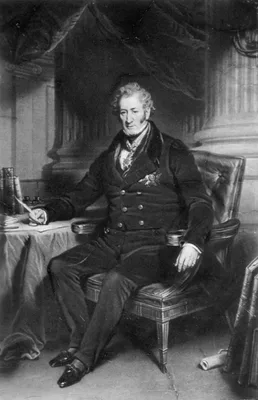
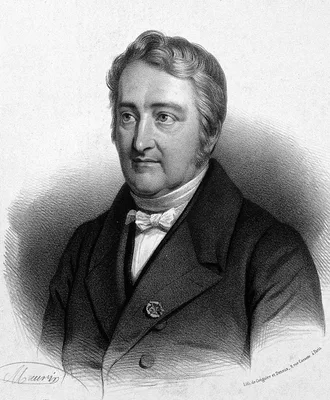
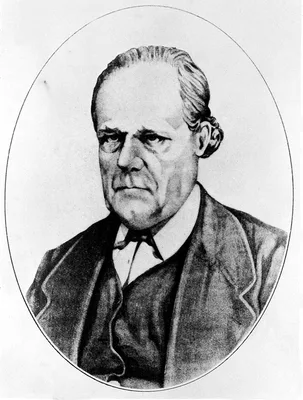
1793 CURRIE, William (1754 – 1828)
A description of the malignant, infectious fever prevailing at present in Philadelphia; with an account of the means to prevent infection, and the remedies and method of treatment, which have been found most successful.
Digital facsimile from the Internet Archive at this link.
GMN 5452 · https://historyofmedicine.com/id/7523
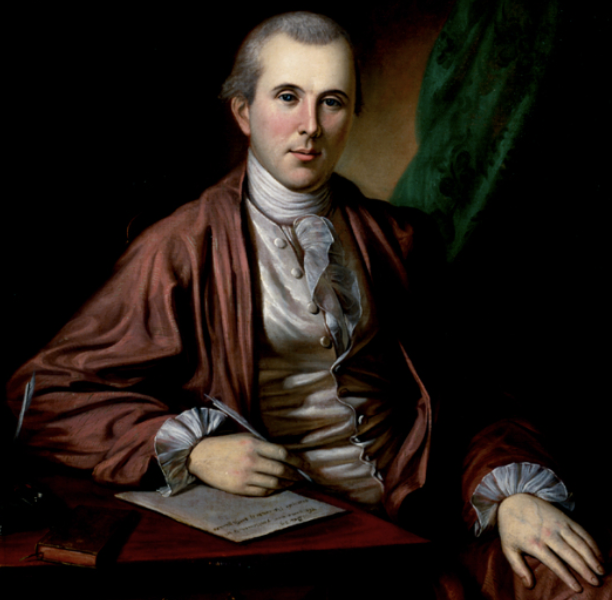
1794 RUSH, Benjamin (1745 – 1813)
An account of the bilious remitting yellow fever, as it appeared in the city of Philadelphia in the year 1793.
Benjamin Rush was the most eminent figure in Philadelphia medicine in his day. His description of the yellow fever epidemic of 1793 is classic. He did magnificent work in treating the sick during the epidemic and in p…
GMN 5453 · https://historyofmedicine.com/id/7528
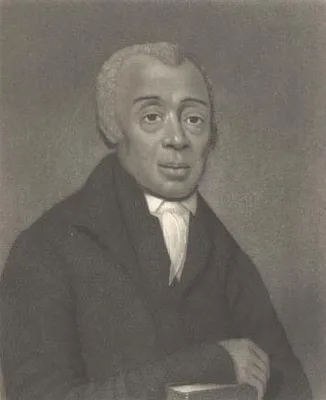
1794 JONES, Absolom (1746 – 1818); ALLEN, Richard (1760 – 1831); CLARKSON, Matthew (1733 – 1800)
A narrative of the proceedings of the black people during the late awful calamity in Philadelphia, in the year 1793: and a refutation of some censures thrown upon them in some late publications.
A refutation of slights by Matthew Carey in his Short account of the malignant fever, lately prevalent in Philadelphia (1793; No. 5451) to the important contributions of black people, many of whom served as nurses and…
GMN 5453.1 · https://historyofmedicine.com/id/7530
1794 DEVÈZE, Jean (1753 – 1829)
An enquiry into, and observations upon the causes and effects of the epidemic disease, which raged in Philadelphia from the month of August till towards the middle of December, 1793.
Text in English and French on facing pages. Digital facsimile from the Medical Heritage Library, Internet Archive at this link.
GMN 9387 · https://historyofmedicine.com/id/11570
1795 CHISHOLM, Colin (1755 – 1825)
An essay on the malignant pestilential fever introduced into the West Indian Islands from Boullam, on the coast of Guinea, as it appeared in 1793 and 1794.
Chisholm, "Surgeon to his Majesty's Ordnance in Grenada," was apparently the first to observe the mode of transmission of the Guinea worm, Dracunculus medinensis. Chishom was also one of the first to recognize that th…
GMN 5336.3 · https://historyofmedicine.com/id/6710
1797 SEAMAN, Valentine (1770 – 1817)
An inquiry into the cause of the prevalence of the yellow fever in New-York.
Includes four early plot maps; Seaman was one of the first to create maps that attempted to show the spread of contagious disease.
GMN 7687 · https://historyofmedicine.com/id/9859
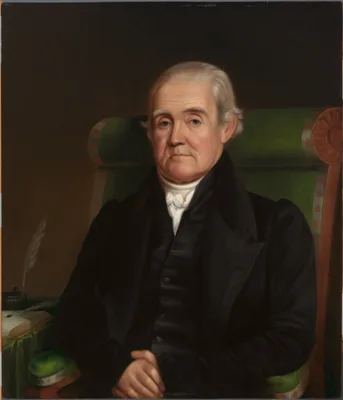
1799 WEBSTER, Noah (1758 – 1843)
A brief history of epidemic and pestilential diseases. 2 vols.
“The best general summary of epidemiological opinion at the beginning of the nineteenth century; and few works surpass it as a compendium of earlier speculations in this field”. (Winslow). A great linguist, Webster wa…
GMN 1675.1 · https://historyofmedicine.com/id/2338
1799 LINING, John (1708 – 1760)
A description of the American yellow fever, which prevailed at Charleston, in South Carolina, in the year 1748.
Digital facsimile from U.S. National Library of Medicine at this link.
GMN 10511 · https://historyofmedicine.com/id/12704
1801 HEBERDEN, William Jr. (1767 – 1845)
Observations on the increase and decrease of different disease, and particularly of the plague.
Heberden observed that the number of deaths from dysentery sharply decreased over the 18th century, but that deaths attributed to apoplexy increased. Digital facsimile from the Internet Archive at this link.
GMN 8372 · https://historyofmedicine.com/id/10549
1801 ASSALINI, Paolo (1759 – 1846)
Observations sur la maladies appelée peste, le flux dissentérique, l'ophtalmie d'Égypte, et les moyens de s'en préserver. Avec des notions sur la fièvre jaune de Cadix, et les projet et plan d'un hôpital, pour le traitement maladies épidémiques et contagieuses.
At the time of publication Assalini, a military surgeon with Napoleon, characterized himself on the title page as "Docteur en Médecine et Chirugien de 1re classe de la Garde des Consuls..." Digital facsimile from well…
GMN 12053 · https://historyofmedicine.com/id/14261
1802 GILBERT, Nicolas-Pierre (1751 – 1814); TRABUC, Michel; BONAMY, Louis Esprey
Instruction des Officiers de Santé en Chef de l'Armée sur les maladies internes et externes des troupes à Sainte-Domingue, et sur leur traitement.
The date of this undated work has been inferred. The 40-page pamphlet issued during the early stages of the French expedition to the island, provided instructions by the chief medical officers of the army for medical …
GMN 13356 · https://historyofmedicine.com/id/15627
1803 WINTERBOTTOM, Thomas Masterman (1765 – 1859)
An account of the native Africans in the neighbourhood of Sierra Leone; to which is added, an account of the present state of medicine among them. 2 vols.
In his travels in Africa, Winterbottom, physician to the Colony of Sierra Leone (now Republic of Sierra Leone) on the west coast of Africa, saw sleeping sickness, which he described in vol. 2, pp. 29-31, as a species …
GMN 5266 · https://historyofmedicine.com/id/8561
1803 WITTMAN, William
Travels in Turkey, Asia-Minor, Syria, and across the desert into Egypt during the years 1799, 1800, and 1801, in company with the Turkish Army, and the British Military Mission.To which are annexed, observations on the plague, and on the diseases prevalent in Turkey, and a meteorological journal.
Wittman described the plague and other epidemics that afflicted both the Ottoman and British armies. In the Appendix he provided medical suggestions for treatment, together with a history of the plague. Digital facsim…
GMN 7367 · https://historyofmedicine.com/id/9539
1803 GILBERT, Nicolas-Pierre (1751 – 1814)
Histoire médicale de l'Armée Française, a Saint-Domingue, en l'an dix; ou mémoire sur la fièvre jaune, avec un apperçu de la topographie médicale de cette colonie.
Digital facsimile from Google Books at this link.
GMN 9657 · https://historyofmedicine.com/id/11844
1807 PAINE, Thomas (1737 – 1809)
Of the cause of the yellow fever; and the means of preventing it in places not yet infected with it: Addressed to the Board of Health in America.
This 13-page pamphlet was probably the only medical publication by the English-born American political activist, philosopher, political theorist, and revolutionary, Thomas Paine. Paine's essay was first published in n…
GMN 12875 · https://historyofmedicine.com/id/15122
1810 HILDENBRAND, Johann Valentin von (1763 – 1818)
Ueber den ansteckenden Typhus.
Hildenbrand gave a classic description of typhus. The French literature sometimes refers to the condition as “Hildenbrand’s disease”. English translation by S. D. Gross, 1829.
GMN 5375 · https://historyofmedicine.com/id/7026
1814 CHARAULT, C. R.
Coup-d'oeil sur Saint-Domingue; observations sur le caractère des négres et sur la fièvre jaune; moyens de recouvrer cette colonie, et de se préserver des maladies qui y règnent.
Digital facsimile from patrimoines-martinique.org at this link.
GMN 8219 · https://historyofmedicine.com/id/10395
1816 BURNETT, William Sir (1779 – 1861)
A practical account of the Mediterranean fever, as it appeared in the ships and hospitals of His Majesty's fleet on that station: With cases and dissections. To which are added facts and observations, illustrative of the causes, symptoms and treatment comprehending the history of the fever in the fleet, during the years 1810, 1811, 1813, and of the Gibraltar and Carthagena fevers.
"Burnett in 1816 described an epidemic of a short term fever occurring among the Naval Forces engaged in the Siege of Malta in 1799, and this fever was almost certainly phlebotomus" (Coulter, The Royal Naval Medical S…
GMN 11143 · https://historyofmedicine.com/id/13340
1817 MACLEAN, Charles (1760 – 1824)
Results of an investigation, respecting epidemic and pestilential diseases; including researches in the Levant, concerning the plague. 2 vols.
"From 1815 to 1817 Maclean travelled in Spain, Turkey, and the Levant, and he studied the plague at the Greek Pest Hospital at Constantinople, in the service of the Levant Company. His experiences in the Levant and in…
GMN 8816 · https://historyofmedicine.com/id/10994
1819 PASCALIS OUVIERE, Felix (1762 – 1833)
A statement of the occurrences during a malignant yellow fever in the city of New-York, in the summer and autumnal months of 1819; and of the check given to its progress, by the measures adopted by the Board of Health. With a list of cases and names of sick persons, and a map of their places of residence within the infected and proscribed limits: With a view of ascertaining, by comparative arguments, whether the distemper was engendered by domestic causes, or communicated by human contagion from foreign ports.
Pascalis mapped this yellow fever outbreak using a method similar to Valentine Seaman, but with a more extensive and detailed list of cases. A condensation of his 60-page pamphlet with a reissue of his map appeared in…
GMN 10456 · https://historyofmedicine.com/id/12649
1820 PELLETIER, Pierre Joseph (1788 – 1842); CAVENTOU, Joseph Bienaimé (1795 – 1877)
Recherches chimique sur les quinquinas.
Isolation of quinine.
GMN 5233 · https://historyofmedicine.com/id/7879
1820 PARISET, Étienne (1770 – 1847); MAZET, André (1793 – 1821)
Observations sur la fièvre jaune, faites à Cadix, en 1819 par MM. Pariset et Mazet, docteurs en médecine de la Faculté de Paris, et rédigées par M. Pariset.
Pariset and Mazet distinguished themselves combating an outbreak of yellow fever in Spain. Pariset's colleague was apparently not involved with publication of the book, and died in a yellow fever outbreak in Barcelona…
GMN 8948 · https://historyofmedicine.com/id/11127
1821 TULLY, James D.
The history of plague, as it has lately appeared in the islands of Malta, Gozo, Corfu, Cephalonia, &c. detailing specific contagion of that disease, with particulars of the means adeopted for its eradication.
Concerns the Maltese plague,. 1813-1814. Digital facsimile from the Internet Archive at this link.
GMN 12757 · https://historyofmedicine.com/id/15003
1822 HARDIE, James (1758 – 1826)
An account of the yellow fever which occurred in the city of New York, in the year 1822, to which is prefixed a brief sketch of the different pestilential diseases, with which this city was afflicted, in the years 1798, 1799, 1803 & 1805, with the opinion of several of our most eminent physicians, respecting the origin of the disease, its prevention and cure.To which is added a correct list of all the deaths by yellow fever during the late season.
Digital facsimile from the Internet Archive at this link.
GMN 9523 · https://historyofmedicine.com/id/11709
1825 HEUSTIS, Jabez Wiggins (1784 – 1841)
Medical facts and inquiries, respecting the causes, nature, prevention and cure of fever: more expressly in relation to the endemic fevers of summer and autumn in the southern states: Together with a history of the bilious remitting fever of Alabama, as it appeared in Cahawba and its vicinity in the summers and autumns of 1821 and 1822.
Digital facsimile from the U.S. National Library of Medicine at this link.
GMN 10518 · https://historyofmedicine.com/id/12711
1829 ALIBERT, Jean Louis Marc (1768 – 1837)
Sur la pyrophlyctide endémique, ou pustule d’Aleppo.
Important description of “Aleppo boil”, furunculosis orientalis.
GMN 5291 · https://historyofmedicine.com/id/6412
1836 PERRY, Robert (1783 – 1848)
Observations on continued fever, as it occurs in the city of Glasgow hospitals.
Perry correctly described many of the distinctions between typhus and typhoid.
GMN 5023.1 · https://historyofmedicine.com/id/6736
1837 GERHARD, William Wood (1809 – 1872)
On the typhus fever which occurred at Philadelphia in the spring and summer of 1836; illustrated by clinical observations at the Philadelphia Hospital; showing the distinction between this form of disease and dothinenteritis, the typhoid fever with alteration of the follicles of the small intestine.
Gerhard, a pupil of Louis, correctly differentiated between typhus and typhoid. Part of his paper is reproduced in R. H. Major, Classic descriptions of disease, 3rd ed., 1945, p. 174.
GMN 5024 · https://historyofmedicine.com/id/6740
1839 DICKSON, Samuel Henry (1798 – 1872)
On dengue; its history, pathology, and treatment.
GMN 5471 · https://historyofmedicine.com/id/7610
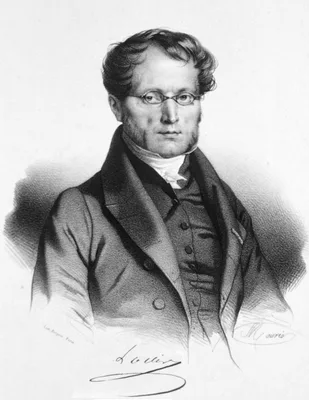
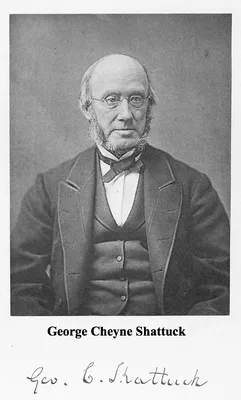
1839 TROUSSEAU, Armand (1801 – 1867); LOUIS, Pierre Charles Alexandre (1787 – 1872); SHATTUCK, George Cheyne (1813 – 1893)
Anatomical, pathological and therapeutic researches on the yellow fever of Gibraltar of 1828, by P. Ch. A. Louis. From observations taken by himself and M. Trousseau as memebers of the French Commission at Gibraltar. Translated from the manuscript by G. C. Shattuck.
The Translator's Introduction begins as follows: "The work now presented to the public has heretofore existed in manuscript only. Circumstances have delayed its publication in France, and some years may yet elapse bef…
GMN 12011 · https://historyofmedicine.com/id/14219
1839 SMITH, Ashbel (1805 – 1886)
An account of the yellow fever which appeared in the city of Galveston, Republic of Texas, in the autumn of 1839, with cases and dissections,
In 1839 Smith treated the victims of a yellow fever epidemic in Galveston while writing reports about the treatment of the disease in the Galveston News. As a result of this experience, he wrote the first treatise on …
GMN 13896 · https://historyofmedicine.com/id/16188
1840 STEWART, Alexander Patrick (1813 – 1883)
Some considerations on the nature and pathology of typhus and typhoid fever, applied to the solution of the question of the identity or non-identity of the two diseases.
Typhoid and typhus were often confused. Stewart made a careful analysis of a number of cases of both fevers and clearly demonstrated that there were in Britain two distinct fevers – typhoid and typhus.
GMN 5025 · https://historyofmedicine.com/id/6744
1840 CLARKE, Robert B.
Observations on the disease lethargus: with cases and pathology.
Clarke left a detailed account of African trypanosomiasis; he saw cases of the disease while serving as a colonial surgeon at Sierra Leone, and named it “narcoleptic dropsy”.
GMN 5267 · https://historyofmedicine.com/id/8562
1841 VALENTIN, Gabriel Gustav (1810 – 1883)
Ueber ein Entozoon im Blute von Salmo fario.
Valentin was the first to discover a trypanosome; this was in a salmon. English translation in Kean (No. 2268.1).
GMN 5267.1 · https://historyofmedicine.com/id/8563
1842 BARTLETT, Elisha (1804 – 1855)
The history, diagnosis, and treatment of typhoid and of typhus fever: With an essay on the diagnosis of bilious remittent and of yellow fever.
Bartlett's book contains the first complete description of typhoid fever in English. In 1908 Osler wrote, "The chief interest of the work today lies in the remarkably accurate picture which is given of typhoid fever--…
GMN 10064 · https://historyofmedicine.com/id/12253
1843 CORMACK, Sir John Rose (1815 – 1882)
Natural history, pathology and treatment of the epidemic fever at present prevailing in Edinburgh and other towns.
The epidemic of relapsing fever in Edinburgh in 1843 was well described by Cormack. He was first editor of the Association Medical Journal which later became the British Medical Journal.
GMN 5310 · https://historyofmedicine.com/id/6575
1843 CRAIGIE, David (1793 – 1866)
Notice of a febrile disorder which has prevailed at Edinburgh during the summer of 1843.
Relapsing fever was given its name by Craigie, in his description of the Edinburgh epidemic.
GMN 5311 · https://historyofmedicine.com/id/6577
1843 GRUBY, David (1810 – 1898)
Recherches et observations sur une nouvelle espèce d’hématozoaire, Trypanosoma sanguinis.
Gruby discovered trypanosomes in the frog. He first suggested the name “trypanosome” to describe the parasite.
GMN 5268 · https://historyofmedicine.com/id/8569
1843 MCWILLIAM, James Ormiston (1808 – 1862)
Medical history of the expedition to the Niger during the years 1841-42, comprising an account of the fever which led to its abrupt termination.
McWilliam included a history of yellow fever, pathology, description of symptoms, sequences, causes, treatment. He also described the state of medicine among the Africans. He specifically described the ventilation of …
GMN 10737 · https://historyofmedicine.com/id/12932
1844 SYDENHAM, Thomas (1624 – 1689); GREENHILL, William Alexander (1814 – 1894)
Thomae Sydenham, M. D., Opera omnia. Edidit Gulielmus Alexander Greenhill.
Sydenham has been called the “Father of English Medicine”. His reputation rests on his first-hand accounts of such conditions as the malarial fevers of his times, gout, scarlatina, measles, etc. A better edition of th…
GMN 63 · https://historyofmedicine.com/id/991
1844 HENDERSON, William (1810 – 1872)
On some of the characters which distinguish the fever at present epidemic from typhus fever.
Henderson, professor of pathology at Edinburgh, gave a good account of relapsing fever seen during the epidemic in 1843. He was one of the first to differentiate it from typhus.
GMN 5311.1 · https://historyofmedicine.com/id/6582
1844 SAPPINGTON, John S. (1776 – 1856)
The theory and treatment of fevers. Revised and corrected by Ferdinando Stith.
The first medical treatise published in Missouri and the first medical treatise published west of the Mississippi River. "John Sappington provided medical services, was a financial lender, and imported and exported go…
GMN 10446 · https://historyofmedicine.com/id/12639
1846 –1847 RITCHIE, Charles (1799 – 1878)
Practical remarks on the continued fevers of Great Britain, and on the generic distinctions between enteric fever and typhus.
Introduction of the term “enteric fever”, a term for typhoid. Ritchie carefully differentiated the symptoms of typhus and typhoid.
GMN 5026 · https://historyofmedicine.com/id/6748
1848 NOTT, Josiah Clark (1804 – 1873)
Yellow fever contrasted with bilious fever – reasons for believing it a disease sui generis – its mode of propagation – remote cause – probable insect or animalcular origin.
Nott advanced the theory that yellow fever was caused by minute animalcula. Reproduced in part in R. H. Major, Classic descriptions of disease, 3rd ed., 1945, p. 122.
GMN 5454 · https://historyofmedicine.com/id/7534
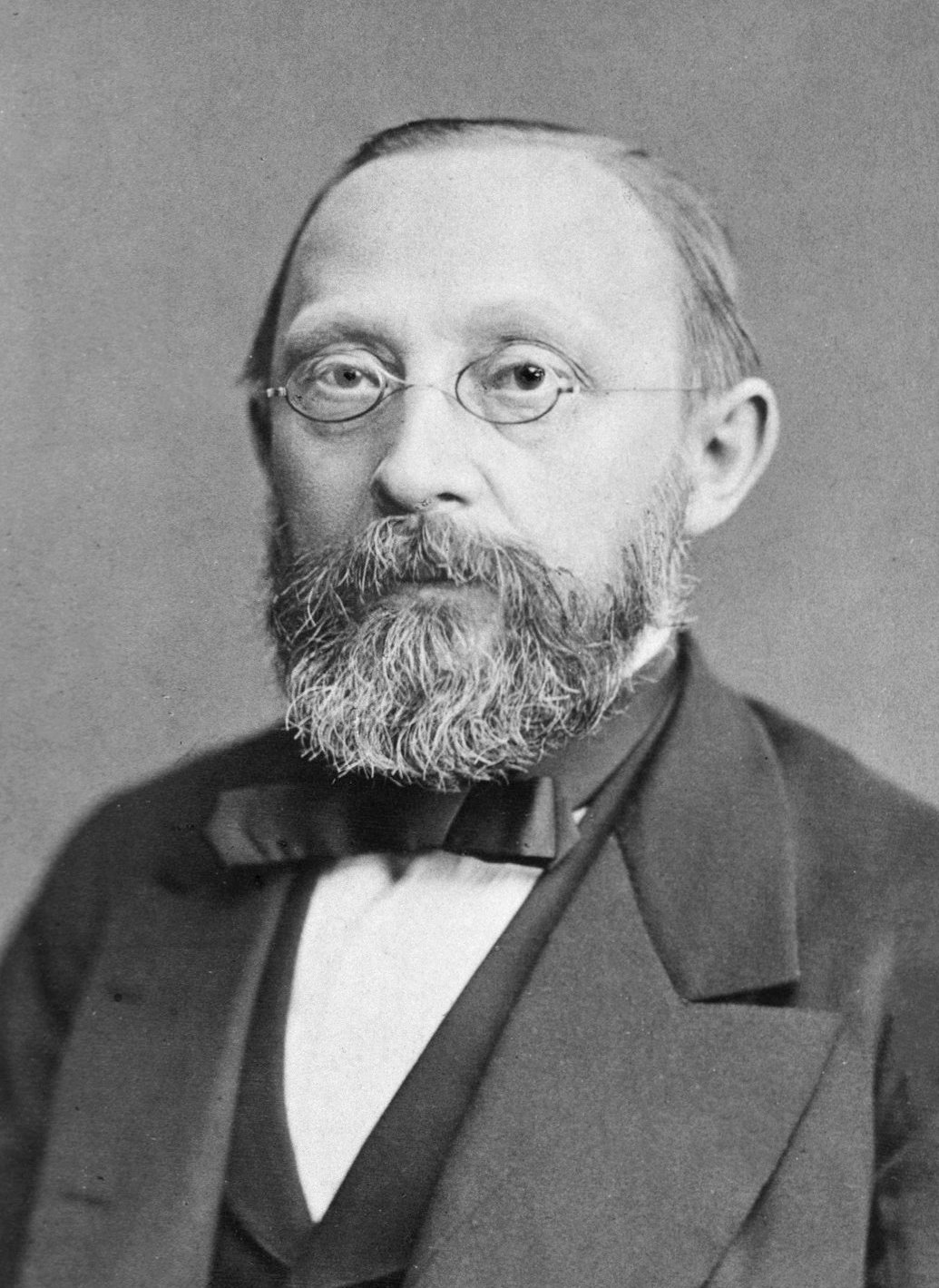
1848 VIRCHOW, Rudolf Ludwig Karl (1821 – 1902)
Mittheilungen über die in Oberschlesien herrschende Typhus-Epidemie.
Virchow was one of the first to identify medicine as a social science. He developed a theory of epidemics that emphasized the social circumstances permitting spread of illness. This approach has been called sociologic…
GMN 12083 · https://historyofmedicine.com/id/14292
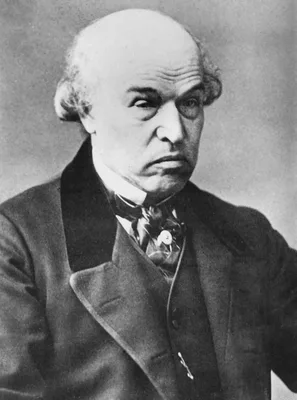
1849 JENNER, Sir William (1815 – 1898)
On typhoid and typhus fevers, – an attempt to determine the question of their identity or non-identity, by an analysis of the symptoms, and of the appearances found after death in 66 fatal cases observed at the London Fever Hospital from Jan. 1847–Feb. 1849.
Despite Stewart’s work, there was still controversy as to the identity of typhoid and typhus. Jenner’s paper demonstrated that the etiology of the two was quite different, that one did not communicate or protect again…
GMN 5027 · https://historyofmedicine.com/id/6752
1849 MITCHELL, John Kearsley (1793 – 1858)
On the cryptogamous origin of malarious and epidemic fevers.
Although Hensinger in 1844 had suggested a parasite as the cause of malaria, Mitchell was the first to approach this theory in a scientific spirit. He was Professor of Medicine at Jefferson College, and the father of …
GMN 5234 · https://historyofmedicine.com/id/7880
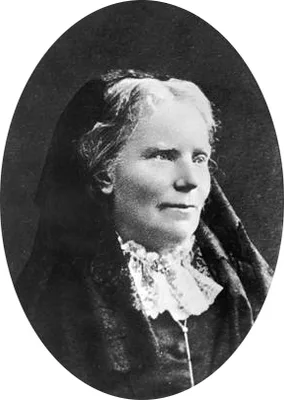
1849 BLACKWELL, Elizabeth (1821 – 1910)
Ship fever. An inaugural thesis, submitted for the degree of M.D., at Geneva Medical College, Jan. 1849.
Elizabeth Blackwell was the first woman to graduate M.D. in the United States. This paper on typhus was her first publication, and is thus the first publication in America by a woman physician educated in the United S…
GMN 11948 · https://historyofmedicine.com/id/14153
1850 –1854 DRAKE, Daniel (1785 – 1852); SMITH, Samuel Hanbury (1810 – 1894); SMITH, Francis G.
A systematic treatise, historical, etiological, and practical, on the principal diseases of the interior valley of North America as they appear in the Causcasian, African, Indian, and Esquimaux varieties of Its population. 2 vols.
This classical contribution to the social / medical history of North America includes the most important work on the natural history of malaria published up to that time. Digital facsimile of vol. 1 from the Internet …
GMN 1777 · https://historyofmedicine.com/id/3345
1854 BEAUPERTHUY, Louis-Daniel (1807 – 1871)
Fiebre amarilla.
Beauperthuy was the first protagonist of the mosquito theory of the transmission of yellow fever. Reprinted in Beauperthuy’s La Obra, Caracas, 1963, pp. 260-70; French translation in Travaux scientifiques de Louis-Dan…
GMN 5454.1 · https://historyofmedicine.com/id/7539