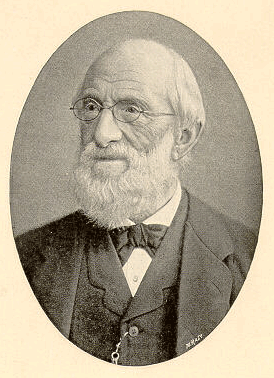
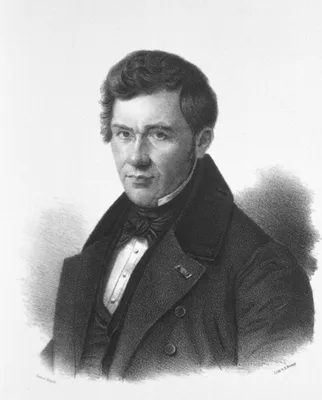
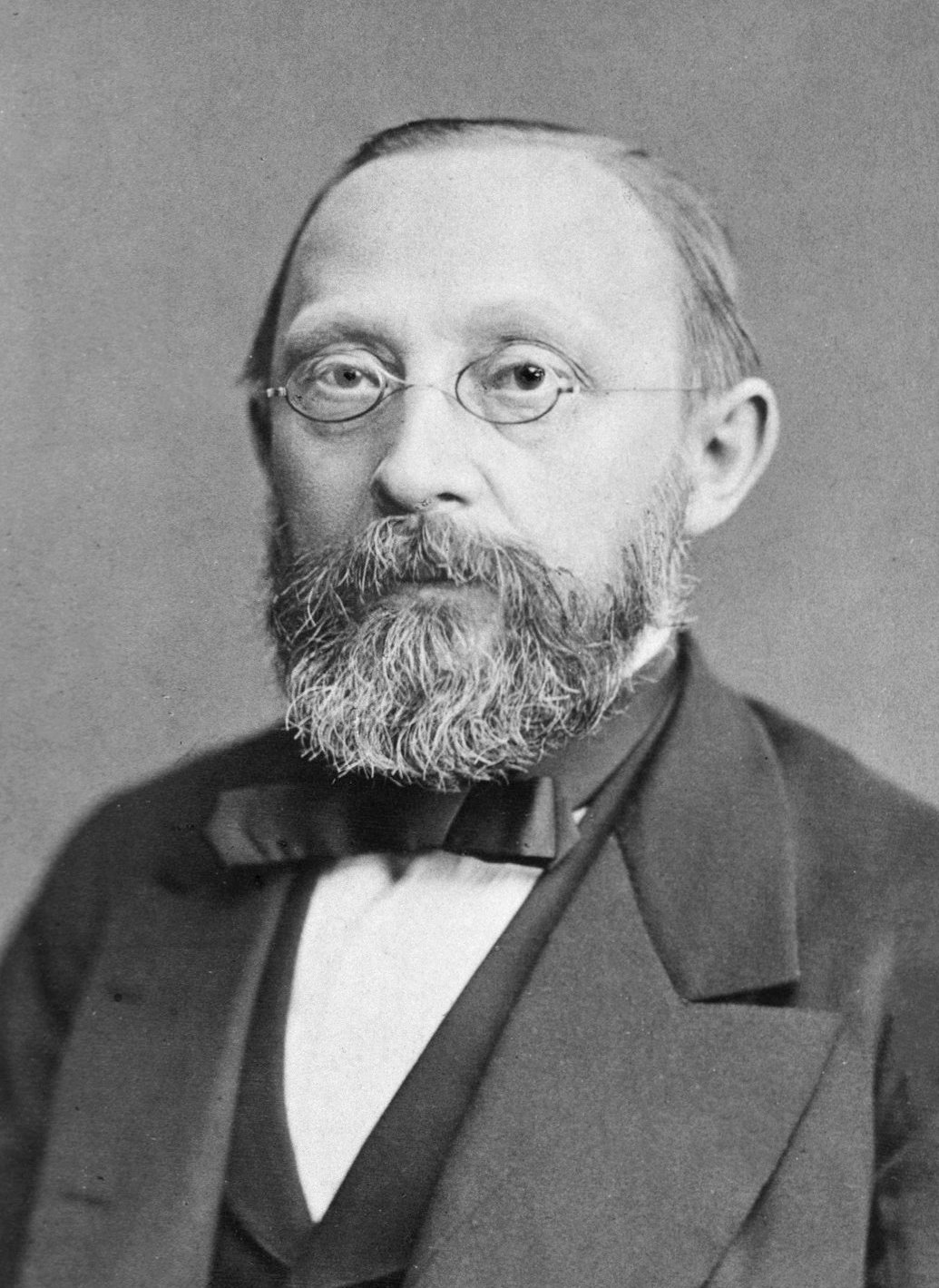
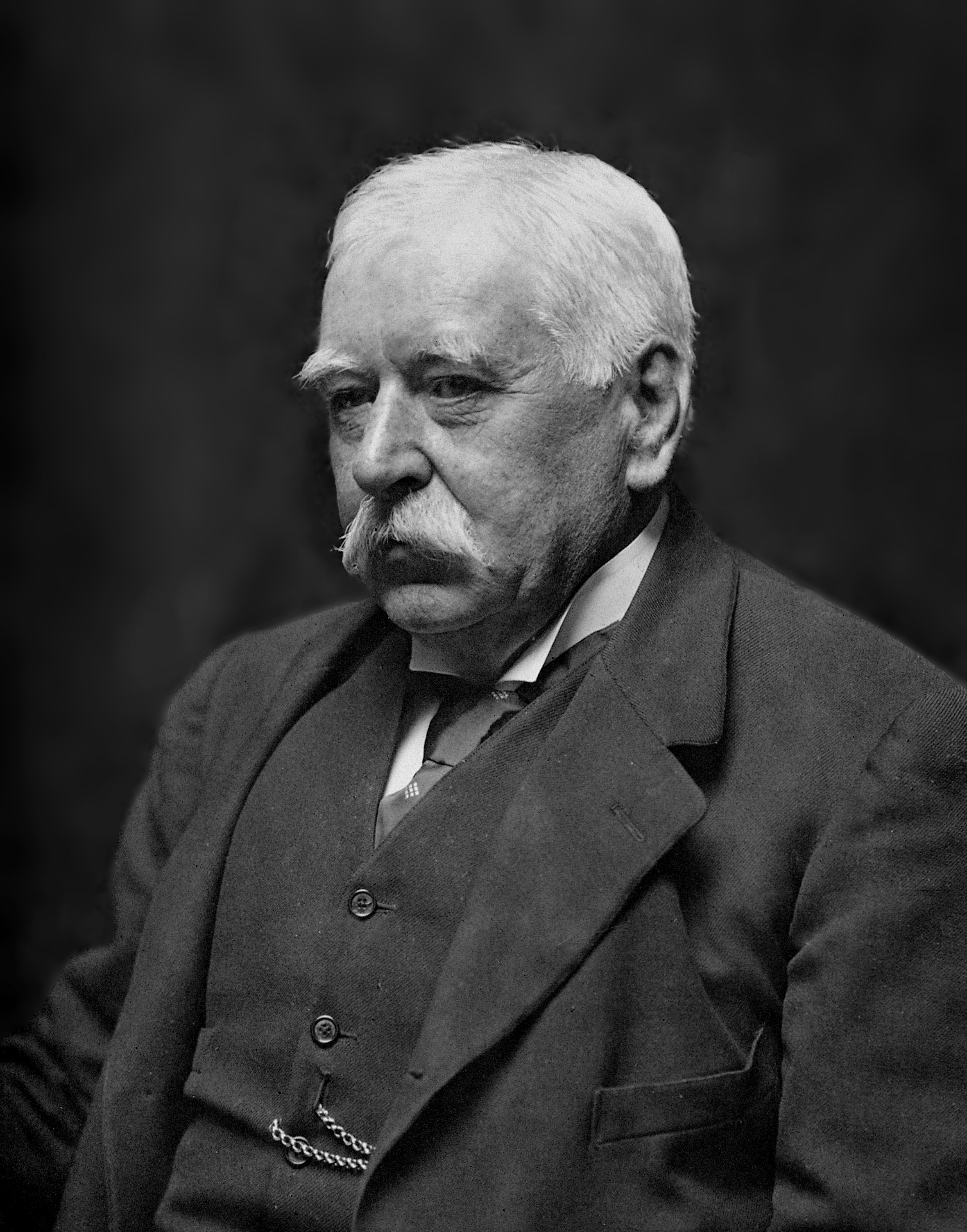
1855 LA ROCHE, René (1795 – 1872)
Yellow fever, considered in its historical, pathological, etiological, and therapeutical relations: including a sketch of the disease as it has occurred in Philadelphia from 1699 to 1854, with an examination of the connections between it and the fevers known under the same name in other parts of temperate, as well as in tropical, regions. 2 vols.
The most important 19th century American monograph on yellow fever. La Roche’s work sketched the disease in its appearances from 1699 to 1854 at Philadelphia, which saw some of the worst yellow fever epidemics, and pr…
GMN 5454.2 · https://historyofmedicine.com/id/7545
1855 WEBB, Allan (1803 – 1863)
Elephantiasis orientalis, and especially elephantiasis genitalis in Bengal.
Digital facsimile from Google Books at this link.
GMN 8809 · https://historyofmedicine.com/id/10987
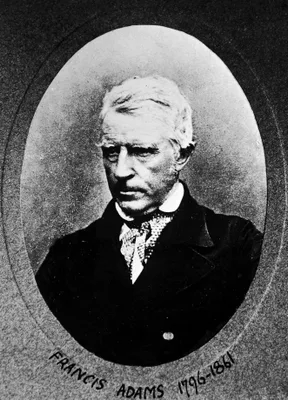
1856 ARETAEUS OF CAPPADOCIA, (Ἀρεταῖος Καππάδοκος) (80 – 140); ADAMS, Francis (1796 – 1861)
Тα ∑ωζομενα. The extant works of Aretaeus, the Cappadocian. Edited and translated by Francis Adams.
Aretaeus left many fine descriptions of disease; in fact Garrison ranks him second only to Hippocrates in this respect. In the printed editions of this bibliography, before the present online version, the Adams editio…
GMN 22 · https://historyofmedicine.com/id/8934
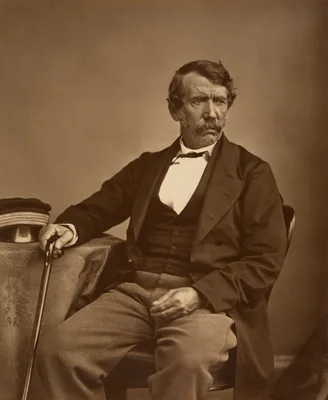
1857 LIVINGSTONE, David (1813 – 1873)
Missionary travels and researches in South Africa.
Livingstone gave an accurate account of the tsetse fly Glossina morsitans and of the disease in cattle following its bite (see pp. 80-83; picture of the tsetse fly on p. 571). In his time the bite of the fly was thoug…
GMN 5269 · https://historyofmedicine.com/id/8570
1858 SALAZAR, Tomas (1830 – 1917)
Historia de la verrugas.
Verruga peruana.
GMN 5525 · https://historyofmedicine.com/id/6611
1858 LIVINGSTONE, David (1813 – 1873)
Arsenic as a remedy for the tsetse bite.
Livingstone was probably the first to administer arsenic for the treatment of “nagana”, a disease of horses caused by trypanosomes. This followed a suggestion by James Braid. Digital facsimile from PubMedCentral at th…
GMN 5270 · https://historyofmedicine.com/id/8572
1861 BRAND, Ernst (1827 – 1897)
Die Hydrotherapie des Typhus.
Brand’s cold bath treatment of typhoid fever consisted of total immersion in water at 65°F. and the pouring of cold water over the neck and shoulders. The cold bath treatment of fevers was instituted by Currie (see No…
GMN 5028 · https://historyofmedicine.com/id/6758
1863 DEMARQUAY, Jean Nicolas (1811 – 1875)
Note sur une tumeur des bourses contenant un liquide laiteux (galactocèle de Vidal) et renfermant de petits êtres vermiformes que l’on peut considérer comme les helminthes hèmatoïdes à l’étatd’embryon.
Description of the embryonic stage of Wuchereria bancrofti in hydrocele fluid.
GMN 5344.3 · https://historyofmedicine.com/id/6770
1864 COBBOLD, Thomas Spencer (1828 – 1886)
Entozoa.
Cobbold suggested (p. 36) that a mollusc was the intermediate host in bilharziasis.
GMN 5344.4 · https://historyofmedicine.com/id/6774
1864 HARLEY, John (1833 – 1921)
On the endemic haematuria of the Cape of Good Hope.
Like Cobbold, Harley expressed the view that a mollusc was the intermediate host in bilharziasis.
GMN 5344.5 · https://historyofmedicine.com/id/6777
1865 HIRSCH, August (1817 – 1894); HECKER, Justus Friedrich Karl (1795 – 1850)
Die grossen Volkskrankheiten des Mittelalters. Historischpathologische Untersuchungen. Von J. F. K. Hecker. Gesammelt und in erweiteter Bearbeitung hrsg. von A. Hirsch.
A collection of essays on the Black Death, the dancing mania, and the English sweat, published 1832-34 and later in a collective English edition, The epidemics of the Middle Ages, 2 pts., London, 1833-35; reprinted 18…
GMN 1678 · https://historyofmedicine.com/id/2353
1868 WUCHERER, Otto Eduard Heinrich (1820 – 1873)
Noticiar preliminar sobre vermes de uma especie ainda nao descripta, encontrados na urina de doentes de hematuria intertropical no Brazil.
In 1866 Wucherer saw the embryo form of the filaria worm. Later the name Wuchereria bancrofti was applied to it. English translation in Kean (No. 2268.1).
GMN 5344.6 · https://historyofmedicine.com/id/6781
1868 VIRCHOW, Rudolf Ludwig Karl (1821 – 1902)
Ueber den Hungertyphus und einige verwandte Krankheitsformen.
Virchow was instrumental in introducing into Germany an epidemiology based on the study of multiple factors – sociological as well as bacteriological. In the above report on the reappearance of typhus in Berlin and Ea…
GMN 5376 · https://historyofmedicine.com/id/7033
1869 SILLIAU, Pierre Marie (1813 – 1871)
Fièvre à rechutes. (Thesis.)
Silliau gave a good account of the epidemic of relapsing fever at Réunion, 1865. He showed the contagious nature of the disease.
GMN 5312 · https://historyofmedicine.com/id/6585
1870 PARRY, John Stubbs (1843 – 1876)
Observations on relapsing fever, as it occurred in Philadelphia in the winter of 1869 and 1870.
Parry called attention to infection from articles of clothing worn by victims of the epidemic of relapsing fever in Philadelphia in 1869.
GMN 5313 · https://historyofmedicine.com/id/6589
1870 BRISCOE, Thomas Benjamin
Kala azar.
Kala azar is mentioned briefly in the Proceedings in 1869 (No. 34, p. 19) but the above is the first full description, given by Briscoe in a report dated 1 Dec 1869.
GMN 5292 · https://historyofmedicine.com/id/8609
1873 OBERMEIER, Otto Hugo Franz (1843 – 1873)
Vorkommen feinster, eine Eigenbewegung zeigender Fäden im Blute von Recurrenskranken.
Discovery (in 1868) of Borrelia recurrentis, causative agent in relapsing fever.
GMN 5314 · https://historyofmedicine.com/id/6602
1874 BERENGER-FÉRAUD, Laurent Jean Baptiste (1832 – 1900)
De la fièvre bilieuse mélanurique des pays chauds comparée avec la fièvre jaune.
An important description of blackwater fever. Berenger-Féraud had experience with the disease in French West Africa.
GMN 5235 · https://historyofmedicine.com/id/7883
1875 O’NEILL, John
On the presence of a Filaria in “craw-craw”.
In 1874, while examining skin snips from craw-craw patients in Ghana, during his service on the H. M. S. Decoy, the Irish surgeon O’Neill discovered the subcutaneous microfilaria. This was the earliest known visual id…
GMN 5344.10 · https://historyofmedicine.com/id/6790
1877 MANSON, Sir Patrick (1844 – 1922)
Further observations on Filaria sanguinis hominis.
Manson showed that Wuchereria bancrofti, the cause of filarial elephantiasis in man, develops in, and is transmitted by, the Culex mosquito. This was the first proof that infective diseases are spread by animal vector…
GMN 5345.1 · https://historyofmedicine.com/id/6800
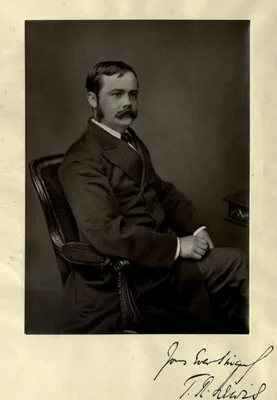
1877 LEWIS, Timothy Richards (1841 – 1886)
Filiaria sanguinis hominis - mature form.
Lewis made the critical connection/association of the worm, Filaria sanguinis,(Wuchereria bancrofti ) to Elephantiasis. This brief account appears to be a third person account summarizing Lewis's work written by an ed…
GMN 10787 · https://historyofmedicine.com/id/12983
1878 LEWIS, Timothy Richards (1841 – 1886)
The microscopic organisms found in the blood of man and animals, and their relation to disease.
First description of a trypanosome (T. lewisi) in a mammal. Seoarate edition in book form with the same title: Calcutta: Office of the Superintendent of Government Printing, 1879.
GMN 5270.1 · https://historyofmedicine.com/id/8574
1879 MOCZUTKOWSKI, Osip Osipovich (Józef Broislaw Moczutkowski) (1845 – 1903)
Materialien zur Pathologie und Therapie des Rückfallstyphus.
By inoculating healthy subjects with blood of patients suffering from replapsing fever, and producing the fever in the former, Mochutkovski demonstrated not only the communicability of the disease but also the specifi…
GMN 5315 · https://historyofmedicine.com/id/6604
1879 POWER, John Logan (1834 – 1901)
The epidemic of 1878 in Mississippi: Report of the yellow fever relief work.
Digital facsimile from the U.S. National Library of Medicine at this link.
GMN 10524 · https://historyofmedicine.com/id/12717
1879 MANSON, Sir Patrick (1844 – 1922)
Additional notes on filaria sanguinis hominis and filiaria disease.
On p. 36 of this paper Manson first described nocturnal periodicity in Filaria Bancrofti, an adaptation to the nocturnal biting habits of their mosquito vector. (Thanks to Juan Weiss for this reference and its interpr…
GMN 11248 · https://historyofmedicine.com/id/13445
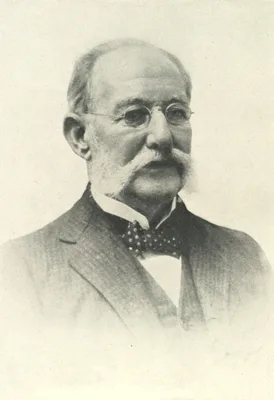
1881 –1882 FINLAY, Carlos Juan (1833 – 1915)
El mosquito hipoteticamente considerado como agente de transmisión de la fiebre amarilla.
Finlay was the first to suggest that the Aedes aegypti mosquito was the vector of yellow fever. Digital facsimile from Google Books at this link. English translation by Rudolph Matas as "The mosquito hypothetically co…
GMN 5455 · https://historyofmedicine.com/id/7549
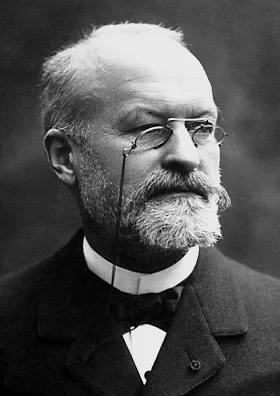
1881 LAVERAN, Charles Louis Alphonse (1845 – 1922)
Un nouveau parasite trouvé dans le sang plusieurs malades atteints de fièvre palustre.
Laveran first saw the malaria parasite on 20 October 1880; he at once recognized its significance. He named it Oscillaria malariae. English translation in Kean (No. 2268.1). Laveran also published a monograph on the d…
GMN 5236 · https://historyofmedicine.com/id/7884
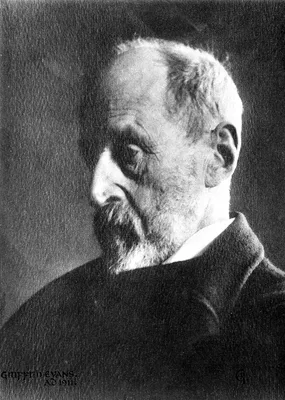
1881 EVANS, Griffith (1835 – 1935)
On a horse disease in India known as “surra”, probably due to a haematozoon.
While serving in India as a veterinary surgeon, Evans discovered parasites in the blood of horses suffering from surra; this was the first pathogenic trypanosome to be described.
GMN 5271 · https://historyofmedicine.com/id/8576
1882 PFEIFFER, Ludwig (1842 – 1921); RULAND, C
Pestilentia in nummis.
A study of medals and tokens relating to epidemics of plague and other infectious diseases.
GMN 5132 · https://historyofmedicine.com/id/6140
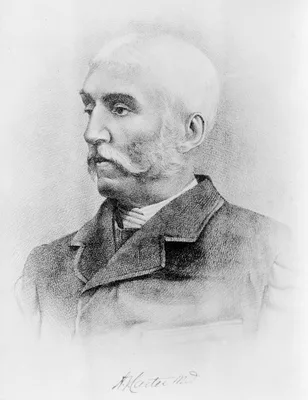
1882 CARTER, Henry Vandyke (1831 – 1897)
Spirillum fever.
Asiatic relapsing fever; original work on this disease by Carter is remembered by the eponym “Carter’s fever” and the name Borrelia carteri. He reproduced the disease in the monkey.
GMN 5316 · https://historyofmedicine.com/id/6607
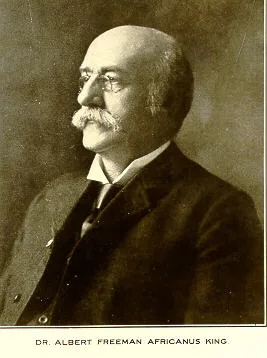
1883 KING, Albert Freeman Africanus (1841 – 1914)
Insects and disease - mosquitoes and malaria.
The first reasoned argument in support of the belief of transmission of malaria by mosquitoes. King was an English-born American physician who witnessed the assassination of Abraham Lincoln in April, 1865, and as a by…
GMN 5237 · https://historyofmedicine.com/id/7886
1884 LECHNER, Karl
Die grosse Sterben in Deutschland in den Jahren 1348 bis 1351 und die folgenden Pestepidemien bis zum Schluss des 14. Jahrhunderts.
Digital facsimile from the Internet Archive at this link.
GMN 9237 · https://historyofmedicine.com/id/11419
1885 CUNNINGHAM, David Douglas (1843 – 1914)
On the presence of peculiar parasitic organisms in the tissue of a specimen of Delhi boil.
Cunningham saw and described bodies in Delhi boil; these were almost certainly Leishman–Donovan bodies.
GMN 5293 · https://historyofmedicine.com/id/6419
1885 MARCHIAFAVA, Ettore (1847 – 1935); CELLI, Angelo (1857 – 1914)
Weitere Untersuchungen über die Malariainfection.
First accurate description of the malaria Plasmodium, discovered by Laveran in 1880. These writers were the first to adopt the name P. malariae.
GMN 5238 · https://historyofmedicine.com/id/7889
1885 DANILEVSKI, Vasili Iakovlevich (1852 – 1934)
Zur Parasitologie des Blutes.
Discovery of malaria parasites in birds. See also Ann. Inst. Pasteur, 1890, 4, 427-31.
GMN 5238.1 · https://historyofmedicine.com/id/7893
1885 ESMARCH, Johann Friedrich August von (1823 – 1908); KULENKAMPFF, Diedrich (1846 – )
Die elephantiastischen Formen. Eine umfassende Darstellung der angeborenen und erworbenen Elephantiasis sowie aller verwandten Leiden.
This atlas illustrates the various changes that occur under the collective term elephantiasis, including tumors of the blood and lymphatic vessels, fibromas, neuromas, papillomas. Goldschmid 258.
GMN 9544 · https://historyofmedicine.com/id/11730
1886 PICK, Alois (1859 – 1945)
Zur Pathologie und Therapie einer eigenthümlichen endemischen Krankheitsform.
This is generally regarded as the first description of pappataci fever.
GMN 5476 · https://historyofmedicine.com/id/7628
1886 GOLGI, Camillo (1844 – 1926)
Sull infezione malarica.
Description of the development of the parasite of quartan malaria. Golgi differentiated the tertian and quartan parasites by the periods of their respective developments.
GMN 5239 · https://historyofmedicine.com/id/7894
1889 GOLGI, Camillo (1844 – 1926)
Sul ciclo evolutivo dei parassiti malarica nella febbre terzana.
Golgi showed that the parasite of quartan differs from that of tertian malarial fever. English translation in Kean (No. 2268.1).
GMN 5240 · https://historyofmedicine.com/id/7895
1889 SMITH, Theobald (1859 – 1934)
Preliminary observations on the microorganism of Texas fever.
First report on the discovery of a Babesia, cause of Babesiosis. Smith first observed the microscopic organism in the summer of 1886, but mentioned Babes's work in this paper, perhaps resulting in Babes being credited…
GMN 10885 · https://historyofmedicine.com/id/13081
1890 CANALIS, Pietro (1856 – 1939)
Études sur l’infection malarique. Sur la variété parasitaire des corps en croissant de Laveran et sur les fièvres palustres qui en dérivent.
Canalis demonstrated and clearly differentiated Plasmodium falciparum from the species vivax and malariae.
GMN 5240.1 · https://historyofmedicine.com/id/7896
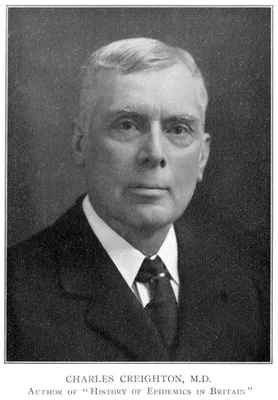
1891 –1894 CREIGHTON, Charles (1847 – 1927)
A history of epidemics in Britain. Vol. 1: From A. D. 664 to the extinction of plague. Vol. 2: From the extinction of plague to the present time.
A classical contribution to modern epidemiology, of which Creighton may be said to have been the founder. Reprinted with new introductory material, 1965. Digital facsimile from the Internet Archive at this link.
GMN 1680 · https://historyofmedicine.com/id/2363
1891 GRASSI, Giovanni Battista (1854 – 1925); FELETTI, Raimondo (1851 – 1928)
Malariaparasiten in den Vögeln.
Confirmation of the work of Laveran.
GMN 5241 · https://historyofmedicine.com/id/7897
1891 EHRLICH, Paul (1854 – 1915); GUTTMANN, Paul (1834 – 1893)
Ueber die Wirkung des Methylenblau bei Malaria.
Guttmann and Ehrlich demonstrated methylene blue to be lethal in vitro for the malaria parasite – the beginning of Ehrlich’s work on chemotherapy.
GMN 5241.1 · https://historyofmedicine.com/id/7898
1891 ROMANOWSKY, Dmitri Leonidovich (1861 – 1921)
K voprosu o parazitologii i terapii bolotnoi likhoradki. [Parasitology and treatment of malarial fever.]
Romanovsky made important studies of the malaria parasite and introduced a special stain for its demonstration. German version in St. Petersburger med. Wschr., 1891, 8, 297-302, 306-15. English translation in Kean (No…
GMN 5242 · https://historyofmedicine.com/id/7899
1891 NEPVEU, Gustav (1841 – 1903)
Étude sur les parasites du sang chez les paludiques.
Nepveu, whilst in Algeria, was the first to see trypanosomes in human blood.
GMN 5272 · https://historyofmedicine.com/id/8578
1892 GOLGI, Camillo (1844 – 1926)
Azione della chinina sui parasite malarici e sui corrispondente accessi febbrili.
French translation in Arch. ital. Biol., 1892, 17, 456-71.
GMN 5243 · https://historyofmedicine.com/id/7900
1892 MARCHIAFAVA, Ettore (1847 – 1935); BIGNAMI, Amico (1862 – 1929)
Sulle febbre malariche estivo-autumnali.
A summary of the Italian work on malaria. English translation, 1894.
GMN 5244 · https://historyofmedicine.com/id/7901
1893 SMITH, Theobald (1859 – 1934); KILBORNE, Frederick Lucius (1858 – 1936)
Investigations into the nature, causation and prevention of Texas or Southern cattle fever.
U.S. Bureau of Animal Industry, Bulletin No. 1. Discovery of the parasite of Texas cattle fever, Pyrosoma bigeminum, and proof that its transmission is due to the cattle tick, Boöphilus bovis. This was the first demon…
GMN 5529 · https://historyofmedicine.com/id/6646
1894 BOGHURST, William (1631 – 1685); PAYNE, Joseph Frank (1840 – 1910)
Loimographia. An account of the great plague of London in the year 1665
This work was written in 1666 and first published as above. Boghurst, an apothecary, did good work during the great plague; in his book he differentiated plague from typhus. Payne’s introduction to the book contains s…
GMN 5120 · https://historyofmedicine.com/id/6092