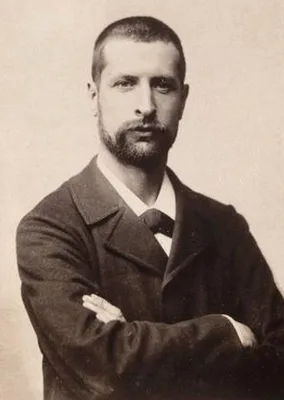
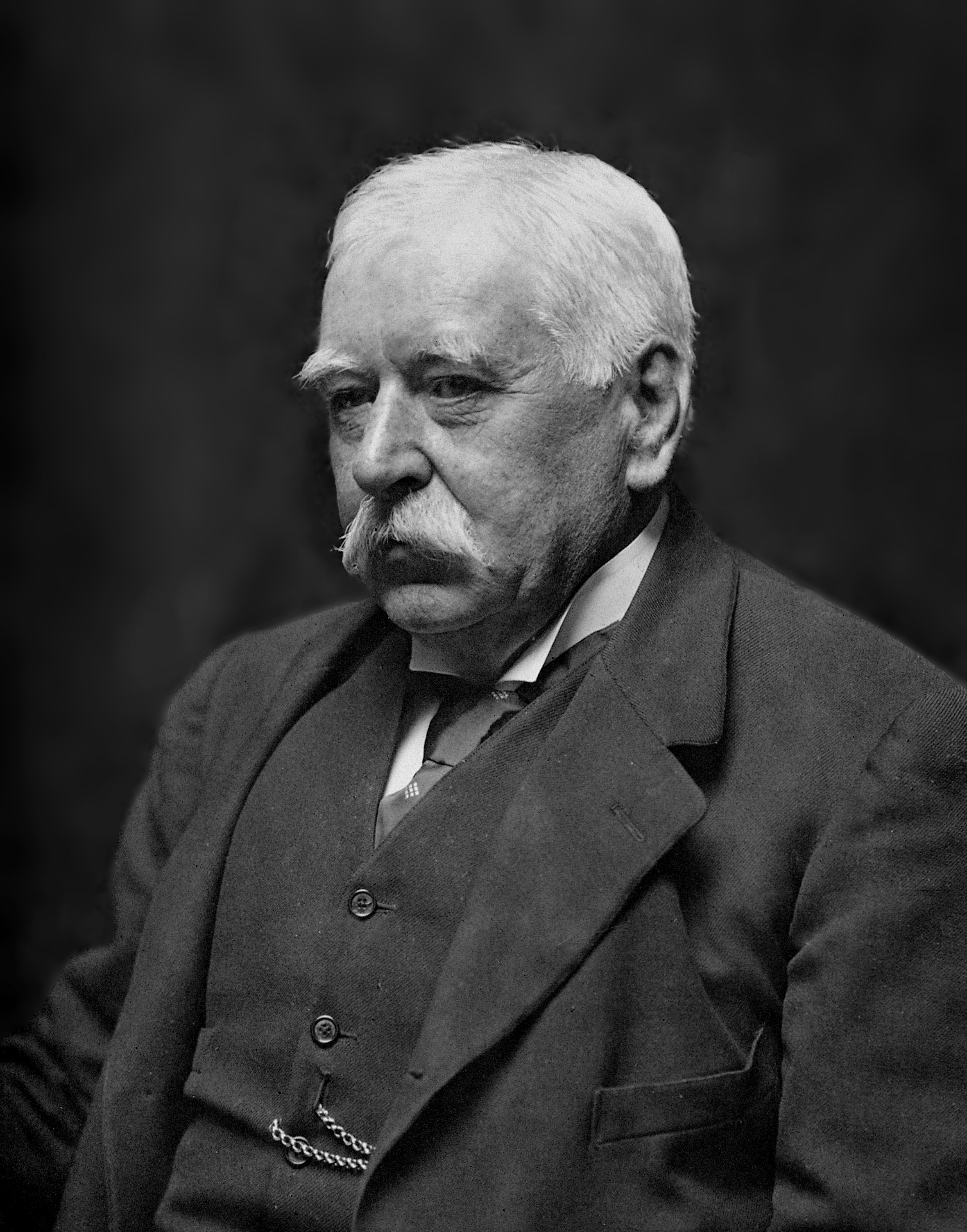
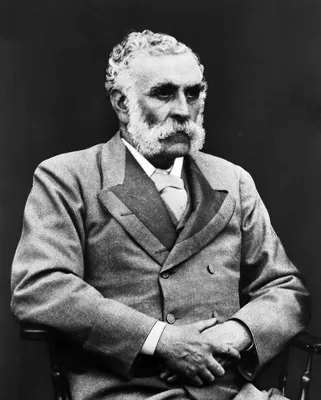
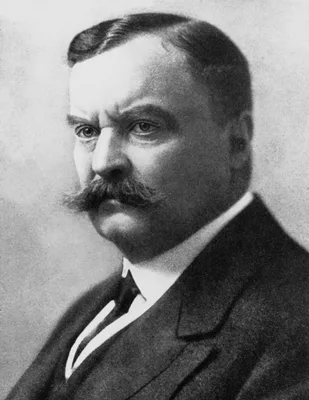
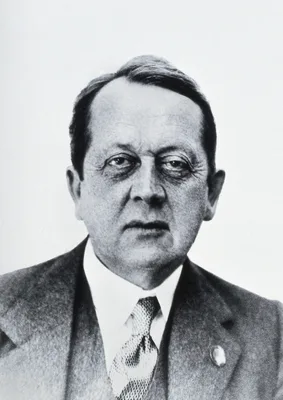
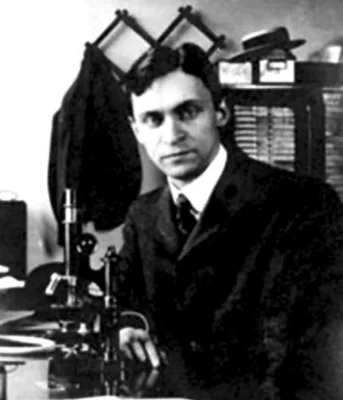
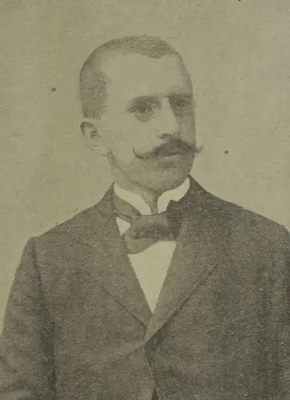
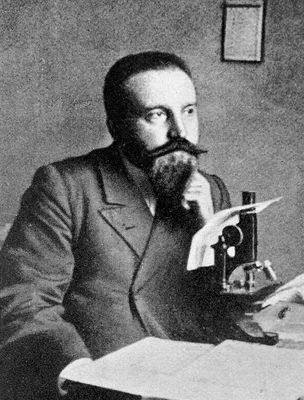
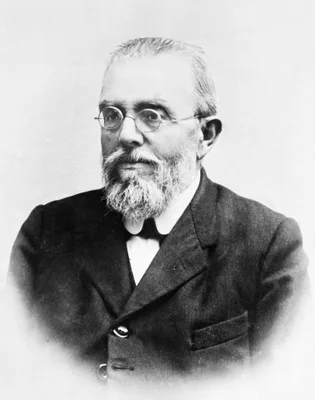
1894 YERSIN, Alexandre Émile Jean (1863 – 1943)
La peste bubonique à Hong-Kong.
Yersin discovered the plague bacillus Pasteurella (Yersinia) pestis, isolating it from excised buboes. He published the first account of this organism. Preliminary note in C. R. Acad. Sci. (Paris), 1894, 119, 356.
GMN 5125 · https://historyofmedicine.com/id/6113
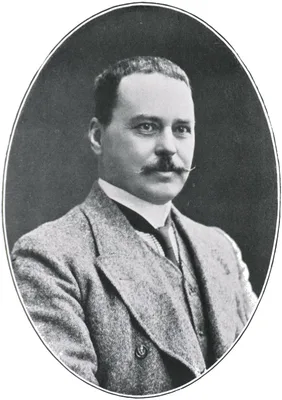
1894 RENNIE, Alexander (1859 – 1940)
The plague in the East.
Rennie appears to be the first seriously to support the theory of transmission of the plague bacillus by rats and to present evidence in support of that theory.
GMN 5126 · https://historyofmedicine.com/id/6115
1894 MANSON, Sir Patrick (1844 – 1922)
On the nature and significance of the crescentic and flagellated bodies in malarial blood.
Manson’s mosquito–malaria hypothesis. See also his Gulstonian Lectures in Lancet, 1896, 1, 695-98, 751-55, 831-33.
GMN 5245 · https://historyofmedicine.com/id/7902
1895 YERSIN, Alexandre Émile Jean (1863 – 1943); CALMETTE, Léon Charles Albert (1863 – 1933); BORREL, Amédée (1867 – 1936)
La peste bubonique. By Alexandre Yersin with L.C.A. Calmette and A. Borrel.
Successful inoculation of animals with anti-plague vaccine.
GMN 5127 · https://historyofmedicine.com/id/6116
1895 BREDA, Achille (1850 – 1933)
Beitrag zum klinischen und bacteriologischen Studium der brasilianischen Framboesie oder “Boubas”.
“Breda’s disease” – Brazilian yaws. English translation New Sydenham Society, 1897.
GMN 5293.1 · https://historyofmedicine.com/id/6435
1895 ODRIOZOLA, Ernesto (1862 – 1921)
La erupción en la enfermedad de Carrión (verruga peruana).
“Carrion’s disease” (Oroya fever) was named by the Peruvian physician Ernesto Odriozola, after Daniel Alcides Carrión Garcia (1859-85), a student. In order to prove or disprove the connection between Oroya fever and v…
GMN 5530 · https://historyofmedicine.com/id/6655
1895 ROBERTSON, Douglas Moray Cooper Lamb Argyll (1837 – 1909)
Case of Filaria loa in which the parasite was removed from under the conjunctiva.
First detailed description of Loa loa. See also Trans. ophthal. Soc. U.K., 1897, 17, 227-32. Robertson first briefly mentioned this procedure and the Loa Loa worm in a brief article written for him by the editor of La…
GMN 5347.1 · https://historyofmedicine.com/id/6817
1895 BRUCE, Sir David (1855 – 1931)
Preliminary report on the tsetse fly disease or nagana, in Zululand.
In 1895 Bruce found that nagana, the tsetse fly disease of Zululand, was due to a trypanosome (T. brucei). He described a hematozoon in the blood of the affected animals that had not been previously described. Digital…
GMN 5273 · https://historyofmedicine.com/id/8580
1896 BRUCE, Sir David (1855 – 1931)
Further report on the tsetse fly disease or nagana, in Zululand.
In this more-detailed follow-up to his "preliminary" paper of 1895 published in Durban, South Africa, Bruce provided definitive proof that the Trypanosoma was the cause of nagana, and the tsetse fly was the vector of …
GMN 11077 · https://historyofmedicine.com/id/13273
1897 KRAUS, Rudolf (1868 – 1932)
Über specifische Reactionen im keimfreien Filtraten aus Cholera, Typhus und Pestbouillonculturen, erzeugt durch homologes Serum.
The precipitin reaction, employed for the qualitative identification of antigens and antibodies. English translation in Bibel, Milestones in immunology,(1988) pp. 265-68.
GMN 2550.1 · https://historyofmedicine.com/id/3665
1897 OGATA, Masanori (1852 – 1919)
Ueber die Pestepidemie in Formosa.
Ogata considered the flea (principally Xenopsylla cheopis) to be the principal, if not the sole, vector of bubonic plague infection.
GMN 5128 · https://historyofmedicine.com/id/6130
1897 MACCALLUM, William George (1874 – 1944)
On the flagellated form of the malarial parasite.
MacCallum reported at a meeting of the British Association his observation of the mode of fertilization of the malarial parasite of birds; two months later he announced that he had found the same to hold good for the …
GMN 5246 · https://historyofmedicine.com/id/7903
1897 ROSS, Sir Ronald (1857 – 1932)
On some peculiar pigmented cells found in two mosquitoes fed on malarial blood.
Ross proved that the mosquito was responsible for the transmission of malaria. On 20 August 1897, he found Laveran’s Plasmodium in the stomach of the Anopheles mosquito after it had fed on the blood of malaria patient…
GMN 5247 · https://historyofmedicine.com/id/7904
1898 MANSON, Sir Patrick (1844 – 1922)
Tropical diseases.
Manson has been called the “father of modern tropical medicine”. He had vast experience of disease in the Tropics and himself made many valuable contributions to the knowledge of this subject. He described tinea nigra…
GMN 2266 · https://historyofmedicine.com/id/2823
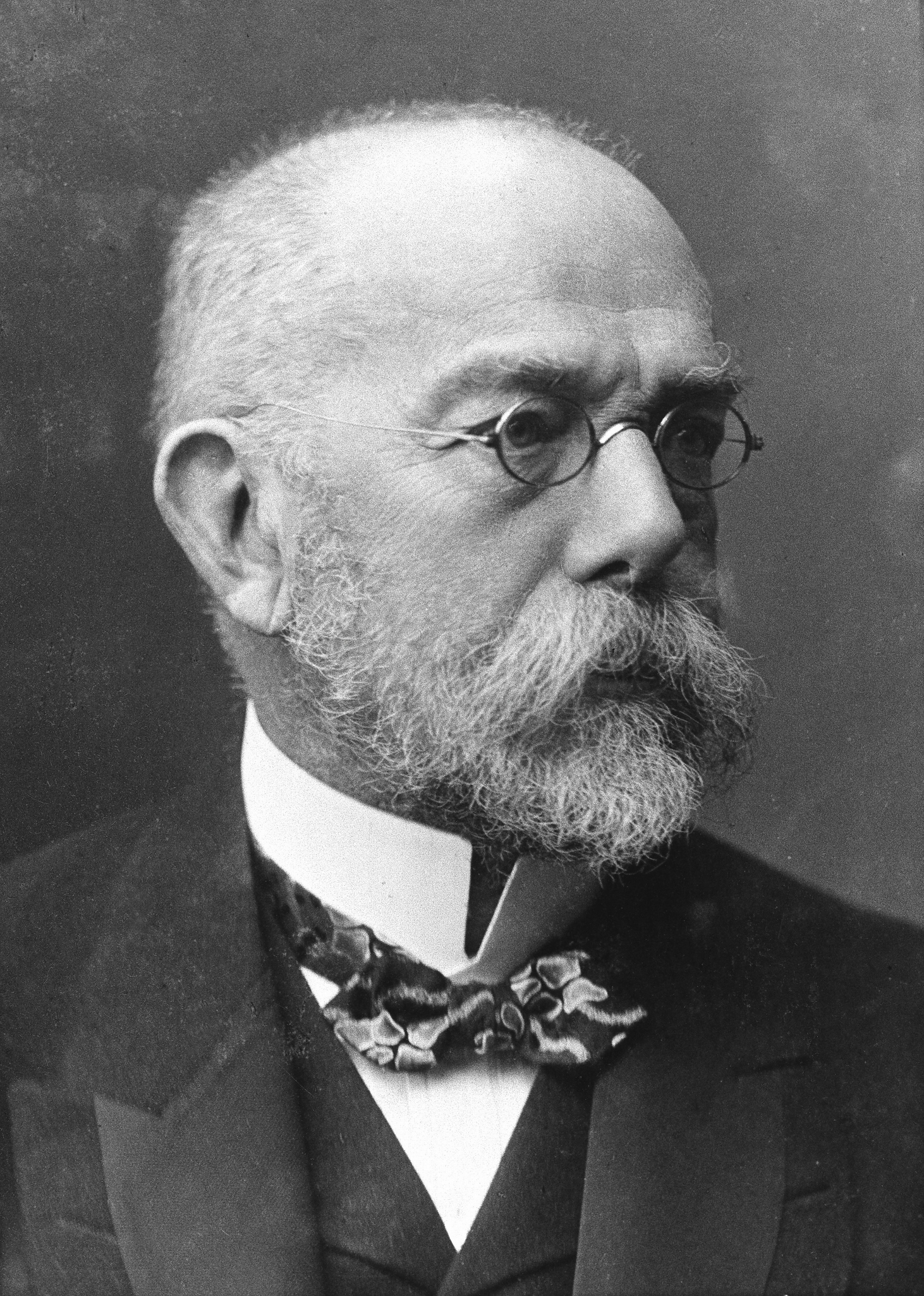
1898 KOCH, Robert Heinrich Hermann (1843 – 1910)
Reise-Bericht über Rinderpest, Bubonenpest in Indien und Afrika, Tsetse-oder Surrakrankheit, Texasfieber, tropische Malaria, Schwarzwasserfieber.
GMN 2457 · https://historyofmedicine.com/id/2986
1898 SIMOND, P. L.
La propagation de la peste.
Simond provided substantial evidence to support Ogata that fleas transmitted plague from rat to man.
GMN 5128.1 · https://historyofmedicine.com/id/6132
1898 BOROVSKII, Petr Fokich (1863 – 1932)
On sart sore.
First description of the protozoon later named Leishmania tropica. The paper is in Russian; for a translation, see C. A. Hoare, in Trans. roy. Soc. trop. Med. Hyg., 1938, 32, 78-90.
GMN 5294 · https://historyofmedicine.com/id/6438
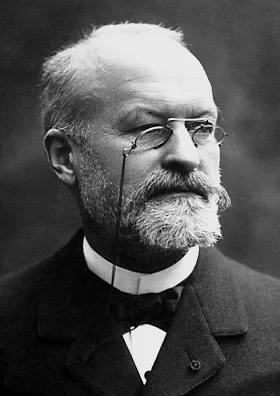
1898 LAVERAN, Charles Louis Alphonse (1845 – 1922)
Traité du paludisme.
GMN 5248 · https://historyofmedicine.com/id/7905
1898 OPIE, Eugene Lindsay (1873 – 1971)
On the haemocytozoa of birds.
Demonstration of sexual conjugation in the malaria parasite. See also No. 5250.
GMN 5249 · https://historyofmedicine.com/id/7906
1898 MACCALLUM, William George (1874 – 1944)
Notes on the pathological changes in the organs of birds infected with haemocytozoa.
MacCallum and Opie discovered the sexual phase of malaria parasites.
GMN 5250 · https://historyofmedicine.com/id/7907
1898 ROSS, Sir Ronald (1857 – 1932)
The rôle of the mosquito in the evolution of the malarial parasite.
Ross provided the last link in the chain demonstrating the complete life-cycle of the parasite of bird malaria. He found that mosquitoes which had fed on malaria-infected birds, and which had allowed the parasites to …
GMN 5251 · https://historyofmedicine.com/id/7908
1898 –1900 GHON, Anton (1866 – 1936); ALBRECHT, Heinrich; MÜLLER, Hermann Franz (1866 – 1898)
Über die Beulenpest in Bombay im Jahre 1897. Gesamtbericht von der Kaiserlichen Akademie der Wissenschaften in Wien zur Studium der Beulenpest nach Indien entsendeten Commission. 2 vols. in 3.
Müller died at the age of 32 as a result of exposure to this plague.
GMN 11394 · https://historyofmedicine.com/id/13593
1899 BIGNAMI, Amico (1862 – 1929); GRASSI, Giovanni Battista (1854 – 1925)
Ciclo evolutivo della semilune nell’ Anopheles claviger.
Grassi and Bignami showed that the Plasmodium undergoes its sexual phase only in the Anopheles mosquito.
GMN 5252 · https://historyofmedicine.com/id/7909
1900 CARTER, Henry Rose (1852 – 1925)
A note on the interval between infecting and secondary cases of yellow fever from the records of yellow fever at Orwood and Taylor, Mississippi, in 1898.
Carter's determination of the incubation period yellow fever influenced the direction of Reed’s researches, and was instrumental in the discovery of the mode of transmission of the yellow fever virus.
GMN 5456 · https://historyofmedicine.com/id/7553
1900 REED, Walter (1851 – 1902); CARROLL, James (1854 – 1907); AGRAMONTE Y SIMONI, Aristides (1868 – 1931); LAZEAR, Jesse William (1866 – 1900)
The etiology of yellow fever. A preliminary note.
First definite proof that the organism causing yellow fever is transmitted to man by the mosquito Aëdes aegypti. During the period spent by these workers in the investigation of the disease in Cuba Lazear and Carroll …
GMN 5457 · https://historyofmedicine.com/id/7559
1900 GRASSI, Giovanni Battista (1854 – 1925)
Studi di uno zoologo sulla malaria.
Includes the best illustrations of the various stages of the malaria parasite published up to that time.
GMN 5252.1 · https://historyofmedicine.com/id/7910
1900 MANSON, Sir Patrick (1844 – 1922)
Experimental proof of the mosquito-malaria theory.
In a classic demonstration Manson allowed infected mosquitoes from Rome to bite a volunteer (his son) in London, who developed malaria 15 days later with tertian parasites in the blood, and who was cured by quinine.
GMN 5252.2 · https://historyofmedicine.com/id/7911
1900 REED, Walter (1851 – 1902); CARROLL, James (1854 – 1907)
A comparative study of the biological characters and pathogenesis of bacillus X (Sternberg), bacillus icteroides (Sanarelli), and the Hog Cholera Bacillus (Salmon and Smith).
Order of authorship in the original publication: Reed, Carroll. In this paper of monograph length the authors irrefutably proved that yellow fever was not caused by a bacterial infection, allowing them to concentrate …
GMN 12007 · https://historyofmedicine.com/id/14215
1901 –1910 THEOBALD, Frederick Vincent (1868 – 1930)
A monograph of the Culicidae, or mosquitoes. Mainly compiled from the collections received at the British Museum from various parts of the world in connection with the cause of malaria conducted by the Colonial Office and the Royal Society. 4 vols. and atlas.
Digital facsimile from the Internet Archive at this link.
GMN 346 · https://historyofmedicine.com/id/253
1901 LEISHMAN, Sir William Boog (1865 – 1926)
Note on a simple and rapid method of producing Romanowsky staining in malarial and other blood films.
“Leishman’s stain”, a modification of that introduced by Romanovsky in 1891.
GMN 5253 · https://historyofmedicine.com/id/7912
1901 HEITZ, Paul
Pestblätter des XV. Jahrhunderts. Hrsg. von P. Heitz, mit einleitendem Text von W.L. Scheiber.
GMN 5135 · https://historyofmedicine.com/id/8859
1901 REED, Walter (1851 – 1902)
The etiology of yellow fever: An additional note.
"The article describes a series of experiments conducted to explore how yellow fever is propagated from individual to individual and how the contagium is spread within households. The study was conducted in an experim…
GMN 9372 · https://historyofmedicine.com/id/11555
1902 FORDE, Robert Michael (1861 – 1948)
Some clinical notes on a European patient in whose blood a trypanosoma was observed.
In 1901 Forde saw (but did not at first recognize as such) trypanosomes in the blood of a patient in Gambia. (See No. 5275.)
GMN 5274 · https://historyofmedicine.com/id/8581
1902 DUTTON, Joseph Everett (1877 – 1905)
Preliminary note upon a trypanosome occurring in the blood of man.
Dutton was the first to recognize human trypanosomiasis. He saw Forde’s patient (see No. 5274) and named the trypanosome T. gambiense. Sleeping sickness itself has been referred to as “Dutton’s disease”. The first ann…
GMN 5275 · https://historyofmedicine.com/id/8584
1902 ROSS, Sir Ronald (1857 – 1932)
Mosquito brigades and how to organise them.
Digital facsimile from the Internet Archive at this link.
GMN 9260 · https://historyofmedicine.com/id/11442
1902 REED, Walter (1851 – 1902)
Recent researches concerning the etiology, propagation, and prevention of yellow fever, by the United States Army Commission.
By 1902 Reed knew that the infectious agent of yellow fever was smaller than bacteria, though he did not specifically call it a virus. "In 1898, the passage of an animal pathogen through a Chamberland filter was repor…
GMN 11860 · https://historyofmedicine.com/id/14064
1903 KOCH, Robert Heinrich Hermann (1843 – 1910)
Die Bekämpfung des Typhus.
The prophylactic measures for the control of typhus suggested by Koch have been adopted almost everywhere.
GMN 5040 · https://historyofmedicine.com/id/5814
1903 LEISHMAN, Sir William Boog (1865 – 1926)
On the possibility of the occurrence of trypanosomiasis in India.
An organism found by Leishman in 1900 was later described by him as possibly a trypanosome. C. Donovan found the same organism in blood in July 1903. The name Leishmania donovani (Leishman-Donovan bodies) was later at…
GMN 5295 · https://historyofmedicine.com/id/6442
1903 MARCHOUX, Émile (1862 – 1943); ET AL
La fièvre jaune.
Yellow fever convalescent serum employed. With A. T. Salimbeni and P. L. Simond.
GMN 5459 · https://historyofmedicine.com/id/7561
1903 SCHAUDINN, Fritz Richard (1871 – 1906)
Studien über krankheitserregende Protozoen. II. Plasmodium vivax (Grassi & Feletti), der Erreger des Tertianfiebers beim Menschen.
Confirmation of the work of Ross and of Grassi.
GMN 5254 · https://historyofmedicine.com/id/7913
1903 CASTELLANI, Aldo (1877 – 1971)
On the discovery of a species of trypanosoma in the cerebrospinal fluid of cases of sleeping sickness.
While in Uganda, Castellani discovered T. gambiense in human cerebrospinal fluid. A paper in Notes Rec. roy. Soc., 1973, 23, 93-110, discounts Castellani’s claim that although he first discovered trypanosomes in the c…
GMN 5276 · https://historyofmedicine.com/id/8585
1903 –1919 BRUCE, Sir David (1855 – 1931); NABARRO, David N.
Reports of the Sleeping Sickness Commission of the Royal Society, 1903-1912. 17 pts.
Bruce and D.N. Nabarro were sent to Africa by the Royal Society to study sleeping sickness, and in their report they showed that the tsetse fly was the vector of trypanosomiasis. They also found that Gambia fever and …
GMN 5277 · https://historyofmedicine.com/id/8587
1903 WRIGHT, James Homer (1871 – 1928)
Protozoa in a case of tropical ulcer (Delhi sore).
Wright found Leishmania tropica in Delhi sore. He was unaware of Borovskii’s paper (No. 5294).
GMN 5297 · https://historyofmedicine.com/id/8607
1903 DONOVAN, Charles (1863 – 1951)
On the possibility of the occurrence of typanosomiasis in India.
Leishimania donovani, independently discovered by two British medical officers William Boog Leishman in Netley, England, and Donovan in Madras, India, in 1903. However, the correct taxonomy was provided by Ronald Ross…
GMN 5296 · https://historyofmedicine.com/id/8972
1903 –1929 GOLGI, Camillo (1844 – 1926)
Opera Omnia. Volume I: Istologia normale—1870-1883 (Con 21 Tavole e ritratto); Volume II: Istologia normale—1883-1902 (Con 21 tavole); Volume III: Patologia generale e isto-patologia—1868-1894 (Con 9 Tavole). Volume IV: Scritti su argomenti varii.
Limited to 325 copies, including material not previously published.
GMN 7338 · https://historyofmedicine.com/id/9509
1903 GORGAS, William Crawford (1854 – 1920)
Notes on the treatment of yellow fever at Las Animas Hospital, the hospital of the Sanitary Department, during the epidemic of 1900 at Havana, Cuba.
In 1901 Gorgas was sent to Havana to undertake a special campaign against the yellow fever mosquito Aëdes aegypti. His methods of sanitation were so successful that in three months yellow fever was practically eradica…
GMN 13923 · https://historyofmedicine.com/id/16217
1904 LEISHMAN, Sir William Boog (1865 – 1926)
Note on the nature of the parasitic bodies found in tropical splenomegaly.
GMN 5298 · https://historyofmedicine.com/id/6473
1904 ROGERS, Sir Leonard (1868 – 1962)
Note on the occurrence of Leishman–Donovan bodies in “cachexial fevers” including kala-azar.
Rogers demonstrated the Leishman–Donovan bodies in kala-azar. See also the same journal, 1904, 2, 645-50. At about the same time Bentley reported similar findings in India.
GMN 5299 · https://historyofmedicine.com/id/6478
1904 ROSS, Philip Hedgeland (1876 – 1929); MILNE, Arthur Dawson (1867 – 1932)
“Tick fever”.
Ross and Milne discovered the causative agent in the African variety of relapsing (tick) fever.
GMN 5317 · https://historyofmedicine.com/id/6608
1904 KATSURADA, Fujiro (1867 – 1946)
The aetiology of a parasitic disease (in Japanese)
First description of Schistosoma japonicum. Translation in Kean (No. 2368.1), p. 518.
GMN 5349.1 · https://historyofmedicine.com/id/6829