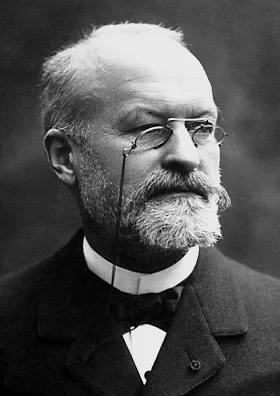
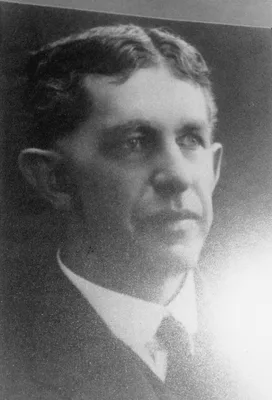
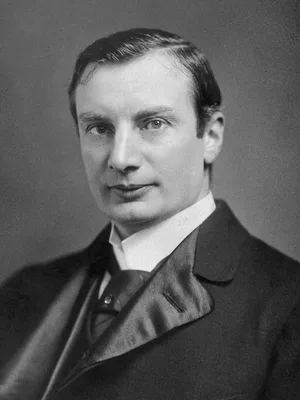
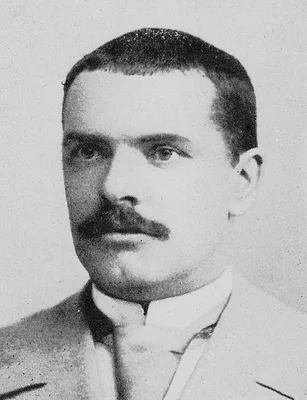
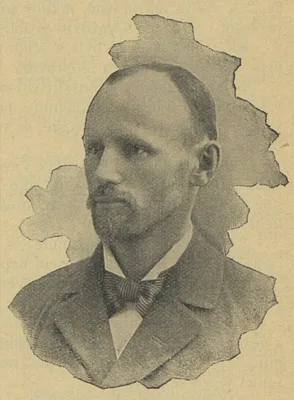
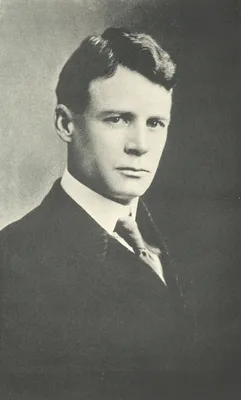
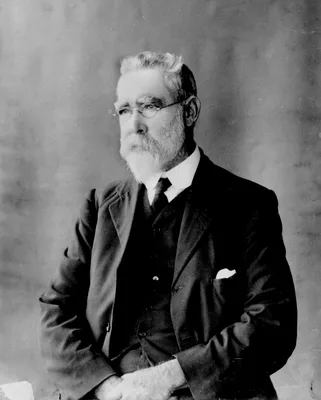
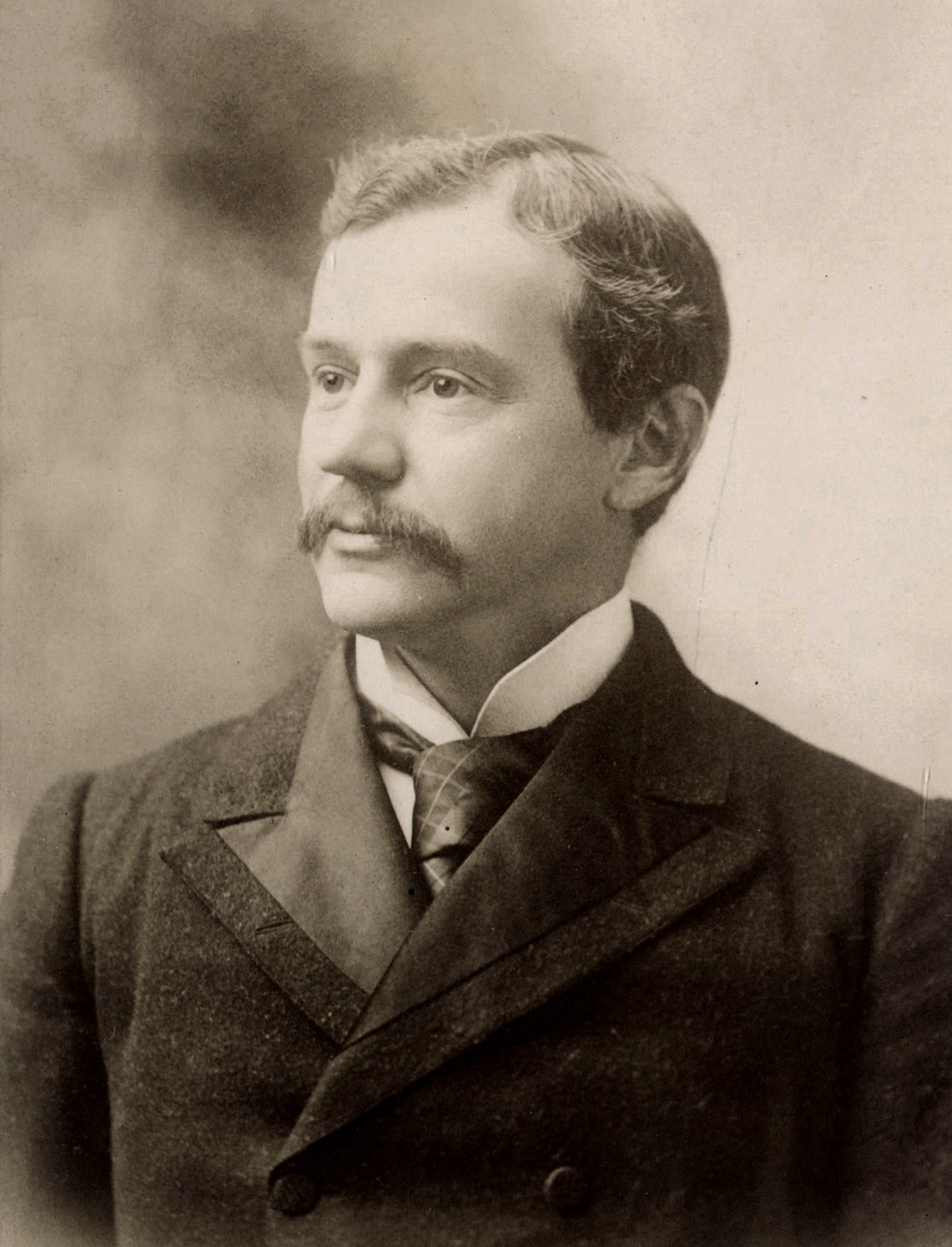
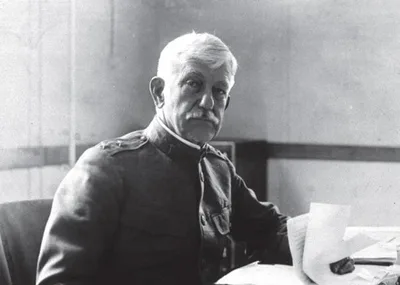
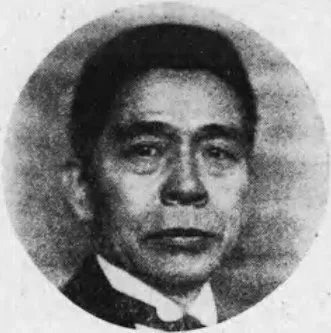
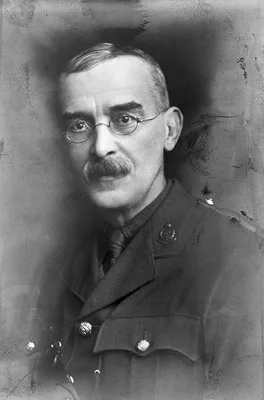
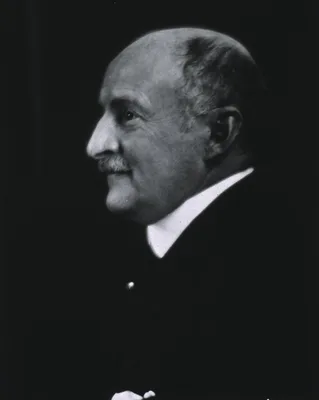
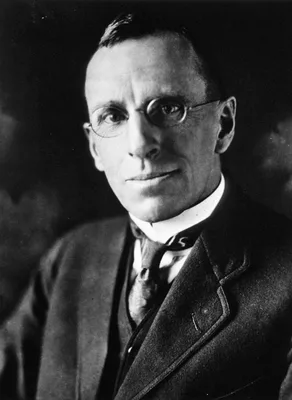
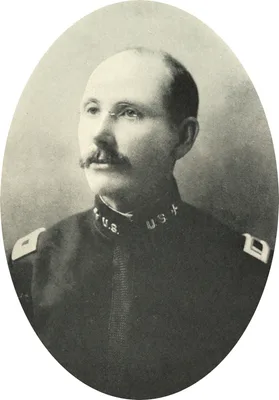
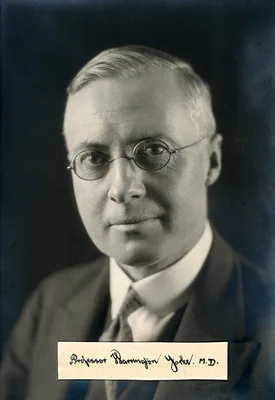
1904 SYMMERS, William St Clair (1863 – 1937)
Note on a new form of liver cirrhosis due to the presence of the ova of Bilharzia haematobia.
“Symmers’s fibrosis”, pipe stem fibrosis of the liver, occurring in cases of certain forms of schistosomiasis.
GMN 5349.2 · https://historyofmedicine.com/id/6832
1904 LAVERAN, Charles Louis Alphonse (1845 – 1922); MESNIL, Félix (1868 – 1938)
Trypanosomes et trypanosomiases.
Laveran and Mesnil discovered that trypanosomes could be maintained indefinitely in rats and mice by serial passage.
GMN 5278 · https://historyofmedicine.com/id/8590
1905 DUTTON, Joseph Everett (1877 – 1905); TODD, John Lancelot (1876 – 1949)
The nature of tick fever in the eastern part of the Congo Free State.
Independently of Ross and Milne, Dutton and Todd demonstrated relapsing fever in monkeys conveyed by infected ticks, Omithodorus moubata. The organism was named Sp. (now Borrelia) duttoni. Both Dutton and Todd contrac…
GMN 5318 · https://historyofmedicine.com/id/6610
1905 CRAIG, Charles Franklin (1872 – 1950)
Intracorpuscular conjugation in the malarial plasmodia and its significance.
Demonstration of the existence of malarial carriers.
GMN 5255 · https://historyofmedicine.com/id/7914
1905 THOMAS, Harold Wolferstan (1875 – 1931); BREINL, Anton (1880 – 1944)
Report on trypanosomes, trypanosomiasis, and sleeping sickness, being an experimental investigation into their pathology and treatment.
Thomas and Breinl discovered that arsanilic acid, was more potent in the treatment of laboratory trypanosomiasis than arsenic in inorganic form. As a crystalline powder it was introduced medically as Atoxyl. Thomas an…
GMN 5279 · https://historyofmedicine.com/id/8592
1906 HAFFKINE, Waldemar Mordecai Wolff (1860 – 1930)
Les inoculations antipesteuses.
Haffkine developed an anti-bubonic plague vaccine (killed bouillon cultures), for use in man.
GMN 5129 · https://historyofmedicine.com/id/6133
1906 NICOLLE, Maurice (1862 – 1932); MESNIL, Félix (1868 – 1938)
Traitement des trypanosomiases par les “couleurs de benzidine”.
Introduction of trypan-blue in the treatment of trypanosomiasis. Second paper by Mesnil and Nicolle.
GMN 5280 · https://historyofmedicine.com/id/6339
1906 NORRIS, Charles (1867 – 1935); ET AL
Study of a spirochete obtained from a case of relapsing fever in man, with notes on morphology, animal reactions, and attempts at cultivation.
Spirochaete causing the American variety of relapsing fever first isolated. With A. W. Pappenheimer and T. Flournoy.
GMN 5319 · https://historyofmedicine.com/id/6613
1906 NOVY, Frederick George (1864 – 1957); KNAPP, Richard Edward (1884 – )
Studies in Spirillum obermeieri and related organisms.
Novy and Knapp made important observations on the spirochaete isolated by Norris et al. from a case of (American) relapsing fever, proving it to be different from Borrelia obermeieri, sometimes referred to as “Novy’s …
GMN 5320 · https://historyofmedicine.com/id/6616
1906 RICKETTS, Howard Taylor (1871 – 1910)
The transmission of Rocky Mountain spotted fever by the bite of the wood-tick (Dermacentor occidentalis).
Ricketts (who himself died of typhus) demonstrated that the wood tick Dermacentor andersoni is a vector of Rocky Mountain spotted fever.
GMN 5378 · https://historyofmedicine.com/id/7054
1906 BANCROFT, Thomas Lane (1860 – 1933)
On the etiology of dengue fever.
Bancroft was the first to produce evidence that Aëdes aegypti is a vector of dengue.
GMN 5472 · https://historyofmedicine.com/id/7611
1906 KELLY, Howard Atwood (1858 – 1943); REED, Walter (1851 – 1902)
Walter Reed and yellow fever.
Digital facsimile of the revised edition published in 1907 from Google Books at this link.
GMN 12820 · https://historyofmedicine.com/id/15066
1907 EHRLICH, Paul (1854 – 1915)
Chemotherapeutische Trypanosomen-Studien.
The first account of induced microbial drug resistance. Ehrlich encountered induced drug resistance in microbes while researching arsenical preparations as cures for sleeping sickness and other trypanosome-caused illn…
GMN 5281 · https://historyofmedicine.com/id/6342
1907 MACKIE, Frederick Percival (1875 – 1944)
The part played by Pediculus corporis in the transmission of relapsing fever.
Proof that relapsing fever is conveyed by the body louse, Pediculus corporis.
GMN 5321 · https://historyofmedicine.com/id/6617
1907 STIMSON, Arthur Marston (1876 – )
Note on an organism found in yellow-fever tissue.
Stimson discovered a spirochete in the organs of persons dying of (?) yellow fever. He called it Sp. interrogans, but it was almost certainly Leptospira icterohaemorrhagiae.
GMN 5333 · https://historyofmedicine.com/id/6661
1907 FUJINAMI, Akira (1870 – 1934); NAKAMURA, Hachitaro
Ueber den Wohnort von Schistosomum japonicum. [Japanese text.]
Fujinami and Nakamura identified the intermediate host of S. japonicum. Abstract in Arch. Schiffs-u. Tropenhyg., 1908, 12,471. Later (1909, 6, 224-52) they demonstrated that infection occurred by skin penetration. Eng…
GMN 5350.1 · https://historyofmedicine.com/id/6841
1907 ASHBURN, Percy Moreau (1872 – 1940); CRAIG, Charles Franklin (1872 – 1950)
Experimental investigations regarding the aetiology of dengue fever, with a general consideration regarding the disease.
Proof that the causal organism of dengue is a filterable virus. Published also in J. infect. Dis., 1907, 4, 440-75.
GMN 5473 · https://historyofmedicine.com/id/7613
1908 –1912 STICKER, Georg (1860 – 1960)
Abhandlungen aus der Seuchengeschichte und Seuchenlehre. Pt. 1: Die Pest. Pt. 2: Die Cholera. 2 vols. in 3.
GMN 1681 · https://historyofmedicine.com/id/2368
1908 PLIMMER, Henry George (1856 – 1918); THOMSON, John D.
Further results of the experimental treatment of trypanosomiasis in rats.
Trial of antimony in the treatment of trypanosomiasis.
GMN 5282 · https://historyofmedicine.com/id/6343
1908 DOERR, Robert (1871 – 1952)
Ueber ein neues invisibles Virus.
Doerr showed the relation of phlebotomus fever to the sandfly, Phlebotomus.
GMN 5477 · https://historyofmedicine.com/id/6363
1909 CHAGAS, Carlos Justiniano Ribiero (1879 – 1934)
Nova tripanozomiaze humana. Estudos sobre a morfolojia e o ciclo evolutivo do Schizotrypanum cruzi n.gen., n.sp., ajente etiolojico de nova entidade morbida do homen.
Chagas discovered T. cruzi, causal organism in American trypanosomiasis (“Chagas’s disease”). Partial English translation in Kean (No. 2268.1).
GMN 5283 · https://historyofmedicine.com/id/6345
1909 KLEINE, Friedrich Karl (1861 – 1950)
Positive Infektionsversuche mit Trypanosoma brucei durch Glossina palpalis.
Glossina was believed to transmit Trypanosoma mechanically to the new host until Kleine showed that the latter undergoes a developmental cycle in Glossina. English translation in Kean (No. 2268.1).
GMN 5283.1 · https://historyofmedicine.com/id/6347
1909 LEVADITI, Constantin (1874 – 1953)
Le mécanisme d’action des dérivés arsenicaux dans les trypanosomiases.
A study of the action of atoxyl and arsacétine.
GMN 5284 · https://historyofmedicine.com/id/6349
1909 DOERR, Robert (1871 – 1952); RUSS, Viktor Karl (1879 – )
Weitere Untersuchungen über das Pappatacifieber.
Doerr and Russ suggested that the virus of phlebotomus fever may be transmitted from one generation of infected Phlebotomus papatasii to another.
GMN 5478 · https://historyofmedicine.com/id/6366
1909 DOERR, Robert (1871 – 1952); ET AL
Das Pappatacifieber.
An Austrian military commission consisting of R. Doerr, K. Franz, and S. Taussig proved that the causal organism of pappataci fever was a virus and that Phlebotomus papatasii was the vector.
GMN 5479 · https://historyofmedicine.com/id/6367
1909 THIMM, C. A.
Bibliography of trypanosomiasis.
Subject index…with additional references and corrections, 1910.
GMN 5289.2 · https://historyofmedicine.com/id/6376
1909 LINDENBERG, Adolfo Carlos (1872 – 1944)
L’ulcère de Bauru ou le bouton d’orientau Brésil.
Muco-cutaneous leishmaniasis of South America. English translation in Kean (No. 2268.1).
GMN 5299.1 · https://historyofmedicine.com/id/6483
1909 NICOLLE, Charles Jules Henri (1866 – 1936)
Le kala azar infantile.
Nicolle considered infantile kala-azar to be caused by a distinct species of Leishmania; to this he gave the name L. infantum.
GMN 5300 · https://historyofmedicine.com/id/6488
1909 BARTON, Alberto Leonardo (1870 – 1950)
Descripción de elementos endo-globulares hallados en las enfermos de fiebre verrucosa.
The causal organism of Oroya fever and verruga peruana, endemic in Peru, was named Bartonella bacilliformis after Barton, who was one of the first to observe it.
GMN 5533 · https://historyofmedicine.com/id/6681
1909 RICKETTS, Howard Taylor (1871 – 1910)
A micro-organism which apparently has a specific relationship to Rocky Mountain spotted fever. A preliminary report.
Description of the causal organism, in blood smears.
GMN 5379 · https://historyofmedicine.com/id/7059
1909 WILSON, William James (1879 – 1954)
On heterologous agglutinins more particularly those present in the blood serum of cerebro-spinal fever and typhus fever cases.
The reaction described by Wilson was later developed by Weil and Felix and named after them (see No. 5390). See also the paper by Wilson in J. Hyg., 1920, 19, 115-30.
GMN 5381 · https://historyofmedicine.com/id/7072
1909 GORGAS, William Crawford (1854 – 1920)
Sanitation of the tropics with special reference to malaria and yellow fever.
GMN 5460 · https://historyofmedicine.com/id/7564
1909 JONES, William Henry Samuel (1876 – 1963); WITHINGTON, Edward Theodore (1860 – 1947)
Malaria and Greek history. To which is added the history of Greek therapeutics and the malaria theory by E.T. Withington.
The view is put forward by the writer that malarial infection was the cause of the decadence of the Greeks. Digital facsimile from the Internet Archive at this link.
GMN 5263 · https://historyofmedicine.com/id/8555
1909 TODD, Frank Morton
Eradicating plague in San Francisco. Report of the Citizen's Health Committee and an account of its work. With brief descriptions of the measures taken, copies of ordinances in aid of sanitation, articles by sanitarians on the nature of plague and the best means of getting rid of it, facsimiles of circulars issued by the committee and a list of subscribers to the health fund. March 31, 1909. Prepared by Frank Morton Todd, historian for the Committee.
Digital facsimile from the Internet Archive at this link.
GMN 10406 · https://historyofmedicine.com/id/12599
1910 EHRLICH, Paul (1854 – 1915); HATA, Sahachiro (1873 – 1938)
Die experimentelle Chemotherapie der Spirillosen (Syphilis, Rückfallfieber, Hühnerspirillose, Frambösie).
After many experiments on the action of synthetic drugs upon spirochetal diseases, Ehrlich and Hata in 1909 discovered Arsphenamine (Salvarsan, "the arsenic that saves", also known as “606”), an effective treatment fo…
GMN 2403 · https://historyofmedicine.com/id/3366
1910 STEPHENS, John William Watson (1865 – 1946); FANTHAM, Harold Benjamin (1875 – 1937)
On the peculiar morphology of a trypanosome from a case of sleeping sickness and the possibility of its being a new species.
T. rhodesiense discovered.
GMN 5285 · https://historyofmedicine.com/id/6351
1910 RICKETTS, Howard Taylor (1871 – 1910); WILDER, Russell Morse (1885 – 1959)
The relation of typhus fever (tabardillo) to Rocky Mountain spotted fever.
Ricketts and Wilder differentiated Rocky Mountain spotted fever and typhus.
GMN 5380 · https://historyofmedicine.com/id/7064
1910 RICKETTS, Howard Taylor (1871 – 1910); WILDER, Russell Morse (1885 – 1959)
The etiology of the typhus fever (tabardillo) of Mexico City. A further preliminary report.
Demonstration of the causal organism of typhus.
GMN 5380.1 · https://historyofmedicine.com/id/7067
1910 BRILL, Nathan Edwin (1860 – 1925)
An acute infectious disease of unknown origin. A clinical study based on 221 cases.
“Brill’s disease” – recrudescent typhus; first description.
GMN 5382 · https://historyofmedicine.com/id/7077
1910 CONOR, Alfred Leon Joseph (1870 – 1914); BRUCH, A
Une fièvre éruptive observée en Tunisie.
First description of fievre boutonneuse, a form of tick-borne typhus found in Tunisia.
GMN 5383 · https://historyofmedicine.com/id/7084
1910 –1911 NICOLLE, Charles Jules Henri (1866 – 1936)
Recherches experimentales sur le typhus exanthématique.
Nicolle demonstrated the transmission of typhus by the body louse Pediculus corporis. He also produced the disease in monkeys and guinea-pigs by the injection of infected blood. Preliminary communication in C. R. Acad…
GMN 5384 · https://historyofmedicine.com/id/7096
1911 GAFFAREL, Paul Louis Jacques (1843 – 1920); DURANTY, Marquis de
La peste de 1720 à Marseille et en France d’après des documents inédits.
GMN 5137 · https://historyofmedicine.com/id/6149
1911 MCCOY, George Walter (1876 – 1952)
A plague-like disease of rodents.
Tularemia first recorded (in rodents).
GMN 5173 · https://historyofmedicine.com/id/6269
1911 VIANNA, Gaspar Oliviera (1885 – 1914)
Contribuiçao para o estudo da anatomia patolojica da “molestia de Carlos Chagas”.
Demonstration of the mode of reproduction of T. cruzi. Text in Portuguese and German. See also the paper by Chagas in pp. 219-75 of the same journal.
GMN 5285.1 · https://historyofmedicine.com/id/6354
1911 FRANCO, Roberto; TORO, Gabriel; MARTINEZ, Jorge
Fiebre amarilla y fiebre espiroquetal; endemias y epidemias en Muzo, de 1907 a 1910.
Franco, J. Martínez-Santamaria, and G. Toro-Villa described epidemics of yellow fever spread by mosquitoes other than Ae. aegypti. Later F. L. Soper, et al., Amer. J. Hyg., 1933, 18, 555-87, substantiated this.
GMN 5460.1 · https://historyofmedicine.com/id/7567
1911 REED, Walter (1851 – 1902); CARROLL, James (1854 – 1907)
Yellow fever: A compilation of various publications. Results of the work of Maj. Walter Reed, Medical Corps, United States Army, and the Yellow Fever Commission. Presented by Mr. Owen.
A convenient compilation of the work of Reed and his associates, including the work of James Carroll published after the death of Walter Reed. Digital facsimile from the Internet Archive at this link.
GMN 9373 · https://historyofmedicine.com/id/11556
1912 MCCOY, George Walter (1876 – 1952); CHAPIN, Charles Willard (1877 – )
Further observations on a plague-like disease of rodents with a preliminary note on the causative agent, Bacterium tularense.
Isolation of Pasteurella tularensis, causal organism in tularemia.
GMN 5174 · https://historyofmedicine.com/id/6273
1912 KINGHORN, Allan (1880 – 1955); YORKE, Warrington (1883 – 1943)
On the transmission of human trypanosomes by Glossina morsitans, Westw.; and on the occurrence of human trypanosomes in game.
Glossina morsitans shown to be the transmitting fly of T. rhodesiense.
GMN 5285.2 · https://historyofmedicine.com/id/6357
1912 BRUMPT, Alexandre Joseph Émile (1877 – 1951)
Le trypanosoma cruzi évolue chez Conorhinus megistus, Cimex lectularius, Cimex Boueti et Ornithodorus moubata. Cycle évolutif de ce parasite.
Life cycle of T. cruzi described. English translation in Kean (No. 2268.1).
GMN 5285.3 · https://historyofmedicine.com/id/6359
1912 BASS, Charles Cassedy (1885 – 1975); JOHNS, Foster Matthew (1889 – 1936)
The cultivation of malaria plasmodia (Plasmodium vivax and Plasmodium falciparum) in vitro.
Cultivation of the malaria parasite.
GMN 5255.1 · https://historyofmedicine.com/id/7915