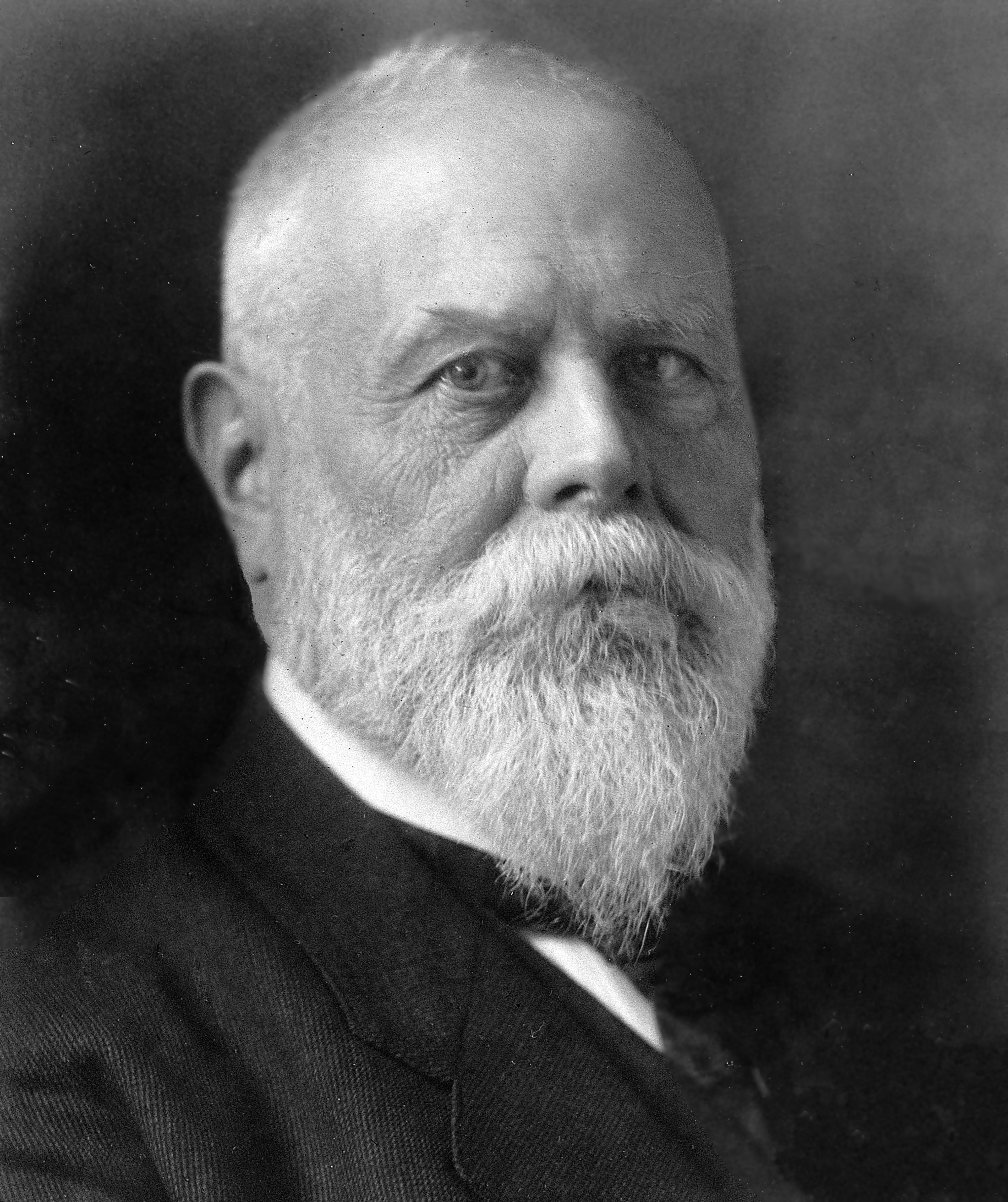
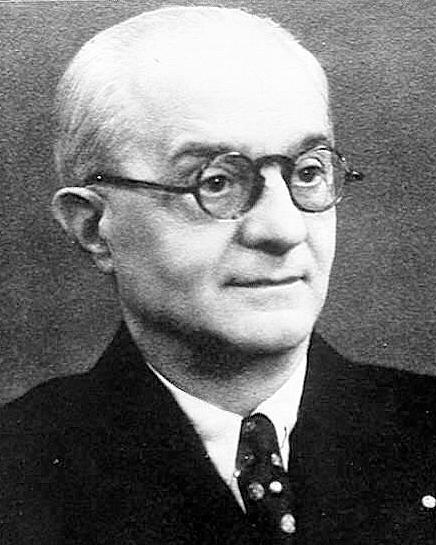
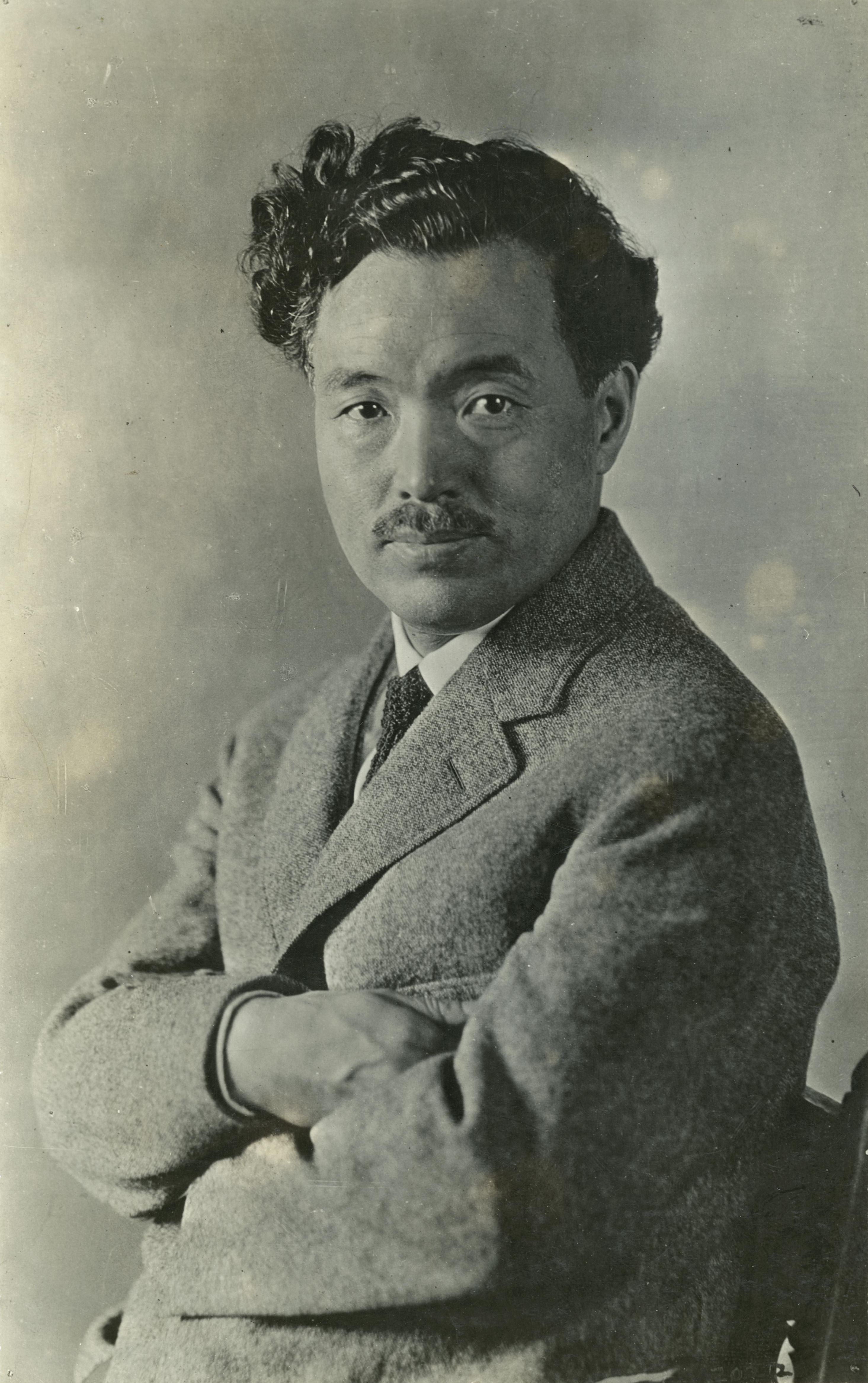
1912 TODD, John Lancelot (1876 – 1949)
Does a human tick-borne disease exist in British Columbia?
Report on the first cases of "tick paralysis", a potentially lethal disease treatable by removing the tick. Follow-up paper by Todd: "Tick bite in British Columbia," Canad. med. Assoc. J., 2 (1912) 1118-1119. Unlike m…
GMN 10921 · https://historyofmedicine.com/id/13117
1912 STRONG, Richard Pearson (1872 – 1948)
Report of the International Plague Conference held at Mukden [Shenyang], April, 1911.
Report on the epidemic of pneumonic plague that raged in Manchuria and north China during the winter months of 1910-11, causing the death of nearly 50,000 people. This was the first outbreak of epidemic pneumonic plag…
GMN 12582 · https://historyofmedicine.com/id/14821
1913 MIGONE, Luis Enrique (1876 – 1954)
Un cas de kala-azar à Asuncion (Paraguay).
Migone first noted the existence of visceral leishmaniasis in the Americas (Paraguay).
GMN 5300.1 · https://historyofmedicine.com/id/6490
1913 LEIPER, Robert Thomson (1881 – 1969)
Important discovery in tropical medicine: Metamorphosis of Filaria Loa.
Leiper discovered diurnal periodicity in Filaria Loa, as the worm embryos are found in the blood only during day, as an adaptation to the day-biting habits of their insect vector, a biting fly of the genus Chrysopa. T…
GMN 11249 · https://historyofmedicine.com/id/13446
1914 MARTIN, Sir Charles James (1866 – 1955); BACOT, Arthur William (1866 – 1922)
Observations on the mechanism of the transmission of plague by fleas.
Bacot and Martin demonstrated the method by which the rat flea (primarily Xenopsylla cheopis) transmits the plague bacillus from rat to man.
GMN 5129.1 · https://historyofmedicine.com/id/6136
1914 CRAWFURD, Sir Raymond Henry Payne (1865 – 1938)
Plague and pestilence in literature and art.
Deals with the subject up to the end of the 18th century. Revised ed., 1951.
GMN 5138 · https://historyofmedicine.com/id/6151
1914 WHERRY, William Buchanan (1875 – 1936); LAMB, Benjamin Harrison (1889 – 1955)
Infection of man with Bacterium tularense
Wherry and Lamb were first to isolate P. tularensis from lesions in man.
GMN 5175 · https://historyofmedicine.com/id/6279
1914 VIANNA, Gaspar Oliviera (1885 – 1914)
Sobre o tratemento de leishmaniose tegumentar.
Vianna introduced tartar emetic in the treatment of S. American leishmaniasis. His preliminary announcement on this form of treatment was made to the Brazilian Dermatological Society and appears in Arch. brasil. Med.,…
GMN 5301 · https://historyofmedicine.com/id/6525
1914 MIYAIRI, Keinosuke (1865 – 1946); SUZUKI, Masatsugu
Der Zwischenwirt des Schistosomum japonicum Katsurada.
Miyairi and Suzuki confirmed that snails are the intermediate hosts of S. japonicum, and their paper completed the description of the life cycle from ova to snail intermediate host. Translation in Kean (No. 2268.1), p…
GMN 5350.2 · https://historyofmedicine.com/id/6847
1915 –1916 LEIPER, Robert Thomson (1881 – 1969)
Reports of the results of the bilharzia mission in Egypt, 1915.
Leiper identified the snail responsible for the transmission of Schistosoma mansoni and S. haematobium.
GMN 5350.4 · https://historyofmedicine.com/id/6861
1915 LEIPER, Robert Thomson (1881 – 1969); ATKINSON, Edward Leicester (1882 – 1928)
Observations on the spread of Asiatic schistosomiasis.
First paper in English giving a detailed account of the development of S. japonicum in the snail and its subsequent development in man. Atkinson, a surgeon in the Royal Navy, was a member of Scott’s Antarctic expediti…
GMN 5350.5 · https://historyofmedicine.com/id/6864
1915 PROWAZEK, Stanislaus Joseph Matthias von (1875 – 1915)
Ätiologische Untersuchungen über den Flecktyphus in Serbien 1913 und in Hamburg 1914.
Prowazek, like Ricketts and Wilder, demonstrated the specific causal agent in typhus. Like Ricketts he died of the disease.
GMN 5384.1 · https://historyofmedicine.com/id/7107
1915 GORGAS, William Crawford (1854 – 1920)
Sanitation in Panama.
"Gorgas capitalized on the momentous work of ... Walter Reed, who had himself built much of his work on insights of a Cuban doctor, Carlos Finlay, to prove the mosquito transmission of yellow fever. He won internation…
GMN 9259 · https://historyofmedicine.com/id/11441
1916 SAXL, Paul (1880 – 1932)
Ueber die Behandlung von Typhus mit Milchinjektionen.
GMN 5043 · https://historyofmedicine.com/id/5819
1916 ROCHA-LIMA, Henrique da (1879 – 1956)
Zur Aetiologie des Fleckfiebers.
Rickettsia prowazeki, cause of epidemic typhus, was first isolated by the Brazilian microbiologist Henrique da Rocha-Lima, who named it after Ricketts and Prowazek, both of whom died of the disease.
GMN 5388 · https://historyofmedicine.com/id/7136
1916 FELIX, Arthur (1887 – 1956); WEIL, Edmund (1880 – 1922)
Zurserologischen Diagnose des Fleckfiebers.
Weil-Felix reaction for the diagnosis of typhus. See also the later paper in the same journal, 1916, 29, 974-78.
GMN 5390 · https://historyofmedicine.com/id/7144
1916 CLELAND, Sir John Burton (1878 – 1971); ET AL
On the transmission of Australian dengue by the mosquito Stegomyia fasciata.
These workers proved that Aëdes aegypti (Stegomyia fasciata) is capable of transmitting dengue fever. See also J. Hyg. (Camb.), 1918, 16, 317-418. With C. H. Bradley and W. McDonald.
GMN 5474 · https://historyofmedicine.com/id/7616
1918 –1919 WAGNER VON JAUREGG, Julius (1857 – 1940)
Ueber die Einwirkung der Malaria auf die progressive Paralyse.
In 1917 Wagner von Jauregg returned to the idea of the inoculation of paretics with malaria to induce pyrexia, first proposed by him in 1887 (Ueber die Einwirkung fieberhafter Erkrankungen auf Psychosen, Jb. Psychiat.…
GMN 4806 · https://historyofmedicine.com/id/1579
1918 CHRISTOPHERSON, John Brian (1868 – 1955)
The successful use of antimony in bilharziosis.
Introduction of tartar emetic (antimony) in the treatment of schistosomiasis.
GMN 5350.6 · https://historyofmedicine.com/id/6869
1919 WOLBACH, Simeon Burt (1880 – 1954)
Studies on Rocky Mountain spotted fever.
In his important aetiological and pathological studies of Rocky Mountain spotted fever, Wolbach mentioned the causal agent Dermacentroxenus rickettsi.
GMN 5391 · https://historyofmedicine.com/id/7147
1920 HAENDEL, Ludwig (1869 – 1939); JOETTEN, Karl Wilhelm (1886 – 1958)
Ueber chemotherapeutische Versuche mit “205 Bayer”, einen neuen trypanoziden Mittel von besonderer Wirkung.
Introduction of “Bayer 205” (germanin, suramin, naphuride).
GMN 5286 · https://historyofmedicine.com/id/6361
1921 PEARCE, Louise (1886 – 1959)
Studies on the treatment of human trypanosomiasis with tryparsamide (the sodium salt of N-phenylglycineamide-p-arsonic acid).
Introduction of tryparsamide in the treatment of trypanosomiasis.
GMN 5287 · https://historyofmedicine.com/id/6364
1921 LOEWE, Leo (1896 – ); ET AL
Cultivation of rickettsia-like bodies in typhus fever.
Isolation of Rickettsia prowazeki from the blood. With S. A. Ritter and G. Baehr.
GMN 5392 · https://historyofmedicine.com/id/7151
1922 TODD, John Lancelot (1876 – 1949); WOLBACH, Simeon Burt (1880 – 1954); PALFREY, Francis Winslow (1876 – 1953)
The etiology and pathology of typhus. Being the main report of the Typhus Research Commission of the League of Red Cross Societies to Poland.
The carefully controlled experiments of Wolbach, Todd, and Palfrey eliminated all doubt that R. prowazeki was the causal agent in typhus. Digital facsimile from the U.S. National Library of Medicine at this link.
GMN 5393 · https://historyofmedicine.com/id/7155
1922 STEPHENS, John William Watson (1865 – 1946)
A new malaria parasite of man.
Plasmodium ovale described.
GMN 5255.2 · https://historyofmedicine.com/id/7916
1923 FOURNEAU, Ernest (1872 – 1949)
Chimiothérapie des trypanosomiasis.
Introduction of moranyl (“Foumeau 309”).
GMN 5288 · https://historyofmedicine.com/id/6368
1923 JONES, William Henry Samuel (1876 – 1963); HIPPOCRATES, [Ἱπποκράτης; Hippocrates of Kos] (-460 – -370)
Epidemics I and III. In [Works] with English translation by W.H.S. Jones, 1, 139-287
Hippocrates may be regarded as the first malariologist; he clearly and fully described the intermittent fevers; he was acquainted with seasonal and topographical variations in the distribution of malaria; and he recog…
GMN 5228 · https://historyofmedicine.com/id/7854
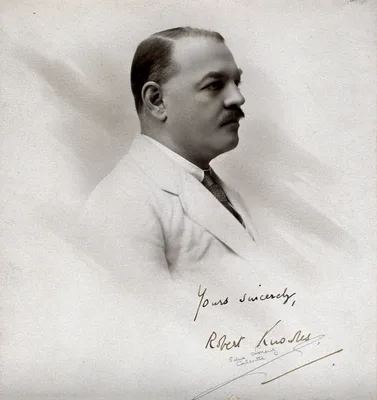
1924 KNOWLES, Robert (1883 – 1936); NAPIER, Lionel Everard (1888 – 1957); ET AL
On a Herpetomonas found in the gut of the sandfly, Phlebotomus argentipes, fed on kala-azar patients.
Demonstration that L. donovani is capable of reproduction in Phlebotomus. With R. O. Smith.
GMN 5301.1 · https://historyofmedicine.com/id/6532
1925 KLEBS, Arnold Carl (1870 – 1943); DROZ, Eugénie (1893 – 1976)
Remèdes contre la peste. Facsimilés, notes et liste bibliographique des incunables sur la peste.
Includes facsimile reproduction of “La régime de l’epidémie et remède contre icelle” of Jean Jacme (Johannes Jacobi), [5115], together with the “Remède très utile contre fièvre pestilencieuse” by the same writer. See …
GMN 5140 · https://historyofmedicine.com/id/6153
1925 FRANCIS, Edward (1872 – 1957)
Tularemia
Francis demonstrated the transmission of tularemia to man from rodents through insects, particularly the deerfly. He gave the disease its present name; it is also called “Francis’s disease” by some writers.
GMN 5176 · https://historyofmedicine.com/id/6281
1925 FLETCHER, William ( – 1938); LESSLAR, J. E.
Tropical typhus in the Federated Malay States, with a compilation on epidemic typhus.
Bull. Inst. med. Res., F. M. S., No. 2. Drew attention to scrub typhus in Malaya.
GMN 5394 · https://historyofmedicine.com/id/7160
1925 LEWIS, Sinclair (1885 – 1951)
Arrowsmith.
"This novel has been inspirational for several generations of pre-medical and medical students. There is much agonizing along the way concerning career and life decisions. While detailing Arrowsmith's pursuit of the n…
GMN 10197 · https://historyofmedicine.com/id/12386
1926 LOEVENHART, Arthur Salomon (1878 – 1929); STRATMAN-THOMAS, Warren Kidwell (1894 – 1946)
On the chemotherapy of neurosyphilis and trypanosomiasis.
Study of the effect of twelve different substances in neurosyphilis and trypanosomiasis.
GMN 1915 · https://historyofmedicine.com/id/2682
1926 WU, Lien-Teh (1879 – 1959)
A treatise on pneumonic plague.
Publication of the League of Nations, III. Health III, 13.
GMN 5130 · https://historyofmedicine.com/id/6137
1926 SUDHOFF, Karl Friedrich Jakob (1853 – 1938); KLEBS, Arnold Carl (1870 – 1943)
Die ersten gedruckten Pestschriften.
Includes descriptions of 130 incunabula.
GMN 5141 · https://historyofmedicine.com/id/6155
1926 LEVADITI, Constantin (1874 – 1953)
Essai de prophylaxie des trypanosomiases par des dérivés phénylarsiniques administré
First attempt to induce prophylaxis by chemical means in trypanosomiasis. With S. Nicolau and I. Galloway.
GMN 5289 · https://historyofmedicine.com/id/6371
1926 FLETCHER, William ( – 1938); LESSLAR, J. E.
The Weil-Felix reaction in sporadic tropical typhus.
Bull. Inst. Med. Res., F. M. S., 1926, No. 1. Demonstration that scrub-typhus patients developed agglutinins against the OX-K strain of B. proteus but not the OX-19 strain.
GMN 5395 · https://historyofmedicine.com/id/7165
1926 MAXCY, Kenneth Fuller (1889 – 1966)
Clinical observations on endemic typhus (Brill’s disease) in Southern United States.
Maxcy described murine (flea-borne) typhus (“Maxcy’s disease”).
GMN 5396 · https://historyofmedicine.com/id/7169
1926 –1927 ROEHL, Wilhelm ( – 1929)
Die Wirkung des Plasmochins auf die Vogelmalaria.
Introduction of plasmoquine (pamaquin) in the treatment of malaria.
GMN 5256 · https://historyofmedicine.com/id/7917
1926 BUER, M. C.
Health, wealth and population in the early days of the industrial revolution.
Chapters on water supply, 18th physicians and pioneers of public health, the hospital and dispensary movement, general hygiene and midwifery, rickets and scurvy, antiseptics, smallpox, anti-typhus campaign, malaria, etc.
GMN 10467 · https://historyofmedicine.com/id/12660
1927 WILSON, Frederick Perera (1876 – 1926)
The plague in Shakespeare’s London.
GMN 5142 · https://historyofmedicine.com/id/6156
1927 BLACKLOCK, Donald Breadalbane (1879 – 1955)
The insect transmission of Onchocerca volvulus (Leuckart, 1893), the cause of worm nodules in man in Africa.
The fly Simulium damnosum shown to be the vector of onchocerciasis.
GMN 5350.8 · https://historyofmedicine.com/id/6874
1928 KANEKO, Renjiro (1886 – ); AOKI, Y
Ueber die Encephalitis epidemica in Japan.
Japanese encephalitis distinguished from encephalitis lethargica.
GMN 4654 · https://historyofmedicine.com/id/760
1928 MOOSER, Hermann (1891 – 1971)
Experiments relating to the pathology and the etiology of Mexican typhus (tabardillo).
Mooser differentiated murine from epidemic typhus. The causative organism was later named Rickettsia mooseri.
GMN 5396.1 · https://historyofmedicine.com/id/7173
1928 HINDLE, Edward (1886 – 1973)
A yellow fever vaccine.
First vaccine for immunization against yellow fever. Hindle devised a method for the transportation of frozen infected material from West Africa to London, making it possible to carry on experimental work in Britain.
GMN 5461 · https://historyofmedicine.com/id/7571
1928 STOKES, Adrian (1887 – 1927); ET AL
Experimental transmission of yellow-fever to laboratory animals.
Experimental infection of the monkey, Macacus rhesus, with the yellow fever virus. Stokes succumbed to yellow fever while investigating the disease. With J. H. Bauer and N. P. Hudson.
GMN 5462 · https://historyofmedicine.com/id/7575
1928 SINTON, Brigadier John Alexander (1884 – 1956); BIRD, William
Studies in malaria, with special references to treatment. Part IX. Plasmoquine in the treatment of malaria.
Clinical trials of pamaquin.
GMN 5256.1 · https://historyofmedicine.com/id/7918
1929 NOGUCHI, Hideyo (1876 – 1928); ET AL
Etiology of Oroya fever. XIV. The insect vectors of Carrión’s disease.
Phlebotomus sand flies shown to be the vector of Oroya fever. With R. C. Shannon, E. B. Tilden, and J. B. Tyler.
GMN 5538.2 · https://historyofmedicine.com/id/6720
1930 OHARA, Hachiro
Ueber Identität von “Yato-Byo” (Ohara’s disease) und “Tularämie”, sowie ihren Erreger.
In Japan tularemia is known as “Ohara’s disease”.
GMN 5177 · https://historyofmedicine.com/id/6284
1930 BECKER, Frederick Edward (1888 – )
Tick-borne infections in Colorado. I. The diagnosis and management of infections transmitted by the wood tick.
Becker first clearly described Colorado tick fever as a separate entity and suggested that the causal organism was transmitted by the tick, Dermacentor andersoni.
GMN 5538.3 · https://historyofmedicine.com/id/6722

![HIPPOCRATES, [Ἱπποκράτης; Hippocrates of Kos] (-460 – -370)](/media/portraits/50)