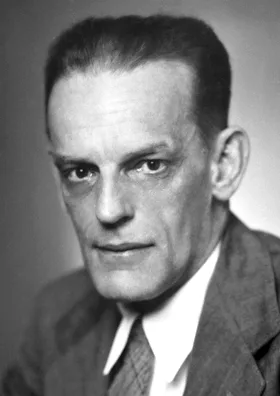
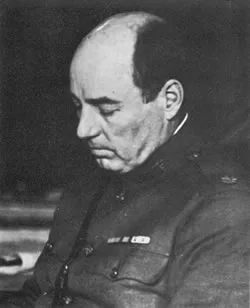
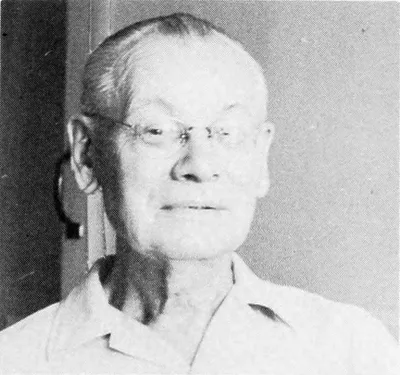
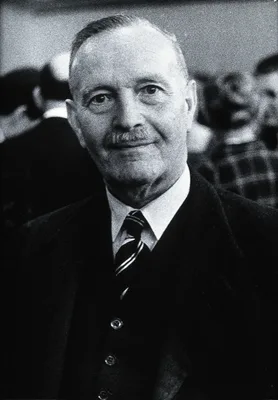
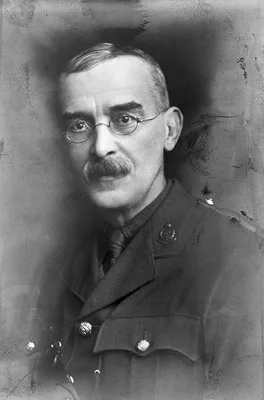
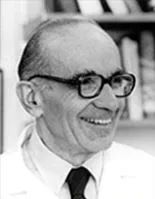
1930 THEILER, Max (1899 – 1972)
Studies on the action of yellow fever virus in mice.
The intracerebral protection test in mice, a test for the diagnosis of yellow fever and for the determination of its past existence in a community, was made possible by Theiler’s discovery that white mice are suscepti…
GMN 5463 · https://historyofmedicine.com/id/7579
1931 CAMPBELL, Anna Montgomery (1888 – 1965)
The black death and men of learning.
GMN 5142.1 · https://historyofmedicine.com/id/6158
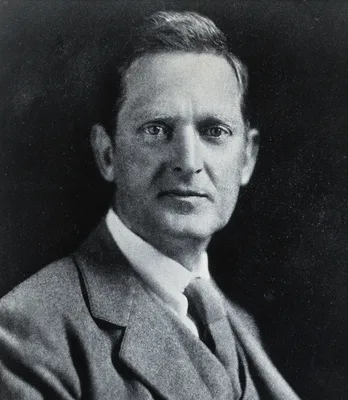
1931 DAUBNEY, Robert (1891 – ); HUDSON, John Richard
Enzootic hepatitis or Rift Valley fever. An undescribed virus disease of sheep, cattle and man from East Africa.
First description.
GMN 5541 · https://historyofmedicine.com/id/6730
1931 KHALIL, Mohamed
The bibliography of schistosomiasis (bilharziasis).
GMN 5352 · https://historyofmedicine.com/id/6900
1931 DYER, Rollo Eugene (1886 – ); ET AL
Typhus fever. A virus of the typhus type derived from fleas collected from wild rats.
Murine typhus shown to be caused by an organism later named Rickettsia mooseri, transmitted by fleas from rats to man. With A. Rumreich and L. F. Badger.
GMN 5396.2 · https://historyofmedicine.com/id/7175
1931 SAWYER, Wilbur Augustus (1879 – 1951); LLOYD, Wray Devere Marr (1902 – 1936)
The use of mice in tests of immunity against yellow fever.
Intraperitoneal protection test.
GMN 5464 · https://historyofmedicine.com/id/7584
1931 SIMMONS, James Stevens (1890 – 1954); ET AL
Experimental studies of dengue.
Proof that Aëdes albopictus is a vector of dengue. See also the earlier paper in the same journal, 1930, 41, 215-29. With J. H. St. John and F. H. K. Reynolds.
GMN 5475 · https://historyofmedicine.com/id/7620
1931 CARTER, Henry Rose (1852 – 1925)
Yellow fever: an epidemiological and historical study of its place of origin. Edited by Laura Armistead Carter and Wade Hampton Frost.
Digital facsimile from the Internet Archive at this link.
GMN 5468 · https://historyofmedicine.com/id/8625
1932 FOSHAY, Lee (1896 – 1960)
Tularemia: Accurate and earlier diagnosis by means of the intradermal reaction.
Skin test for the diagnosis of tularemia. Digital facsimile from Jstor at this link.
GMN 5178 · https://historyofmedicine.com/id/6288
1932 FOSHAY, Lee (1896 – 1960)
Serum treatment of tularemia.
Foshay devised a serum for the treatment of tularemia.
GMN 5179 · https://historyofmedicine.com/id/6292
1932 SAWYER, Wilbur Augustus (1879 – 1951); LLOYD, Wray Devere Marr (1902 – 1936)
Vaccination against yellow fever with immune serum and virus fixed for mice.
These workers devised an immune serum for prophylactic inoculation against yellow fever. With S. F. Kitchen and W. D. M. Lloyd.
GMN 5465 · https://historyofmedicine.com/id/7586
1932 THEILER, Max (1899 – 1972); HAAGEN, Eugen (1898 – 1972)
Untersuchungen über das Verhalten des Gelbfiebervirus in der Gewebekultur. Mit besonderer Berücksichtigung seiner Kultivierbarkeit.
Yellow fever virus grown in tissue culture.
GMN 5465.1 · https://historyofmedicine.com/id/7591
1932 KIKUTH, Walter (1896 – 1968)
Zur Weiterentwicklung synthetisch dargestellter Malariamittel. I. Ueber die chemotherapeutische Wirkung des Atebrin.
Introduction of atebrin (mepacrine, quinacrine).
GMN 5257 · https://historyofmedicine.com/id/7919
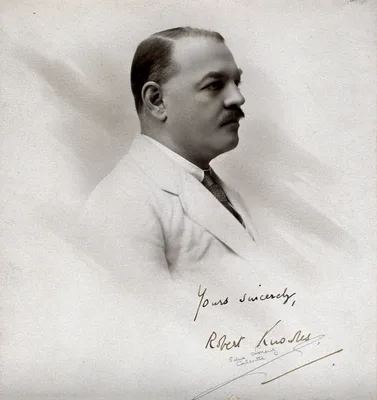
1932 KNOWLES, Robert (1883 – 1936); DAS GUPTA, Biraj Mohan (Dasgupta) (1889 – 1945)
A study of monkey-malaria, and its experimental transmission to man.
Das Gupta and his supervisor Robert Knowles first described Plasmodium knowlesi as a distinct species, and as a potential cause of human malaria in 1932 when they described the morphology of the parasite in macaque bl…
GMN 12586 · https://historyofmedicine.com/id/14825
1933 THEILER, Max (1899 – 1972)
A yellow fever protection test in mice by intracerebral injection.
Intracerebral protection test.
GMN 5466 · https://historyofmedicine.com/id/7594
1933 STANNUS, Hugh Stannus (1877 – 1957)
A sixth venereal disease. Climatic bubo, lymphogranuloma inguinale, esthioméne, chronic ulcer and elephantiasis of the genito-ano-rectal region, inflammatory stricture of the rectum.
In this exhaustive review of the literature, Stannus considered all the conditions he discussed to be different manifestations of infection by the same organisms – the agent causing lymphogranuloma venereum. Includes …
GMN 5221 · https://historyofmedicine.com/id/7838
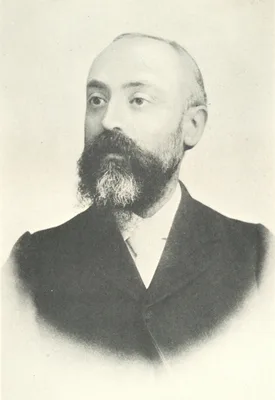
1933 CELLI, Angelo (1857 – 1914)
The history of malaria in the Roman Campagna from ancient times. Edited and enlarged by Anna Celli-Fraentzel.
Reprinted New York, 1977.
GMN 5264 · https://historyofmedicine.com/id/8556
1934 HAYASHI, Michitomo
Übertragung des Virus von Encephalitis epidemica auf Affen.
Experimental transmission of Japanese B encephalitis.
GMN 4657 · https://historyofmedicine.com/id/767
1934 ZINSSER, Hans (1878 – 1940)
Varieties of typhus virus and the epidemiology of the American form of European typhus fever (Brill’s disease).
Zinsser advanced the theory that Brill’s disease is a recrudescence of epidemic typhus in persons who have contracted the typhus some time previously. The condition has subsequently been renamed “Brill-Zinsser disease”.
GMN 5396.4 · https://historyofmedicine.com/id/7180
1934 STRONG, Richard Pearson (1872 – 1948); BEQUAERT, Joseph Charles (1886 – 1982); SANDGROUND, Jack Henry (1899 – 1987); OCHOA, Miguel Muños
Onchocerciasis: With special reference to the Central American form of the disease. Parts I, II, III, and IV
In depth study of onchcerciasis in Guatemala, where "the disease was of real importance to human beings" at the time. Each of the 4 authors contributed a separate part of the report.
GMN 12575 · https://historyofmedicine.com/id/14814
1936 TANIGUCHI, Tenji (1889 – 1961); ET AL
A virus isolated in 1935 epidemic of summer encephalitis in Japan.
T. Taniguchi, M. Hosokawa, and S. Kuga established a virus etiology for Japanese B encephalitis.
GMN 4659 · https://historyofmedicine.com/id/774
1936 SHORTT, Henry Edward (1887 – 1987); ET AL
Cultivation of the viruses of sandfly fever and dengue fever on the chorioallantoic membrane of the chick-embryo.
Cultivation of the virus of phlebotomus fever. With R. S. Rao and C. S. Swaminath.
GMN 5480 · https://historyofmedicine.com/id/6369
1937 THEILER, Max (1899 – 1972); SMITH, Hugh Hollingsworth (1902 – 1995)
The use of yellow fever virus modified by in vitro cultivation for human immunization.
Immunization without the use of immune serum. In 1951 Theiler was awared the Nobel Prize in Physiology or Medicine "for his discovery of an effective vaccine against yellow fever." This was the first Nobel Prize award…
GMN 5467 · https://historyofmedicine.com/id/7597
1937 STEPHENS, John William Watson (1865 – 1946)
Blackwater fever, a historical survey and summary of observations made over a century.
GMN 5264.1 · https://historyofmedicine.com/id/8557
1938 SHANNON, Raymond Corbett (1894 – 1945); ET AL
Yellow fever virus in jungle mosquitoes.
Haemagogus sp. shown to be vectors of yellow fever. With L. Whitman and M. Frania.
GMN 5467.1 · https://historyofmedicine.com/id/7600
1938 JAMES, Sydney Price (1870 – 1946); TAIT, P
Exo-erythrocytic schizogony in Plasmodium gallinaceum Brumpt, 1935.
The term “exo-erythrocytic stage” introduced to describe the unpigmented schizonts found in tissue cells. The parasite Plasmodium gallincaceum described by Alexandre Joseph Emile Brumpt causes malaria in poultry.
GMN 5258 · https://historyofmedicine.com/id/8541
1939 ZILBER, Lev Aleksandrovich (Alexandrovich) (1894 – 1966)
Vesennij (vesenne-letnij) endemiceskij klescevoj encefalit. [Vernal (verno-aestival) endemic tick-borne encephalitis.]
Isolation of the virus of spring–summer (Russian Far East) encephalitis.
GMN 4660.1 · https://historyofmedicine.com/id/785
1940 COX, Herald Rea (1907 – 1986); BELL, E. John
Epidemic and endemic typhus. Protective value for guinea pigs of vaccines prepared from infected tissues of the developing chick embryo.
Typhus vaccine.
GMN 5398.1 · https://historyofmedicine.com/id/7191
1940 LEWTHWAITE, Raymond (1894 – 1972); SAVOOR, S. R. (1900 – 1980)
Rickettsia disease of Malaya. Identity of tsutsugamushi and rural typhus.
Lewthwaite and Savoor showed scrub typhus to be identical to tsutsugamushi fever.
GMN 5398.2 · https://historyofmedicine.com/id/7195
1940 MUDROW, Lilly (1908 – 1957)
Klinische und parasitologische Befunde und chemotherapeutische Ergebnisse bei der Hühnermalaria.
Discovery of the developmental forms of P. gallinaceum in the incubation period.
GMN 5259 · https://historyofmedicine.com/id/8542
1940 SHORTT, Henry Edward (1887 – 1987); ET AL
The form of Plasmodium, gallinaceum present in the incubation period of the infection.
Independently of Mudrow, H. E. Shortt, K. P. Menon, and P. V. Seetharama Iyer found pre-erythrocytic forms of P. gallinaceum in the tissues.
GMN 5259.1 · https://historyofmedicine.com/id/8543
1940 SMITHBURN, K. C.; HUGHES, T. P.; BURKE, A. W.; ET AL
A neurotropic virus isolated from the blood of a native in Uganda.
Order of authorship in the original paper: Smithburn, Hughes, Burke. In 1937 the authors isolated a virus from the blood of an adult female with fever from the Omogo West Nile district of Uganda, and named it West Nil…
GMN 10951 · https://historyofmedicine.com/id/13147
1941 ADLER, Saul (1895 – 1956); BER, Mordechai ( – 1952)
The transmission of Leishmania tropica by the bite of Phlebotomus papatasii.
Proof of the transmission of L. tropica by P. papatasii.
GMN 5301.2 · https://historyofmedicine.com/id/6543
1942 SWAMINATH, C. S.
Transmission of Indian kala-azar to man by the bites of Phlebotomus argentipes, Ann. and Brun.
Successful transmission of kala-azar to man by the bite of Phlebotomus argentipes reported, showing it to be the vector of Leishmania. With H. E. Shortt and L. A. P. Anderson.
GMN 5302 · https://historyofmedicine.com/id/6545
1943 SMADEL, Joseph Edwin (1907 – 1963); PHILIP, C. B.
Transmission of West Nile virus by infected Aedes albopictus.
The authors demonstrated that the Aedes albopictus mosquito is the vector of West Nile virus. (Thanks to Juan Weiss for this reference and its interpretation.)
GMN 10952 · https://historyofmedicine.com/id/13148
1944 YEOMANS, Andrew (1907 – ); ET AL
The therapeutic effect of para-aminobenzic acid in louse-borne typhus fever.
With J. C. Snyder, E. S. Murray, C. J. D. Zarafonetis, and R. S. Ecke.
GMN 5398.3 · https://historyofmedicine.com/id/7199
1944 HUFF, Clay G. (1900 – ); COULSTON, Frederick (1914 – 2003)
The development of Plasmodium gallinaceum from sporozoite to erythrocytic trophozoite.
First detailed account of the full cycle of development of the avian malaria parasite P. gallinaceum.
GMN 5259.2 · https://historyofmedicine.com/id/8544
1945 FULTON, Forrest (1913 – 1971); JOYNER, L
Cultivation of Rickettsia tsutsugamushi in lungs of rodents. Preparation of a scrub-typhus vaccine.
Scrub-typhus vaccine.
GMN 5399 · https://historyofmedicine.com/id/7205
1945 SABIN, Albert Bruce (1906 – 1993); SCHLESINGER, Robert Walter (1913 – 2003)
Production of immunity to dengue with virus modified by propagation in mice.
Successful propagation of dengue in mice and production of a vaccine.
GMN 5475.1 · https://historyofmedicine.com/id/7622
1945 CURD, Francis Henry Swinton (1909 – 1948); ET AL
Studies on synthetic antimalarial drugs.
F. H. S. Curd, D. G. Davey, and F. L. Rose synthesized proguanil (“paludrine”) and first tested it in avian malaria.
GMN 5260 · https://historyofmedicine.com/id/8545
1945 ADAMS, Alfred Robert Davies (1901 – 1992)
Studies on synthetic antimalarial drugs. XIII. Results of a preliminary investigation of the therapeutic action of 4888 (paludrine) on acute attacks of benign tertian malaria.
First use of proguanil in human malaria. With B. G. Maegraith, J. D. King, R. H. Townsend, T. H. Davey, and R. E. Havard.
GMN 5261 · https://historyofmedicine.com/id/8546
1946 FOSHAY, Lee (1896 – 1960); PASTERNACK, A. Bernard (1916 – )
Streptomycin treatment of tularemia.
GMN 5180 · https://historyofmedicine.com/id/6293
1946 MOST, Harry (1907 – 1994); LONDON, Irving M. (1918 – 2018); LAVIETES, Paul Harold (1907 – 1990)
Chloroquine for treatment of acute attacks of vivax malaria.
Harry Most led the development of chloroquine for use in treating American troops suffering from malaria. At the beginning of the American involvement in the war there were more American casualties from malaria than f…
GMN 5261.1 · https://historyofmedicine.com/id/8547
1947 VAN HOOF, L.
Sur la chimiothérapie de l’onchocercose. (Note préliminaire).
First effective chemotherapy (suramin) for onchocerciasis. With C. Heurard, E. Peel, and M. Wanson.
GMN 5351.4 · https://historyofmedicine.com/id/6887
1947 SMADEL, Joseph Edwin (1907 – 1963); JACKSON, Elizabeth B.
Chloromycetin, an antibiotic with chemotherapeutic activity in experimental rickettsial and viral infections.
Introduction of chloramphenicol, used in treatment of typhus.
GMN 1940 · https://historyofmedicine.com/id/8617
1948 ALVING, Alf Sven (1902 – 1965)
Pentaquine (Sn-13,276), a therapeutic agent effective in reducing the relapse rate in vivax malaria.
Clinical trials of pentaquine. With B. Craige, R. Jones, C. M. Whorton, T. N. Pullman, and L. Eichelberger.
GMN 5261.2 · https://historyofmedicine.com/id/8548
1948 SHORTT, Henry Edward (1887 – 1987); ET AL
The pre-erythrocytic stage of mammalian malaria.
Demonstration of the pre-erythrocytic stage of P. cynomolgi in the monkey. With P. C. C. Garnham and B. Malamos. Preliminary communication in Nature (Lond.), 1948, 161, 126.
GMN 5262 · https://historyofmedicine.com/id/8549
1948 SHORTT, Henry Edward (1887 – 1987)
The pre-erythrocytic stage of human malaria Plasmodium vivax.
With P. C. C. Garnham, G. Covell, and P. G. Shute.
GMN 5262.1 · https://historyofmedicine.com/id/8550
1949 BOUILLON, Albert
Bibliographie des schistosome et des schistosomiases (bilharzioses) humaines et animales de 1931 á 1948.
Continues and supplements No. 5352.
GMN 5352.1 · https://historyofmedicine.com/id/6912
1949 SHORTT, Henry Edward (1887 – 1987)
The pre-erythrocytic stage of Plasmodium falciparum. A preliminary note.
With N. H. Fairley, G. Covell, P. G. Shute, and P. C. C. Garnham. See also Trans. roy. Soc. trop. Med. Hyg., 1951, 44, 405-19.
GMN 5262.2 · https://historyofmedicine.com/id/8551