1536 CARDANO, Girolamo [Gerolamo; Hieronymus Cardanus] (1501 – 1576)
De malo recentiorum medicorum medendi usu libellus.
Includes (cap. XXXVI) an early account of typhus, morbus pulicaris. English translation in Major, Classic descriptions of disease, 3rd ed., Springfield: Charles C Thomas, 1945, p. 163.
GMN 5370 · https://historyofmedicine.com/id/7006
1546 FRACASTORO, Girolamo [FRACASTORIUS] (1478 – 1553)
De sympathia et antipathia rerum liber unus. De contagione et contagiosis morbis et curatione.
Though Fracastoro wrote this book more than a century before Leewenhoek invented the microscope, and could only express the theory of contagion in very general terms, this book represents a landmark in the development…
GMN 2528 · https://historyofmedicine.com/id/3485
1570 BRAVO, Francisco (1530 – 1594)
Opera medicinalia.
Opera medicinalia was the first medical book printed in the Western Hemisphere, and its botanical images were the first illustrations of plants printed in the Western Hemisphere. Of the original edition only two copie…
GMN 5372 · https://historyofmedicine.com/id/7014
1578 COYTARD DE THAIRÉ, Jean (Johannes Coytarrus) ( – 1590)
De febre purpura epidemiali et contagiosa libri duo.
Coytard distinguished between petechial typhus and typhoid.
GMN 5372.1 · https://historyofmedicine.com/id/7016
1598 WATESON, George
The cures of the diseased, in remote regions. Preventing mortalitie, incident in forraine attempts, of the English nation.
This book is the earliest work in English devoted to tropical medicine. It discusses sunstroke, tabardilla (possibly typhus or yellow fever), prickly heat, dysentery, erysipelas and scurvy. Facsimile reproduction, wit…
GMN 2262 · https://historyofmedicine.com/id/2805
1685 COBER, Tobias (1625 – )
Observationum medicarum Castrensium Hungaricarum.
Pp. 49-51: Cober, a German physician, reported the relationship between typhus and pediculosis.
GMN 5373 · https://historyofmedicine.com/id/7020
1750 HUXHAM, John (1692 – 1768)
An essay on fevers.
Huxham’s best work. He was well known in the west of England and wrote important monographs on diphtheria and on Devonshire colic. Huxham seemed to appreciate that a difference existed between typhus and typhoid, at t…
GMN 2201 · https://historyofmedicine.com/id/1609
1750 PRINGLE, Sir John (1707 – 1782)
Observations on the nature and cure of hospital and jayl-fevers.
Pringle was a strong advocate of better ventilation in prisons and hospitals as a means of preventing typhus, which he showed to be identical with “hospital fever”.
GMN 5374 · https://historyofmedicine.com/id/7023
1810 HILDENBRAND, Johann Valentin von (1763 – 1818)
Ueber den ansteckenden Typhus.
Hildenbrand gave a classic description of typhus. The French literature sometimes refers to the condition as “Hildenbrand’s disease”. English translation by S. D. Gross, 1829.
GMN 5375 · https://historyofmedicine.com/id/7026
1836 PERRY, Robert (1783 – 1848)
Observations on continued fever, as it occurs in the city of Glasgow hospitals.
Perry correctly described many of the distinctions between typhus and typhoid.
GMN 5023.1 · https://historyofmedicine.com/id/6736
1837 GERHARD, William Wood (1809 – 1872)
On the typhus fever which occurred at Philadelphia in the spring and summer of 1836; illustrated by clinical observations at the Philadelphia Hospital; showing the distinction between this form of disease and dothinenteritis, the typhoid fever with alteration of the follicles of the small intestine.
Gerhard, a pupil of Louis, correctly differentiated between typhus and typhoid. Part of his paper is reproduced in R. H. Major, Classic descriptions of disease, 3rd ed., 1945, p. 174.
GMN 5024 · https://historyofmedicine.com/id/6740
1840 STEWART, Alexander Patrick (1813 – 1883)
Some considerations on the nature and pathology of typhus and typhoid fever, applied to the solution of the question of the identity or non-identity of the two diseases.
Typhoid and typhus were often confused. Stewart made a careful analysis of a number of cases of both fevers and clearly demonstrated that there were in Britain two distinct fevers – typhoid and typhus.
GMN 5025 · https://historyofmedicine.com/id/6744
1842 BARTLETT, Elisha (1804 – 1855)
The history, diagnosis, and treatment of typhoid and of typhus fever: With an essay on the diagnosis of bilious remittent and of yellow fever.
Bartlett's book contains the first complete description of typhoid fever in English. In 1908 Osler wrote, "The chief interest of the work today lies in the remarkably accurate picture which is given of typhoid fever--…
GMN 10064 · https://historyofmedicine.com/id/12253
1844 HENDERSON, William (1810 – 1872)
On some of the characters which distinguish the fever at present epidemic from typhus fever.
Henderson, professor of pathology at Edinburgh, gave a good account of relapsing fever seen during the epidemic in 1843. He was one of the first to differentiate it from typhus.
GMN 5311.1 · https://historyofmedicine.com/id/6582
1846 –1847 RITCHIE, Charles (1799 – 1878)
Practical remarks on the continued fevers of Great Britain, and on the generic distinctions between enteric fever and typhus.
Introduction of the term “enteric fever”, a term for typhoid. Ritchie carefully differentiated the symptoms of typhus and typhoid.
GMN 5026 · https://historyofmedicine.com/id/6748
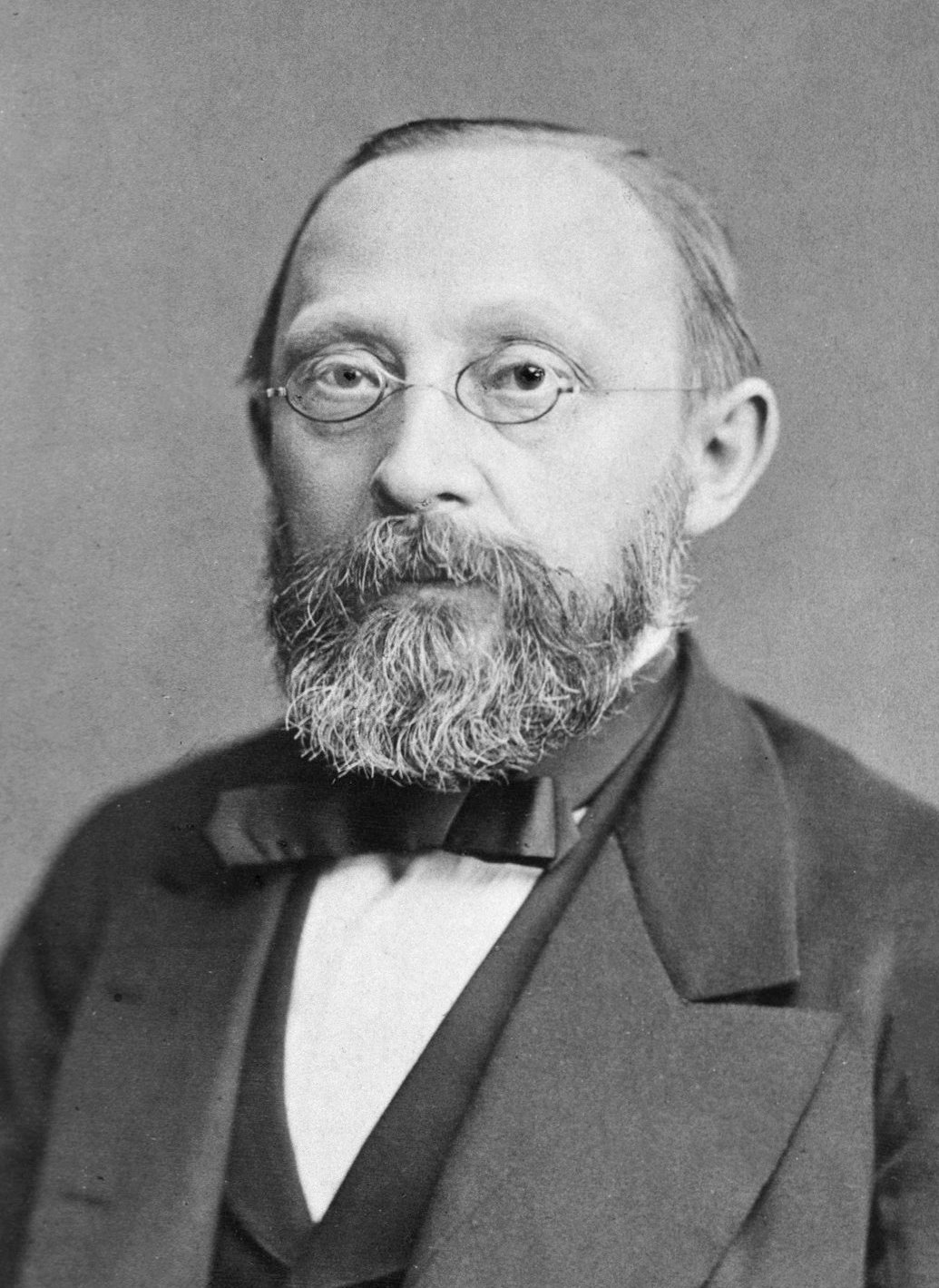
1848 VIRCHOW, Rudolf Ludwig Karl (1821 – 1902)
Mittheilungen über die in Oberschlesien herrschende Typhus-Epidemie.
Virchow was one of the first to identify medicine as a social science. He developed a theory of epidemics that emphasized the social circumstances permitting spread of illness. This approach has been called sociologic…
GMN 12083 · https://historyofmedicine.com/id/14292
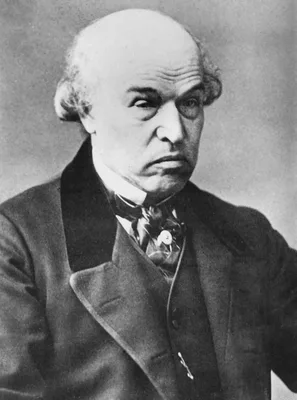
1849 JENNER, Sir William (1815 – 1898)
On typhoid and typhus fevers, – an attempt to determine the question of their identity or non-identity, by an analysis of the symptoms, and of the appearances found after death in 66 fatal cases observed at the London Fever Hospital from Jan. 1847–Feb. 1849.
Despite Stewart’s work, there was still controversy as to the identity of typhoid and typhus. Jenner’s paper demonstrated that the etiology of the two was quite different, that one did not communicate or protect again…
GMN 5027 · https://historyofmedicine.com/id/6752
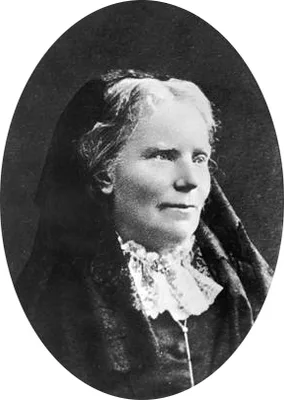
1849 BLACKWELL, Elizabeth (1821 – 1910)
Ship fever. An inaugural thesis, submitted for the degree of M.D., at Geneva Medical College, Jan. 1849.
Elizabeth Blackwell was the first woman to graduate M.D. in the United States. This paper on typhus was her first publication, and is thus the first publication in America by a woman physician educated in the United S…
GMN 11948 · https://historyofmedicine.com/id/14153
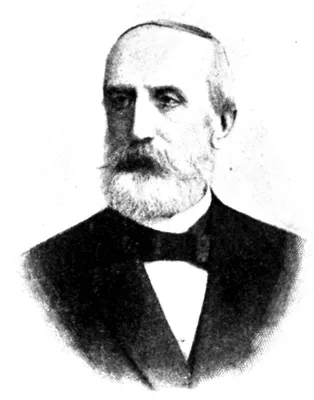
1861 BRAND, Ernst (1827 – 1897)
Die Hydrotherapie des Typhus.
Brand’s cold bath treatment of typhoid fever consisted of total immersion in water at 65°F. and the pouring of cold water over the neck and shoulders. The cold bath treatment of fevers was instituted by Currie (see No…
GMN 5028 · https://historyofmedicine.com/id/6758
1868 VIRCHOW, Rudolf Ludwig Karl (1821 – 1902)
Ueber den Hungertyphus und einige verwandte Krankheitsformen.
Virchow was instrumental in introducing into Germany an epidemiology based on the study of multiple factors – sociological as well as bacteriological. In the above report on the reappearance of typhus in Berlin and Ea…
GMN 5376 · https://historyofmedicine.com/id/7033
1894 BOGHURST, William (1631 – 1685); PAYNE, Joseph Frank (1840 – 1910)
Loimographia. An account of the great plague of London in the year 1665
This work was written in 1666 and first published as above. Boghurst, an apothecary, did good work during the great plague; in his book he differentiated plague from typhus. Payne’s introduction to the book contains s…
GMN 5120 · https://historyofmedicine.com/id/6092
1897 KRAUS, Rudolf (1868 – 1932)
Über specifische Reactionen im keimfreien Filtraten aus Cholera, Typhus und Pestbouillonculturen, erzeugt durch homologes Serum.
The precipitin reaction, employed for the qualitative identification of antigens and antibodies. English translation in Bibel, Milestones in immunology,(1988) pp. 265-68.
GMN 2550.1 · https://historyofmedicine.com/id/3665
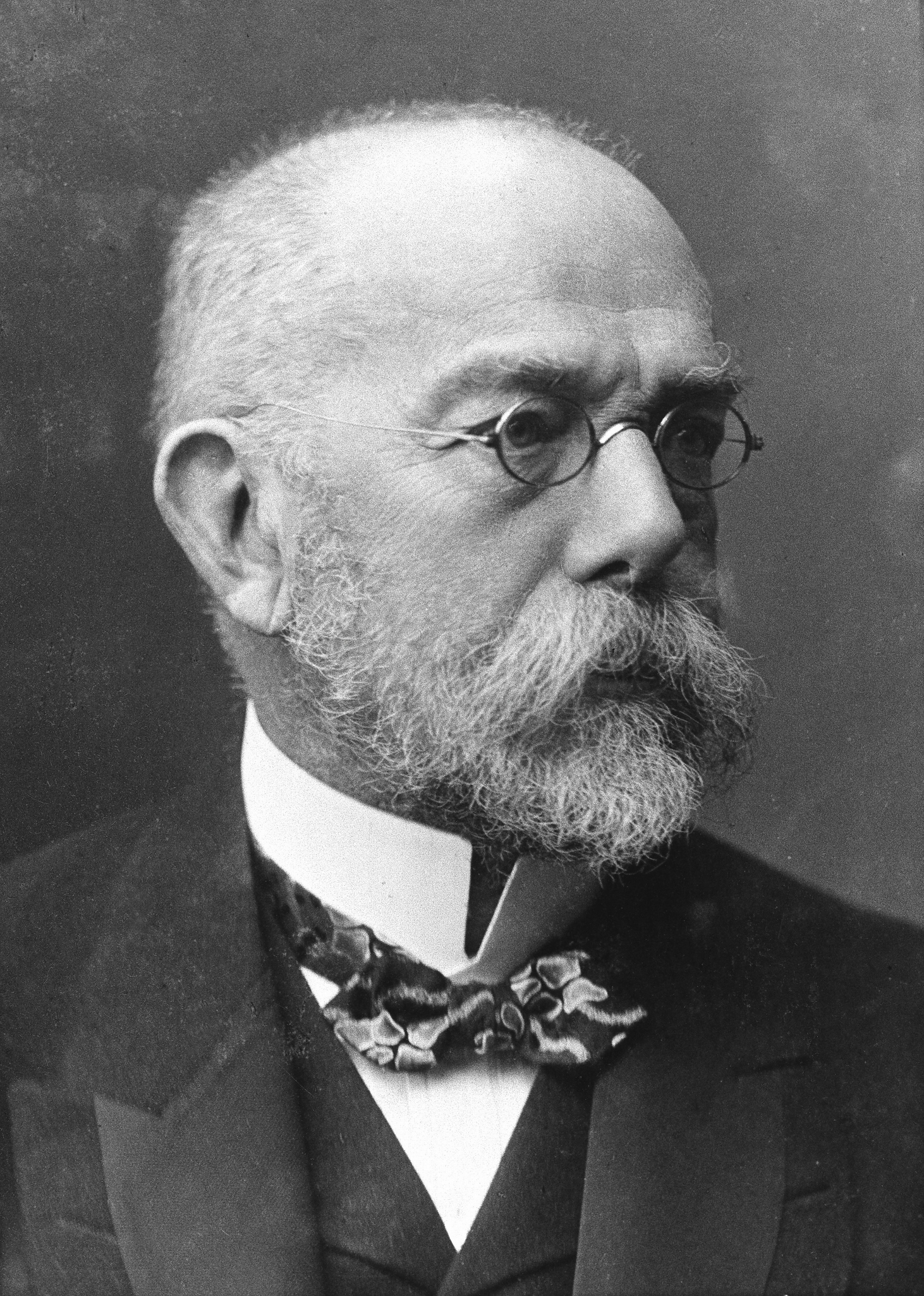
1903 KOCH, Robert Heinrich Hermann (1843 – 1910)
Die Bekämpfung des Typhus.
The prophylactic measures for the control of typhus suggested by Koch have been adopted almost everywhere.
GMN 5040 · https://historyofmedicine.com/id/5814
1909 WILSON, William James (1879 – 1954)
On heterologous agglutinins more particularly those present in the blood serum of cerebro-spinal fever and typhus fever cases.
The reaction described by Wilson was later developed by Weil and Felix and named after them (see No. 5390). See also the paper by Wilson in J. Hyg., 1920, 19, 115-30.
GMN 5381 · https://historyofmedicine.com/id/7072
1910 RICKETTS, Howard Taylor (1871 – 1910); WILDER, Russell Morse (1885 – 1959)
The relation of typhus fever (tabardillo) to Rocky Mountain spotted fever.
Ricketts and Wilder differentiated Rocky Mountain spotted fever and typhus.
GMN 5380 · https://historyofmedicine.com/id/7064
1910 RICKETTS, Howard Taylor (1871 – 1910); WILDER, Russell Morse (1885 – 1959)
The etiology of the typhus fever (tabardillo) of Mexico City. A further preliminary report.
Demonstration of the causal organism of typhus.
GMN 5380.1 · https://historyofmedicine.com/id/7067
1910 BRILL, Nathan Edwin (1860 – 1925)
An acute infectious disease of unknown origin. A clinical study based on 221 cases.
“Brill’s disease” – recrudescent typhus; first description.
GMN 5382 · https://historyofmedicine.com/id/7077
1910 CONOR, Alfred Leon Joseph (1870 – 1914); BRUCH, A
Une fièvre éruptive observée en Tunisie.
First description of fievre boutonneuse, a form of tick-borne typhus found in Tunisia.
GMN 5383 · https://historyofmedicine.com/id/7084
1910 –1911 NICOLLE, Charles Jules Henri (1866 – 1936)
Recherches experimentales sur le typhus exanthématique.
Nicolle demonstrated the transmission of typhus by the body louse Pediculus corporis. He also produced the disease in monkeys and guinea-pigs by the injection of infected blood. Preliminary communication in C. R. Acad…
GMN 5384 · https://historyofmedicine.com/id/7096
1915 PROWAZEK, Stanislaus Joseph Matthias von (1875 – 1915)
Ätiologische Untersuchungen über den Flecktyphus in Serbien 1913 und in Hamburg 1914.
Prowazek, like Ricketts and Wilder, demonstrated the specific causal agent in typhus. Like Ricketts he died of the disease.
GMN 5384.1 · https://historyofmedicine.com/id/7107
1916 SAXL, Paul (1880 – 1932)
Ueber die Behandlung von Typhus mit Milchinjektionen.
GMN 5043 · https://historyofmedicine.com/id/5819
1916 ROCHA-LIMA, Henrique da (1879 – 1956)
Zur Aetiologie des Fleckfiebers.
Rickettsia prowazeki, cause of epidemic typhus, was first isolated by the Brazilian microbiologist Henrique da Rocha-Lima, who named it after Ricketts and Prowazek, both of whom died of the disease.
GMN 5388 · https://historyofmedicine.com/id/7136
1916 FELIX, Arthur (1887 – 1956); WEIL, Edmund (1880 – 1922)
Zurserologischen Diagnose des Fleckfiebers.
Weil-Felix reaction for the diagnosis of typhus. See also the later paper in the same journal, 1916, 29, 974-78.
GMN 5390 · https://historyofmedicine.com/id/7144
1921 LOEWE, Leo (1896 – ); ET AL
Cultivation of rickettsia-like bodies in typhus fever.
Isolation of Rickettsia prowazeki from the blood. With S. A. Ritter and G. Baehr.
GMN 5392 · https://historyofmedicine.com/id/7151
1922 TODD, John Lancelot (1876 – 1949); WOLBACH, Simeon Burt (1880 – 1954); PALFREY, Francis Winslow (1876 – 1953)
The etiology and pathology of typhus. Being the main report of the Typhus Research Commission of the League of Red Cross Societies to Poland.
The carefully controlled experiments of Wolbach, Todd, and Palfrey eliminated all doubt that R. prowazeki was the causal agent in typhus. Digital facsimile from the U.S. National Library of Medicine at this link.
GMN 5393 · https://historyofmedicine.com/id/7155
1925 FLETCHER, William ( – 1938); LESSLAR, J. E.
Tropical typhus in the Federated Malay States, with a compilation on epidemic typhus.
Bull. Inst. med. Res., F. M. S., No. 2. Drew attention to scrub typhus in Malaya.
GMN 5394 · https://historyofmedicine.com/id/7160
1926 FLETCHER, William ( – 1938); LESSLAR, J. E.
The Weil-Felix reaction in sporadic tropical typhus.
Bull. Inst. Med. Res., F. M. S., 1926, No. 1. Demonstration that scrub-typhus patients developed agglutinins against the OX-K strain of B. proteus but not the OX-19 strain.
GMN 5395 · https://historyofmedicine.com/id/7165
1926 MAXCY, Kenneth Fuller (1889 – 1966)
Clinical observations on endemic typhus (Brill’s disease) in Southern United States.
Maxcy described murine (flea-borne) typhus (“Maxcy’s disease”).
GMN 5396 · https://historyofmedicine.com/id/7169
1926 BUER, M. C.
Health, wealth and population in the early days of the industrial revolution.
Chapters on water supply, 18th physicians and pioneers of public health, the hospital and dispensary movement, general hygiene and midwifery, rickets and scurvy, antiseptics, smallpox, anti-typhus campaign, malaria, etc.
GMN 10467 · https://historyofmedicine.com/id/12660
1928 MOOSER, Hermann (1891 – 1971)
Experiments relating to the pathology and the etiology of Mexican typhus (tabardillo).
Mooser differentiated murine from epidemic typhus. The causative organism was later named Rickettsia mooseri.
GMN 5396.1 · https://historyofmedicine.com/id/7173
1931 DYER, Rollo Eugene (1886 – ); ET AL
Typhus fever. A virus of the typhus type derived from fleas collected from wild rats.
Murine typhus shown to be caused by an organism later named Rickettsia mooseri, transmitted by fleas from rats to man. With A. Rumreich and L. F. Badger.
GMN 5396.2 · https://historyofmedicine.com/id/7175
1934 ZINSSER, Hans (1878 – 1940)
Varieties of typhus virus and the epidemiology of the American form of European typhus fever (Brill’s disease).
Zinsser advanced the theory that Brill’s disease is a recrudescence of epidemic typhus in persons who have contracted the typhus some time previously. The condition has subsequently been renamed “Brill-Zinsser disease”.
GMN 5396.4 · https://historyofmedicine.com/id/7180
1940 COX, Herald Rea (1907 – 1986); BELL, E. John
Epidemic and endemic typhus. Protective value for guinea pigs of vaccines prepared from infected tissues of the developing chick embryo.
Typhus vaccine.
GMN 5398.1 · https://historyofmedicine.com/id/7191
1940 LEWTHWAITE, Raymond (1894 – 1972); SAVOOR, S. R. (1900 – 1980)
Rickettsia disease of Malaya. Identity of tsutsugamushi and rural typhus.
Lewthwaite and Savoor showed scrub typhus to be identical to tsutsugamushi fever.
GMN 5398.2 · https://historyofmedicine.com/id/7195
1944 YEOMANS, Andrew (1907 – ); ET AL
The therapeutic effect of para-aminobenzic acid in louse-borne typhus fever.
With J. C. Snyder, E. S. Murray, C. J. D. Zarafonetis, and R. S. Ecke.
GMN 5398.3 · https://historyofmedicine.com/id/7199
1945 FULTON, Forrest (1913 – 1971); JOYNER, L
Cultivation of Rickettsia tsutsugamushi in lungs of rodents. Preparation of a scrub-typhus vaccine.
Scrub-typhus vaccine.
GMN 5399 · https://historyofmedicine.com/id/7205
1947 SMADEL, Joseph Edwin (1907 – 1963); JACKSON, Elizabeth B.
Chloromycetin, an antibiotic with chemotherapeutic activity in experimental rickettsial and viral infections.
Introduction of chloramphenicol, used in treatment of typhus.
GMN 1940 · https://historyofmedicine.com/id/8617

![CARDANO, Girolamo [Gerolamo; Hieronymus Cardanus] (1501 – 1576)](/media/portraits/7679)