1623 ABREU, Aleixo de (1568 – 1630)
Tratado de las siete enfermedades, de la inflammacion universal del higado, zirbo, pyloron, y riñones, y de la obstrucion, de la satiriasi, de la terciana y febre maligna, y passion hipocondriaca. Lleva otros tres tratados, del mal de Loanda, del guzano, y de las fuentes y sedales.
The first important work on tropical diseases. Only six copies of the original edition of this book are known. It includes full accounts of malaria, typhoid, and scurvy, and the first accurate descriptions of yellow f…
GMN 2262.1 · https://historyofmedicine.com/id/2808
1624 SPIEGHEL, Adriaan van der [SPIGELIUS] (1578 – 1625)
De semitertiana libri quatuor.
First extensive account of malaria.
GMN 5229 · https://historyofmedicine.com/id/7857
1656 BADO, Sebastiano [Baldi, Baldo] (1610 – 1676)
Cortex Peruviae redivivus, profligator febrium, assertus ab impugnationibus Melippi Protimi ...
The first book on Peruvian bark or cinchona (chinchona) in the treatment of malaria.
GMN 7620 · https://historyofmedicine.com/id/9792
1663 BADO, Sebastiano [Baldi, Baldo] (1610 – 1676)
Anastasis corticis Peruviae, seu chinae defensio
A defence of the virtues of Jesuit's bark or Peruvian bark (cinchona, chinchona), the most celebrated specific remedy for malaria. It was obtained from the bark of several species of the genus Cinchona, of the Rubiace…
GMN 1826 · https://historyofmedicine.com/id/7875
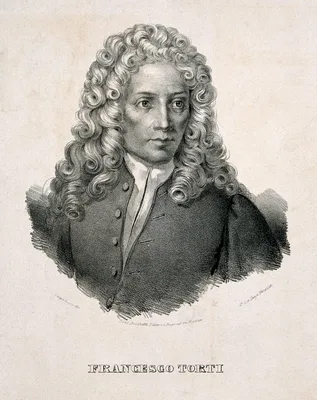
1712 TORTI, Francesco (1658 – 1741)
Therapeutice specialis ad febres quasdam pemiciosas, inopinato, ac repente lethales, una vera china china, peculiare methodo ministrata, sanabiles
Torti’s work finally established the specific nature of cinchona bark. His demonstration of its effectiveness in periodic over continuous fevers finally overthrew the doctrine of the common origin of all fevers. He is…
GMN 5231 · https://historyofmedicine.com/id/7866
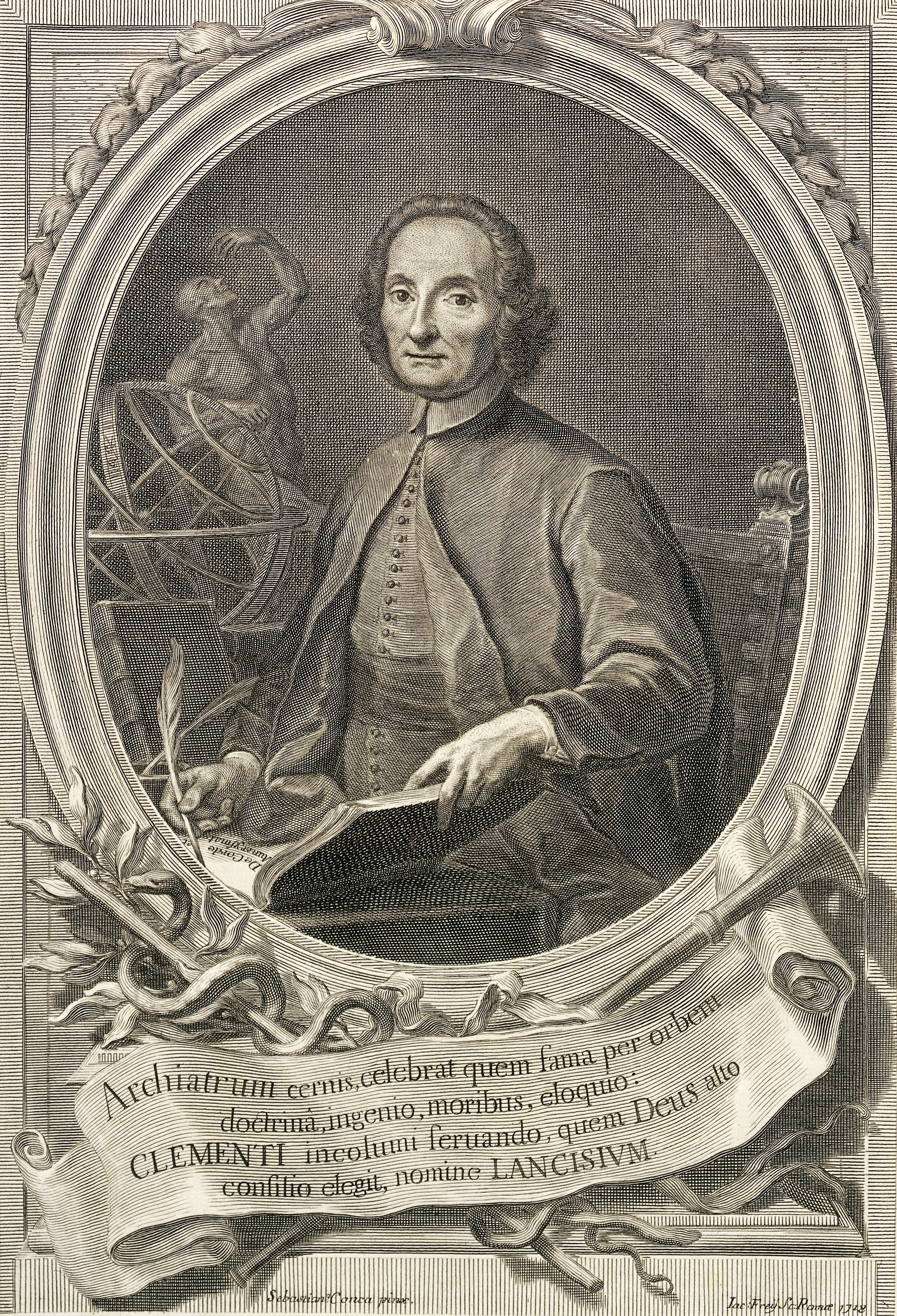
1717 LANCISI, Giovanni Maria (1654 – 1720)
De noxiis paludum effluviis, eorumque remediis.
Lancisi suggested that since malaria disappears after drainage it was due to some sort of poison emanating from marshes and possibly transmitted by mosquitoes. He planned a drainage scheme for marshy regions. His work…
GMN 5232 · https://historyofmedicine.com/id/7877
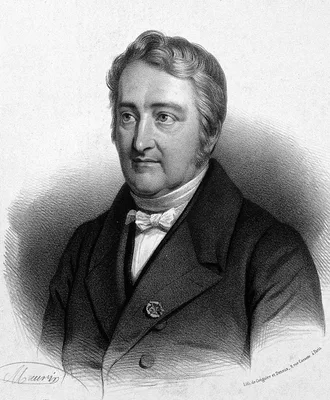
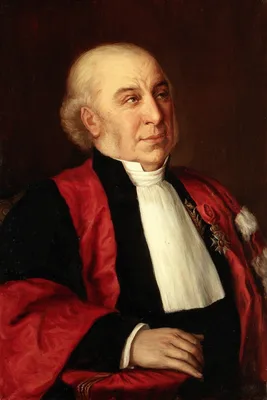
1820 PELLETIER, Pierre Joseph (1788 – 1842); CAVENTOU, Joseph Bienaimé (1795 – 1877)
Recherches chimique sur les quinquinas.
Isolation of quinine.
GMN 5233 · https://historyofmedicine.com/id/7879
1825 HEUSTIS, Jabez Wiggins (1784 – 1841)
Medical facts and inquiries, respecting the causes, nature, prevention and cure of fever: more expressly in relation to the endemic fevers of summer and autumn in the southern states: Together with a history of the bilious remitting fever of Alabama, as it appeared in Cahawba and its vicinity in the summers and autumns of 1821 and 1822.
Digital facsimile from the U.S. National Library of Medicine at this link.
GMN 10518 · https://historyofmedicine.com/id/12711
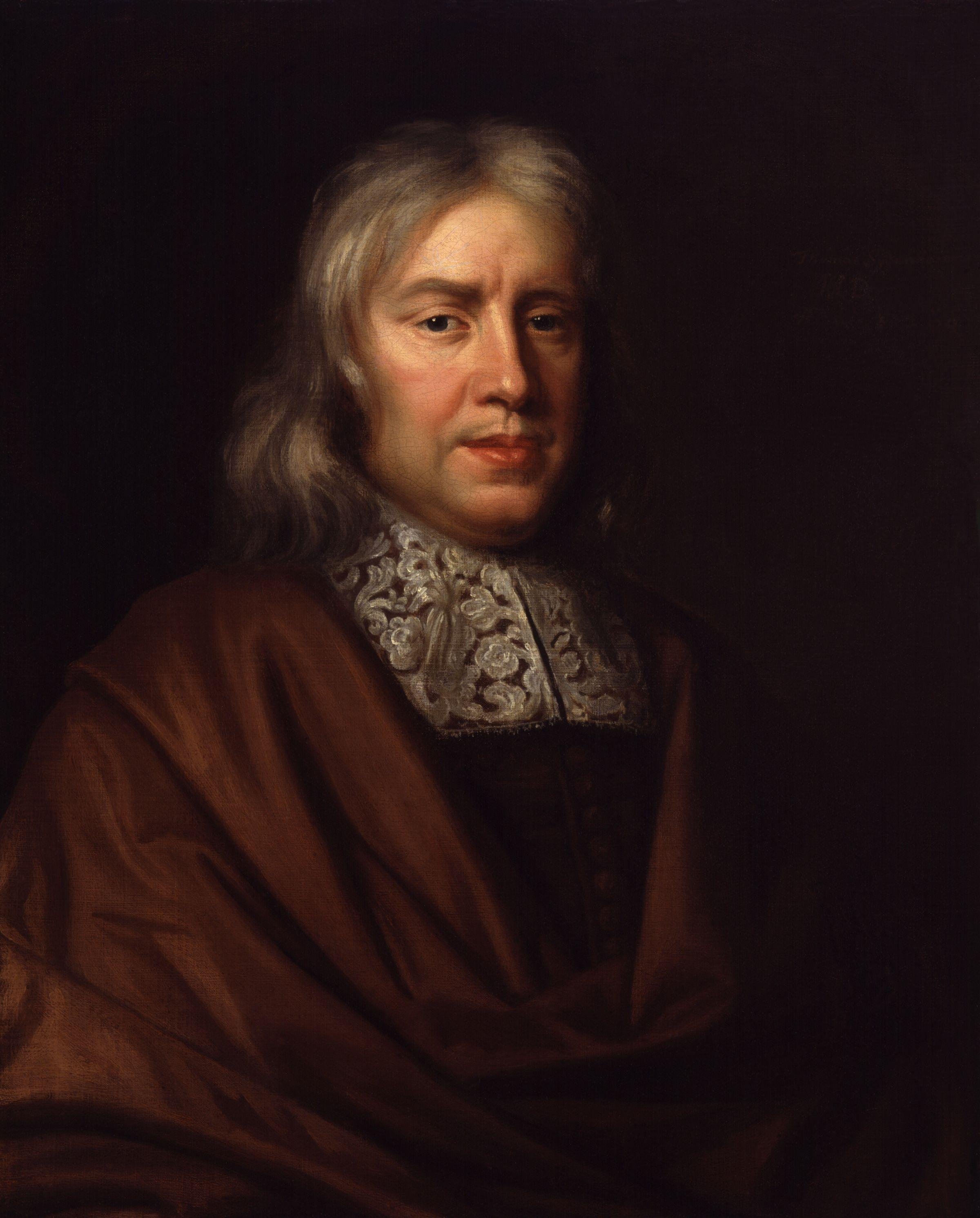
1844 SYDENHAM, Thomas (1624 – 1689); GREENHILL, William Alexander (1814 – 1894)
Thomae Sydenham, M. D., Opera omnia. Edidit Gulielmus Alexander Greenhill.
Sydenham has been called the “Father of English Medicine”. His reputation rests on his first-hand accounts of such conditions as the malarial fevers of his times, gout, scarlatina, measles, etc. A better edition of th…
GMN 63 · https://historyofmedicine.com/id/991
1844 SAPPINGTON, John S. (1776 – 1856)
The theory and treatment of fevers. Revised and corrected by Ferdinando Stith.
The first medical treatise published in Missouri and the first medical treatise published west of the Mississippi River. "John Sappington provided medical services, was a financial lender, and imported and exported go…
GMN 10446 · https://historyofmedicine.com/id/12639
1849 MITCHELL, John Kearsley (1793 – 1858)
On the cryptogamous origin of malarious and epidemic fevers.
Although Hensinger in 1844 had suggested a parasite as the cause of malaria, Mitchell was the first to approach this theory in a scientific spirit. He was Professor of Medicine at Jefferson College, and the father of …
GMN 5234 · https://historyofmedicine.com/id/7880
1850 –1854 DRAKE, Daniel (1785 – 1852); SMITH, Samuel Hanbury (1810 – 1894); SMITH, Francis G.
A systematic treatise, historical, etiological, and practical, on the principal diseases of the interior valley of North America as they appear in the Causcasian, African, Indian, and Esquimaux varieties of Its population. 2 vols.
This classical contribution to the social / medical history of North America includes the most important work on the natural history of malaria published up to that time. Digital facsimile of vol. 1 from the Internet …
GMN 1777 · https://historyofmedicine.com/id/3345
1874 BERENGER-FÉRAUD, Laurent Jean Baptiste (1832 – 1900)
De la fièvre bilieuse mélanurique des pays chauds comparée avec la fièvre jaune.
An important description of blackwater fever. Berenger-Féraud had experience with the disease in French West Africa.
GMN 5235 · https://historyofmedicine.com/id/7883
1881 LAVERAN, Charles Louis Alphonse (1845 – 1922)
Un nouveau parasite trouvé dans le sang plusieurs malades atteints de fièvre palustre.
Laveran first saw the malaria parasite on 20 October 1880; he at once recognized its significance. He named it Oscillaria malariae. English translation in Kean (No. 2268.1). Laveran also published a monograph on the d…
GMN 5236 · https://historyofmedicine.com/id/7884
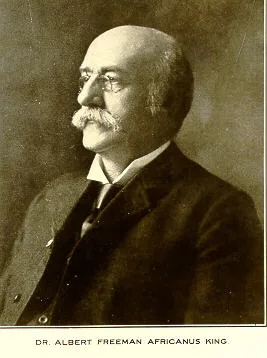
1883 KING, Albert Freeman Africanus (1841 – 1914)
Insects and disease - mosquitoes and malaria.
The first reasoned argument in support of the belief of transmission of malaria by mosquitoes. King was an English-born American physician who witnessed the assassination of Abraham Lincoln in April, 1865, and as a by…
GMN 5237 · https://historyofmedicine.com/id/7886
1885 MARCHIAFAVA, Ettore (1847 – 1935); CELLI, Angelo (1857 – 1914)
Weitere Untersuchungen über die Malariainfection.
First accurate description of the malaria Plasmodium, discovered by Laveran in 1880. These writers were the first to adopt the name P. malariae.
GMN 5238 · https://historyofmedicine.com/id/7889
1885 DANILEVSKI, Vasili Iakovlevich (1852 – 1934)
Zur Parasitologie des Blutes.
Discovery of malaria parasites in birds. See also Ann. Inst. Pasteur, 1890, 4, 427-31.
GMN 5238.1 · https://historyofmedicine.com/id/7893
1886 GOLGI, Camillo (1844 – 1926)
Sull infezione malarica.
Description of the development of the parasite of quartan malaria. Golgi differentiated the tertian and quartan parasites by the periods of their respective developments.
GMN 5239 · https://historyofmedicine.com/id/7894
1889 GOLGI, Camillo (1844 – 1926)
Sul ciclo evolutivo dei parassiti malarica nella febbre terzana.
Golgi showed that the parasite of quartan differs from that of tertian malarial fever. English translation in Kean (No. 2268.1).
GMN 5240 · https://historyofmedicine.com/id/7895
1890 CANALIS, Pietro (1856 – 1939)
Études sur l’infection malarique. Sur la variété parasitaire des corps en croissant de Laveran et sur les fièvres palustres qui en dérivent.
Canalis demonstrated and clearly differentiated Plasmodium falciparum from the species vivax and malariae.
GMN 5240.1 · https://historyofmedicine.com/id/7896
1891 GRASSI, Giovanni Battista (1854 – 1925); FELETTI, Raimondo (1851 – 1928)
Malariaparasiten in den Vögeln.
Confirmation of the work of Laveran.
GMN 5241 · https://historyofmedicine.com/id/7897
1891 EHRLICH, Paul (1854 – 1915); GUTTMANN, Paul (1834 – 1893)
Ueber die Wirkung des Methylenblau bei Malaria.
Guttmann and Ehrlich demonstrated methylene blue to be lethal in vitro for the malaria parasite – the beginning of Ehrlich’s work on chemotherapy.
GMN 5241.1 · https://historyofmedicine.com/id/7898
1891 ROMANOWSKY, Dmitri Leonidovich (1861 – 1921)
K voprosu o parazitologii i terapii bolotnoi likhoradki. [Parasitology and treatment of malarial fever.]
Romanovsky made important studies of the malaria parasite and introduced a special stain for its demonstration. German version in St. Petersburger med. Wschr., 1891, 8, 297-302, 306-15. English translation in Kean (No…
GMN 5242 · https://historyofmedicine.com/id/7899
1892 GOLGI, Camillo (1844 – 1926)
Azione della chinina sui parasite malarici e sui corrispondente accessi febbrili.
French translation in Arch. ital. Biol., 1892, 17, 456-71.
GMN 5243 · https://historyofmedicine.com/id/7900
1892 MARCHIAFAVA, Ettore (1847 – 1935); BIGNAMI, Amico (1862 – 1929)
Sulle febbre malariche estivo-autumnali.
A summary of the Italian work on malaria. English translation, 1894.
GMN 5244 · https://historyofmedicine.com/id/7901
1894 MANSON, Sir Patrick (1844 – 1922)
On the nature and significance of the crescentic and flagellated bodies in malarial blood.
Manson’s mosquito–malaria hypothesis. See also his Gulstonian Lectures in Lancet, 1896, 1, 695-98, 751-55, 831-33.
GMN 5245 · https://historyofmedicine.com/id/7902
1897 MACCALLUM, William George (1874 – 1944)
On the flagellated form of the malarial parasite.
MacCallum reported at a meeting of the British Association his observation of the mode of fertilization of the malarial parasite of birds; two months later he announced that he had found the same to hold good for the …
GMN 5246 · https://historyofmedicine.com/id/7903
1897 ROSS, Sir Ronald (1857 – 1932)
On some peculiar pigmented cells found in two mosquitoes fed on malarial blood.
Ross proved that the mosquito was responsible for the transmission of malaria. On 20 August 1897, he found Laveran’s Plasmodium in the stomach of the Anopheles mosquito after it had fed on the blood of malaria patient…
GMN 5247 · https://historyofmedicine.com/id/7904
1898 KOCH, Robert Heinrich Hermann (1843 – 1910)
Reise-Bericht über Rinderpest, Bubonenpest in Indien und Afrika, Tsetse-oder Surrakrankheit, Texasfieber, tropische Malaria, Schwarzwasserfieber.
GMN 2457 · https://historyofmedicine.com/id/2986
1898 LAVERAN, Charles Louis Alphonse (1845 – 1922)
Traité du paludisme.
GMN 5248 · https://historyofmedicine.com/id/7905
1898 OPIE, Eugene Lindsay (1873 – 1971)
On the haemocytozoa of birds.
Demonstration of sexual conjugation in the malaria parasite. See also No. 5250.
GMN 5249 · https://historyofmedicine.com/id/7906
1898 MACCALLUM, William George (1874 – 1944)
Notes on the pathological changes in the organs of birds infected with haemocytozoa.
MacCallum and Opie discovered the sexual phase of malaria parasites.
GMN 5250 · https://historyofmedicine.com/id/7907
1898 ROSS, Sir Ronald (1857 – 1932)
The rôle of the mosquito in the evolution of the malarial parasite.
Ross provided the last link in the chain demonstrating the complete life-cycle of the parasite of bird malaria. He found that mosquitoes which had fed on malaria-infected birds, and which had allowed the parasites to …
GMN 5251 · https://historyofmedicine.com/id/7908
1899 BIGNAMI, Amico (1862 – 1929); GRASSI, Giovanni Battista (1854 – 1925)
Ciclo evolutivo della semilune nell’ Anopheles claviger.
Grassi and Bignami showed that the Plasmodium undergoes its sexual phase only in the Anopheles mosquito.
GMN 5252 · https://historyofmedicine.com/id/7909
1900 GRASSI, Giovanni Battista (1854 – 1925)
Studi di uno zoologo sulla malaria.
Includes the best illustrations of the various stages of the malaria parasite published up to that time.
GMN 5252.1 · https://historyofmedicine.com/id/7910
1900 MANSON, Sir Patrick (1844 – 1922)
Experimental proof of the mosquito-malaria theory.
In a classic demonstration Manson allowed infected mosquitoes from Rome to bite a volunteer (his son) in London, who developed malaria 15 days later with tertian parasites in the blood, and who was cured by quinine.
GMN 5252.2 · https://historyofmedicine.com/id/7911
1901 –1910 THEOBALD, Frederick Vincent (1868 – 1930)
A monograph of the Culicidae, or mosquitoes. Mainly compiled from the collections received at the British Museum from various parts of the world in connection with the cause of malaria conducted by the Colonial Office and the Royal Society. 4 vols. and atlas.
Digital facsimile from the Internet Archive at this link.
GMN 346 · https://historyofmedicine.com/id/253
1901 LEISHMAN, Sir William Boog (1865 – 1926)
Note on a simple and rapid method of producing Romanowsky staining in malarial and other blood films.
“Leishman’s stain”, a modification of that introduced by Romanovsky in 1891.
GMN 5253 · https://historyofmedicine.com/id/7912
1902 ROSS, Sir Ronald (1857 – 1932)
Mosquito brigades and how to organise them.
Digital facsimile from the Internet Archive at this link.
GMN 9260 · https://historyofmedicine.com/id/11442
1903 SCHAUDINN, Fritz Richard (1871 – 1906)
Studien über krankheitserregende Protozoen. II. Plasmodium vivax (Grassi & Feletti), der Erreger des Tertianfiebers beim Menschen.
Confirmation of the work of Ross and of Grassi.
GMN 5254 · https://historyofmedicine.com/id/7913
1903 –1929 GOLGI, Camillo (1844 – 1926)
Opera Omnia. Volume I: Istologia normale—1870-1883 (Con 21 Tavole e ritratto); Volume II: Istologia normale—1883-1902 (Con 21 tavole); Volume III: Patologia generale e isto-patologia—1868-1894 (Con 9 Tavole). Volume IV: Scritti su argomenti varii.
Limited to 325 copies, including material not previously published.
GMN 7338 · https://historyofmedicine.com/id/9509
1905 CRAIG, Charles Franklin (1872 – 1950)
Intracorpuscular conjugation in the malarial plasmodia and its significance.
Demonstration of the existence of malarial carriers.
GMN 5255 · https://historyofmedicine.com/id/7914
1909 JONES, William Henry Samuel (1876 – 1963); WITHINGTON, Edward Theodore (1860 – 1947)
Malaria and Greek history. To which is added the history of Greek therapeutics and the malaria theory by E.T. Withington.
The view is put forward by the writer that malarial infection was the cause of the decadence of the Greeks. Digital facsimile from the Internet Archive at this link.
GMN 5263 · https://historyofmedicine.com/id/8555
1912 BASS, Charles Cassedy (1885 – 1975); JOHNS, Foster Matthew (1889 – 1936)
The cultivation of malaria plasmodia (Plasmodium vivax and Plasmodium falciparum) in vitro.
Cultivation of the malaria parasite.
GMN 5255.1 · https://historyofmedicine.com/id/7915
1915 GORGAS, William Crawford (1854 – 1920)
Sanitation in Panama.
"Gorgas capitalized on the momentous work of ... Walter Reed, who had himself built much of his work on insights of a Cuban doctor, Carlos Finlay, to prove the mosquito transmission of yellow fever. He won internation…
GMN 9259 · https://historyofmedicine.com/id/11441
1918 –1919 WAGNER VON JAUREGG, Julius (1857 – 1940)
Ueber die Einwirkung der Malaria auf die progressive Paralyse.
In 1917 Wagner von Jauregg returned to the idea of the inoculation of paretics with malaria to induce pyrexia, first proposed by him in 1887 (Ueber die Einwirkung fieberhafter Erkrankungen auf Psychosen, Jb. Psychiat.…
GMN 4806 · https://historyofmedicine.com/id/1579
1922 STEPHENS, John William Watson (1865 – 1946)
A new malaria parasite of man.
Plasmodium ovale described.
GMN 5255.2 · https://historyofmedicine.com/id/7916
1923 JONES, William Henry Samuel (1876 – 1963); HIPPOCRATES, [Ἱπποκράτης; Hippocrates of Kos] (-460 – -370)
Epidemics I and III. In [Works] with English translation by W.H.S. Jones, 1, 139-287
Hippocrates may be regarded as the first malariologist; he clearly and fully described the intermittent fevers; he was acquainted with seasonal and topographical variations in the distribution of malaria; and he recog…
GMN 5228 · https://historyofmedicine.com/id/7854
1926 –1927 ROEHL, Wilhelm ( – 1929)
Die Wirkung des Plasmochins auf die Vogelmalaria.
Introduction of plasmoquine (pamaquin) in the treatment of malaria.
GMN 5256 · https://historyofmedicine.com/id/7917
1928 SINTON, Brigadier John Alexander (1884 – 1956); BIRD, William
Studies in malaria, with special references to treatment. Part IX. Plasmoquine in the treatment of malaria.
Clinical trials of pamaquin.
GMN 5256.1 · https://historyofmedicine.com/id/7918

![HIPPOCRATES, [Ἱπποκράτης; Hippocrates of Kos] (-460 – -370)](/media/portraits/50)