1598 WATESON, George
The cures of the diseased, in remote regions. Preventing mortalitie, incident in forraine attempts, of the English nation.
This book is the earliest work in English devoted to tropical medicine. It discusses sunstroke, tabardilla (possibly typhus or yellow fever), prickly heat, dysentery, erysipelas and scurvy. Facsimile reproduction, wit…
GMN 2262 · https://historyofmedicine.com/id/2805
1623 ABREU, Aleixo de (1568 – 1630)
Tratado de las siete enfermedades, de la inflammacion universal del higado, zirbo, pyloron, y riñones, y de la obstrucion, de la satiriasi, de la terciana y febre maligna, y passion hipocondriaca. Lleva otros tres tratados, del mal de Loanda, del guzano, y de las fuentes y sedales.
The first important work on tropical diseases. Only six copies of the original edition of this book are known. It includes full accounts of malaria, typhoid, and scurvy, and the first accurate descriptions of yellow f…
GMN 2262.1 · https://historyofmedicine.com/id/2808
1667 DU TERTRE, Jean Baptiste (1610 – 1687)
Histoire générale des Antilles habités par les Français. Tom. 1.
Du Tertre, a priest, described (pp. 81, 99, 423) the outbreaks of yellow fever at Guadeloupe in 1635, 1640, and 1648.
GMN 5450 · https://historyofmedicine.com/id/7513
1694 ROSA, João Ferreira da (Ferreyra da Rosa)
Trattado unico da constituiçam pestilencial de Pernambuco, offerecido a ElRey N.S. por ser servido ordenar por seu Governador aos Medicos da America, que assistem aonde ha este contagio, que o compusessem para se conferirem pelos Coripheos da Medicina aos dictames com que he trattada esta pestilencial febre.
The first scientific description of yellow fever in Brazil by the first European physician to treat the disease in Brazil, and perhaps in all of Latin America. It includes the description of the first autopsy of a yel…
GMN 8930 · https://historyofmedicine.com/id/11108
1755 INGRAM, Dale (1710 – 1793)
An historical account of the several plagues that have appeared in the world since the year 1346. With an enquiry Into the present prevailing opinion, that the plague is a contagious distemper, capable of being transported in merchandize, from one country to another. In which the absurdity of such notions is exposed, and the arguments that have been made use of to support them, refuted. To which are added a particular account of the yellow fever, shewing its periodical appearance to be similar to the plague. Also observations on Dr Mackenzie's letters; read before the Royal Society on this subject. And an abstract of Capt. Isaac Clemens's voyage in the Sloop Fawey, from their arrival in the Mould of Algiers, to the sinking of her, on a supposition that the plague was on board her. Taken from his log-book
Digital facsimile from Google Books at this link.
GMN 10510 · https://historyofmedicine.com/id/12703
1793 CAREY, Mathew (1760 – 1839)
A short account of the malignant fever, lately prevalent in Philadelphia: With a statement of the proceedings that took place on the subject in different parts of the United States.
Carey was a Philadelphia publisher and economist rather than a physician. In this little book, which passed through four editions in a few months, Carey left a graphic description of the great yellow fever epidemic of…
GMN 5451 · https://historyofmedicine.com/id/7515
1793 CURRIE, William (1754 – 1828)
A description of the malignant, infectious fever prevailing at present in Philadelphia; with an account of the means to prevent infection, and the remedies and method of treatment, which have been found most successful.
Digital facsimile from the Internet Archive at this link.
GMN 5452 · https://historyofmedicine.com/id/7523
1794 RUSH, Benjamin (1745 – 1813)
An account of the bilious remitting yellow fever, as it appeared in the city of Philadelphia in the year 1793.
Benjamin Rush was the most eminent figure in Philadelphia medicine in his day. His description of the yellow fever epidemic of 1793 is classic. He did magnificent work in treating the sick during the epidemic and in p…
GMN 5453 · https://historyofmedicine.com/id/7528
1794 JONES, Absolom (1746 – 1818); ALLEN, Richard (1760 – 1831); CLARKSON, Matthew (1733 – 1800)
A narrative of the proceedings of the black people during the late awful calamity in Philadelphia, in the year 1793: and a refutation of some censures thrown upon them in some late publications.
A refutation of slights by Matthew Carey in his Short account of the malignant fever, lately prevalent in Philadelphia (1793; No. 5451) to the important contributions of black people, many of whom served as nurses and…
GMN 5453.1 · https://historyofmedicine.com/id/7530
1794 DEVÈZE, Jean (1753 – 1829)
An enquiry into, and observations upon the causes and effects of the epidemic disease, which raged in Philadelphia from the month of August till towards the middle of December, 1793.
Text in English and French on facing pages. Digital facsimile from the Medical Heritage Library, Internet Archive at this link.
GMN 9387 · https://historyofmedicine.com/id/11570
1795 CHISHOLM, Colin (1755 – 1825)
An essay on the malignant pestilential fever introduced into the West Indian Islands from Boullam, on the coast of Guinea, as it appeared in 1793 and 1794.
Chisholm, "Surgeon to his Majesty's Ordnance in Grenada," was apparently the first to observe the mode of transmission of the Guinea worm, Dracunculus medinensis. Chishom was also one of the first to recognize that th…
GMN 5336.3 · https://historyofmedicine.com/id/6710
1797 SEAMAN, Valentine (1770 – 1817)
An inquiry into the cause of the prevalence of the yellow fever in New-York.
Includes four early plot maps; Seaman was one of the first to create maps that attempted to show the spread of contagious disease.
GMN 7687 · https://historyofmedicine.com/id/9859
1799 LINING, John (1708 – 1760)
A description of the American yellow fever, which prevailed at Charleston, in South Carolina, in the year 1748.
Digital facsimile from U.S. National Library of Medicine at this link.
GMN 10511 · https://historyofmedicine.com/id/12704
1801 ASSALINI, Paolo (1759 – 1846)
Observations sur la maladies appelée peste, le flux dissentérique, l'ophtalmie d'Égypte, et les moyens de s'en préserver. Avec des notions sur la fièvre jaune de Cadix, et les projet et plan d'un hôpital, pour le traitement maladies épidémiques et contagieuses.
At the time of publication Assalini, a military surgeon with Napoleon, characterized himself on the title page as "Docteur en Médecine et Chirugien de 1re classe de la Garde des Consuls..." Digital facsimile from well…
GMN 12053 · https://historyofmedicine.com/id/14261
1802 GILBERT, Nicolas-Pierre (1751 – 1814); TRABUC, Michel; BONAMY, Louis Esprey
Instruction des Officiers de Santé en Chef de l'Armée sur les maladies internes et externes des troupes à Sainte-Domingue, et sur leur traitement.
The date of this undated work has been inferred. The 40-page pamphlet issued during the early stages of the French expedition to the island, provided instructions by the chief medical officers of the army for medical …
GMN 13356 · https://historyofmedicine.com/id/15627
1803 GILBERT, Nicolas-Pierre (1751 – 1814)
Histoire médicale de l'Armée Française, a Saint-Domingue, en l'an dix; ou mémoire sur la fièvre jaune, avec un apperçu de la topographie médicale de cette colonie.
Digital facsimile from Google Books at this link.
GMN 9657 · https://historyofmedicine.com/id/11844
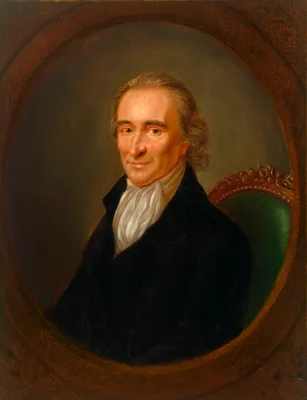
1807 PAINE, Thomas (1737 – 1809)
Of the cause of the yellow fever; and the means of preventing it in places not yet infected with it: Addressed to the Board of Health in America.
This 13-page pamphlet was probably the only medical publication by the English-born American political activist, philosopher, political theorist, and revolutionary, Thomas Paine. Paine's essay was first published in n…
GMN 12875 · https://historyofmedicine.com/id/15122
1814 CHARAULT, C. R.
Coup-d'oeil sur Saint-Domingue; observations sur le caractère des négres et sur la fièvre jaune; moyens de recouvrer cette colonie, et de se préserver des maladies qui y règnent.
Digital facsimile from patrimoines-martinique.org at this link.
GMN 8219 · https://historyofmedicine.com/id/10395
1819 PASCALIS OUVIERE, Felix (1762 – 1833)
A statement of the occurrences during a malignant yellow fever in the city of New-York, in the summer and autumnal months of 1819; and of the check given to its progress, by the measures adopted by the Board of Health. With a list of cases and names of sick persons, and a map of their places of residence within the infected and proscribed limits: With a view of ascertaining, by comparative arguments, whether the distemper was engendered by domestic causes, or communicated by human contagion from foreign ports.
Pascalis mapped this yellow fever outbreak using a method similar to Valentine Seaman, but with a more extensive and detailed list of cases. A condensation of his 60-page pamphlet with a reissue of his map appeared in…
GMN 10456 · https://historyofmedicine.com/id/12649
1820 PARISET, Étienne (1770 – 1847); MAZET, André (1793 – 1821)
Observations sur la fièvre jaune, faites à Cadix, en 1819 par MM. Pariset et Mazet, docteurs en médecine de la Faculté de Paris, et rédigées par M. Pariset.
Pariset and Mazet distinguished themselves combating an outbreak of yellow fever in Spain. Pariset's colleague was apparently not involved with publication of the book, and died in a yellow fever outbreak in Barcelona…
GMN 8948 · https://historyofmedicine.com/id/11127
1822 HARDIE, James (1758 – 1826)
An account of the yellow fever which occurred in the city of New York, in the year 1822, to which is prefixed a brief sketch of the different pestilential diseases, with which this city was afflicted, in the years 1798, 1799, 1803 & 1805, with the opinion of several of our most eminent physicians, respecting the origin of the disease, its prevention and cure.To which is added a correct list of all the deaths by yellow fever during the late season.
Digital facsimile from the Internet Archive at this link.
GMN 9523 · https://historyofmedicine.com/id/11709
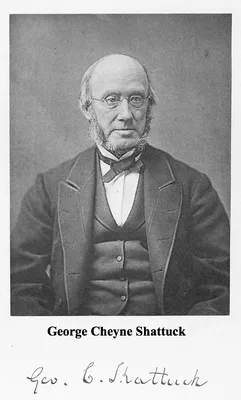
1839 TROUSSEAU, Armand (1801 – 1867); LOUIS, Pierre Charles Alexandre (1787 – 1872); SHATTUCK, George Cheyne (1813 – 1893)
Anatomical, pathological and therapeutic researches on the yellow fever of Gibraltar of 1828, by P. Ch. A. Louis. From observations taken by himself and M. Trousseau as memebers of the French Commission at Gibraltar. Translated from the manuscript by G. C. Shattuck.
The Translator's Introduction begins as follows: "The work now presented to the public has heretofore existed in manuscript only. Circumstances have delayed its publication in France, and some years may yet elapse bef…
GMN 12011 · https://historyofmedicine.com/id/14219
1839 SMITH, Ashbel (1805 – 1886)
An account of the yellow fever which appeared in the city of Galveston, Republic of Texas, in the autumn of 1839, with cases and dissections,
In 1839 Smith treated the victims of a yellow fever epidemic in Galveston while writing reports about the treatment of the disease in the Galveston News. As a result of this experience, he wrote the first treatise on …
GMN 13896 · https://historyofmedicine.com/id/16188
1842 BARTLETT, Elisha (1804 – 1855)
The history, diagnosis, and treatment of typhoid and of typhus fever: With an essay on the diagnosis of bilious remittent and of yellow fever.
Bartlett's book contains the first complete description of typhoid fever in English. In 1908 Osler wrote, "The chief interest of the work today lies in the remarkably accurate picture which is given of typhoid fever--…
GMN 10064 · https://historyofmedicine.com/id/12253
1843 MCWILLIAM, James Ormiston (1808 – 1862)
Medical history of the expedition to the Niger during the years 1841-42, comprising an account of the fever which led to its abrupt termination.
McWilliam included a history of yellow fever, pathology, description of symptoms, sequences, causes, treatment. He also described the state of medicine among the Africans. He specifically described the ventilation of …
GMN 10737 · https://historyofmedicine.com/id/12932
1848 NOTT, Josiah Clark (1804 – 1873)
Yellow fever contrasted with bilious fever – reasons for believing it a disease sui generis – its mode of propagation – remote cause – probable insect or animalcular origin.
Nott advanced the theory that yellow fever was caused by minute animalcula. Reproduced in part in R. H. Major, Classic descriptions of disease, 3rd ed., 1945, p. 122.
GMN 5454 · https://historyofmedicine.com/id/7534
1854 BEAUPERTHUY, Louis-Daniel (1807 – 1871)
Fiebre amarilla.
Beauperthuy was the first protagonist of the mosquito theory of the transmission of yellow fever. Reprinted in Beauperthuy’s La Obra, Caracas, 1963, pp. 260-70; French translation in Travaux scientifiques de Louis-Dan…
GMN 5454.1 · https://historyofmedicine.com/id/7539
1855 LA ROCHE, René (1795 – 1872)
Yellow fever, considered in its historical, pathological, etiological, and therapeutical relations: including a sketch of the disease as it has occurred in Philadelphia from 1699 to 1854, with an examination of the connections between it and the fevers known under the same name in other parts of temperate, as well as in tropical, regions. 2 vols.
The most important 19th century American monograph on yellow fever. La Roche’s work sketched the disease in its appearances from 1699 to 1854 at Philadelphia, which saw some of the worst yellow fever epidemics, and pr…
GMN 5454.2 · https://historyofmedicine.com/id/7545
1879 POWER, John Logan (1834 – 1901)
The epidemic of 1878 in Mississippi: Report of the yellow fever relief work.
Digital facsimile from the U.S. National Library of Medicine at this link.
GMN 10524 · https://historyofmedicine.com/id/12717
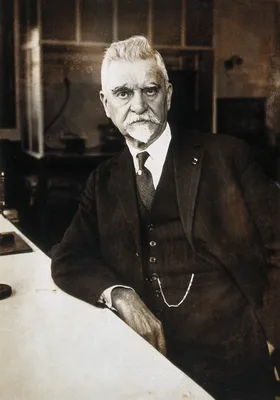
1881 –1882 FINLAY, Carlos Juan (1833 – 1915)
El mosquito hipoteticamente considerado como agente de transmisión de la fiebre amarilla.
Finlay was the first to suggest that the Aedes aegypti mosquito was the vector of yellow fever. Digital facsimile from Google Books at this link. English translation by Rudolph Matas as "The mosquito hypothetically co…
GMN 5455 · https://historyofmedicine.com/id/7549
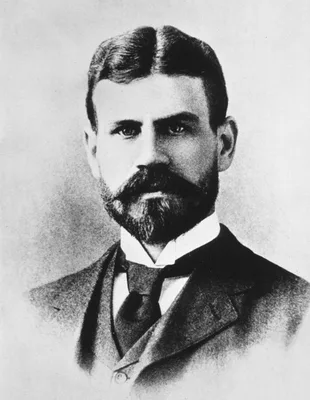
1900 CARTER, Henry Rose (1852 – 1925)
A note on the interval between infecting and secondary cases of yellow fever from the records of yellow fever at Orwood and Taylor, Mississippi, in 1898.
Carter's determination of the incubation period yellow fever influenced the direction of Reed’s researches, and was instrumental in the discovery of the mode of transmission of the yellow fever virus.
GMN 5456 · https://historyofmedicine.com/id/7553
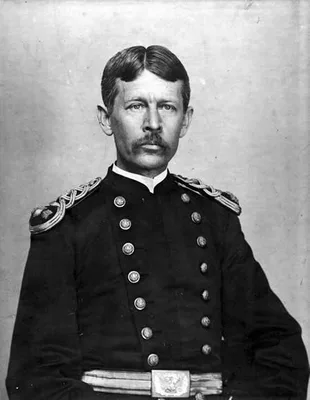
1900 REED, Walter (1851 – 1902); CARROLL, James (1854 – 1907); AGRAMONTE Y SIMONI, Aristides (1868 – 1931); LAZEAR, Jesse William (1866 – 1900)
The etiology of yellow fever. A preliminary note.
First definite proof that the organism causing yellow fever is transmitted to man by the mosquito Aëdes aegypti. During the period spent by these workers in the investigation of the disease in Cuba Lazear and Carroll …
GMN 5457 · https://historyofmedicine.com/id/7559
1900 REED, Walter (1851 – 1902); CARROLL, James (1854 – 1907)
A comparative study of the biological characters and pathogenesis of bacillus X (Sternberg), bacillus icteroides (Sanarelli), and the Hog Cholera Bacillus (Salmon and Smith).
Order of authorship in the original publication: Reed, Carroll. In this paper of monograph length the authors irrefutably proved that yellow fever was not caused by a bacterial infection, allowing them to concentrate …
GMN 12007 · https://historyofmedicine.com/id/14215
1901 REED, Walter (1851 – 1902)
The etiology of yellow fever: An additional note.
"The article describes a series of experiments conducted to explore how yellow fever is propagated from individual to individual and how the contagium is spread within households. The study was conducted in an experim…
GMN 9372 · https://historyofmedicine.com/id/11555
1902 REED, Walter (1851 – 1902)
Recent researches concerning the etiology, propagation, and prevention of yellow fever, by the United States Army Commission.
By 1902 Reed knew that the infectious agent of yellow fever was smaller than bacteria, though he did not specifically call it a virus. "In 1898, the passage of an animal pathogen through a Chamberland filter was repor…
GMN 11860 · https://historyofmedicine.com/id/14064
1903 MARCHOUX, Émile (1862 – 1943); ET AL
La fièvre jaune.
Yellow fever convalescent serum employed. With A. T. Salimbeni and P. L. Simond.
GMN 5459 · https://historyofmedicine.com/id/7561
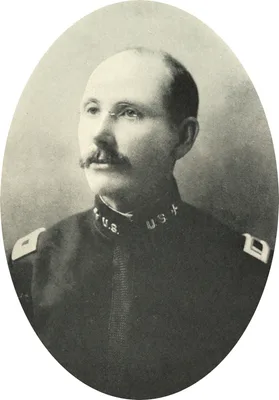
1903 GORGAS, William Crawford (1854 – 1920)
Notes on the treatment of yellow fever at Las Animas Hospital, the hospital of the Sanitary Department, during the epidemic of 1900 at Havana, Cuba.
In 1901 Gorgas was sent to Havana to undertake a special campaign against the yellow fever mosquito Aëdes aegypti. His methods of sanitation were so successful that in three months yellow fever was practically eradica…
GMN 13923 · https://historyofmedicine.com/id/16217
1906 KELLY, Howard Atwood (1858 – 1943); REED, Walter (1851 – 1902)
Walter Reed and yellow fever.
Digital facsimile of the revised edition published in 1907 from Google Books at this link.
GMN 12820 · https://historyofmedicine.com/id/15066
1907 STIMSON, Arthur Marston (1876 – )
Note on an organism found in yellow-fever tissue.
Stimson discovered a spirochete in the organs of persons dying of (?) yellow fever. He called it Sp. interrogans, but it was almost certainly Leptospira icterohaemorrhagiae.
GMN 5333 · https://historyofmedicine.com/id/6661
1909 GORGAS, William Crawford (1854 – 1920)
Sanitation of the tropics with special reference to malaria and yellow fever.
GMN 5460 · https://historyofmedicine.com/id/7564
1911 FRANCO, Roberto; TORO, Gabriel; MARTINEZ, Jorge
Fiebre amarilla y fiebre espiroquetal; endemias y epidemias en Muzo, de 1907 a 1910.
Franco, J. Martínez-Santamaria, and G. Toro-Villa described epidemics of yellow fever spread by mosquitoes other than Ae. aegypti. Later F. L. Soper, et al., Amer. J. Hyg., 1933, 18, 555-87, substantiated this.
GMN 5460.1 · https://historyofmedicine.com/id/7567
1911 REED, Walter (1851 – 1902); CARROLL, James (1854 – 1907)
Yellow fever: A compilation of various publications. Results of the work of Maj. Walter Reed, Medical Corps, United States Army, and the Yellow Fever Commission. Presented by Mr. Owen.
A convenient compilation of the work of Reed and his associates, including the work of James Carroll published after the death of Walter Reed. Digital facsimile from the Internet Archive at this link.
GMN 9373 · https://historyofmedicine.com/id/11556
1915 GORGAS, William Crawford (1854 – 1920)
Sanitation in Panama.
"Gorgas capitalized on the momentous work of ... Walter Reed, who had himself built much of his work on insights of a Cuban doctor, Carlos Finlay, to prove the mosquito transmission of yellow fever. He won internation…
GMN 9259 · https://historyofmedicine.com/id/11441
1928 HINDLE, Edward (1886 – 1973)
A yellow fever vaccine.
First vaccine for immunization against yellow fever. Hindle devised a method for the transportation of frozen infected material from West Africa to London, making it possible to carry on experimental work in Britain.
GMN 5461 · https://historyofmedicine.com/id/7571
1928 STOKES, Adrian (1887 – 1927); ET AL
Experimental transmission of yellow-fever to laboratory animals.
Experimental infection of the monkey, Macacus rhesus, with the yellow fever virus. Stokes succumbed to yellow fever while investigating the disease. With J. H. Bauer and N. P. Hudson.
GMN 5462 · https://historyofmedicine.com/id/7575
1930 THEILER, Max (1899 – 1972)
Studies on the action of yellow fever virus in mice.
The intracerebral protection test in mice, a test for the diagnosis of yellow fever and for the determination of its past existence in a community, was made possible by Theiler’s discovery that white mice are suscepti…
GMN 5463 · https://historyofmedicine.com/id/7579
1931 SAWYER, Wilbur Augustus (1879 – 1951); LLOYD, Wray Devere Marr (1902 – 1936)
The use of mice in tests of immunity against yellow fever.
Intraperitoneal protection test.
GMN 5464 · https://historyofmedicine.com/id/7584
1931 CARTER, Henry Rose (1852 – 1925)
Yellow fever: an epidemiological and historical study of its place of origin. Edited by Laura Armistead Carter and Wade Hampton Frost.
Digital facsimile from the Internet Archive at this link.
GMN 5468 · https://historyofmedicine.com/id/8625
1932 SAWYER, Wilbur Augustus (1879 – 1951); LLOYD, Wray Devere Marr (1902 – 1936)
Vaccination against yellow fever with immune serum and virus fixed for mice.
These workers devised an immune serum for prophylactic inoculation against yellow fever. With S. F. Kitchen and W. D. M. Lloyd.
GMN 5465 · https://historyofmedicine.com/id/7586
1932 THEILER, Max (1899 – 1972); HAAGEN, Eugen (1898 – 1972)
Untersuchungen über das Verhalten des Gelbfiebervirus in der Gewebekultur. Mit besonderer Berücksichtigung seiner Kultivierbarkeit.
Yellow fever virus grown in tissue culture.
GMN 5465.1 · https://historyofmedicine.com/id/7591