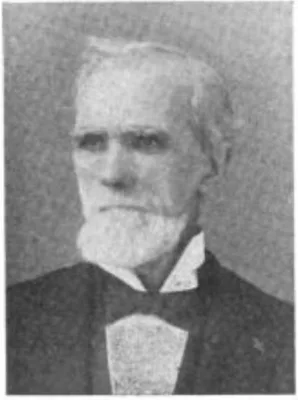
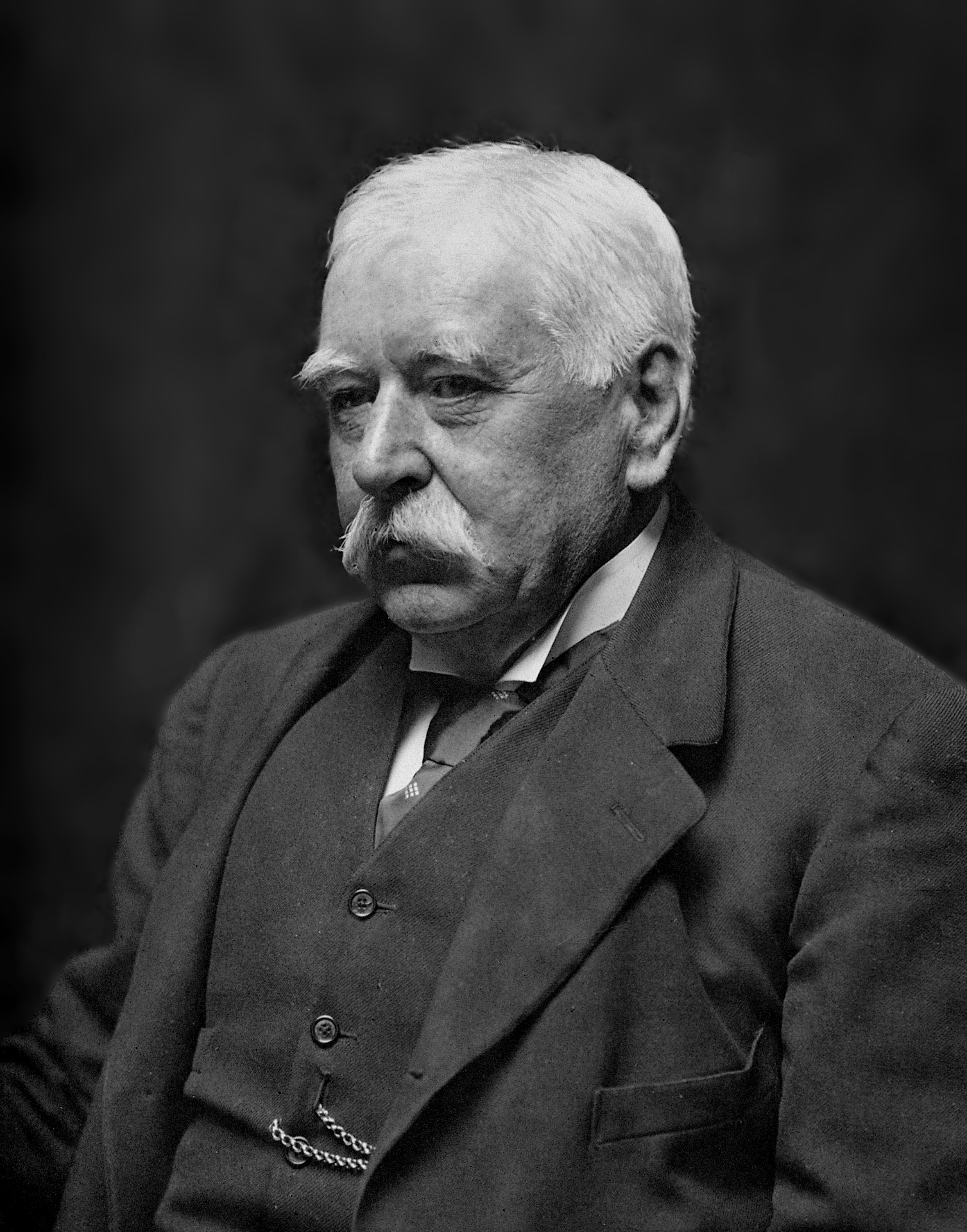
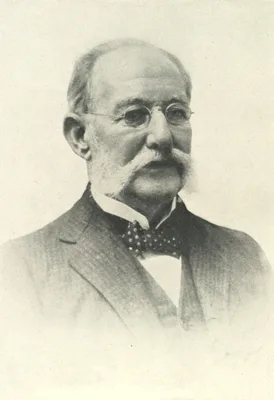
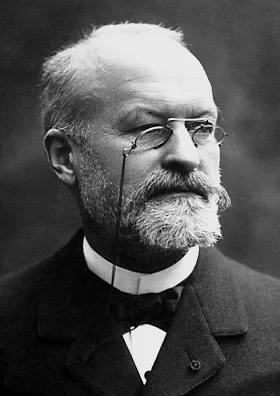
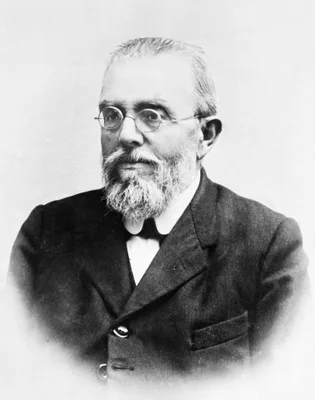
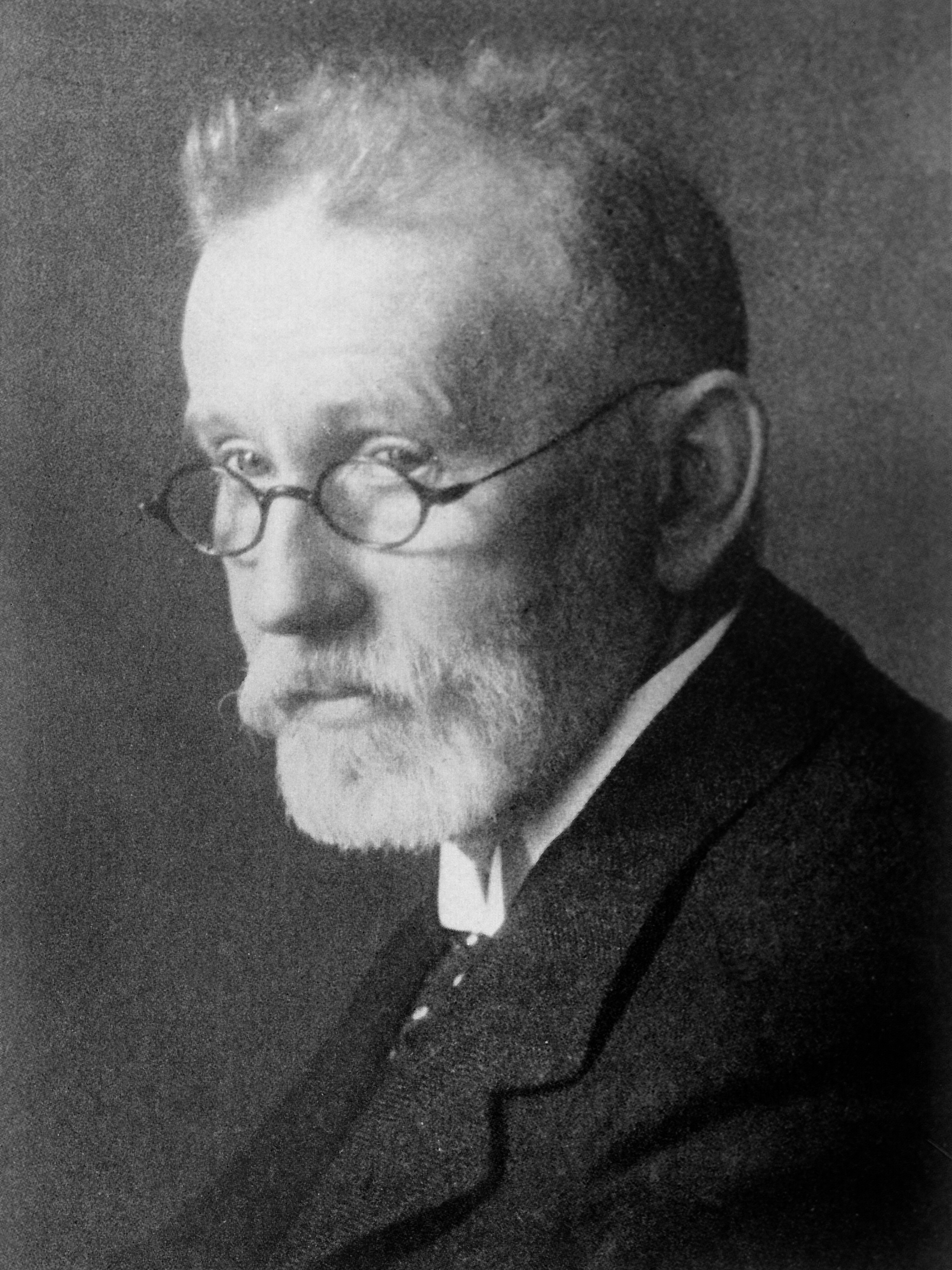
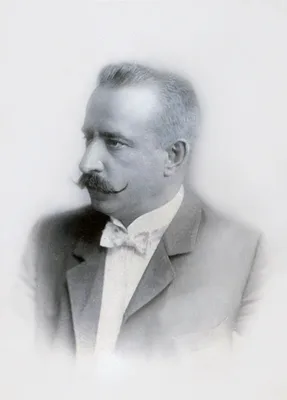
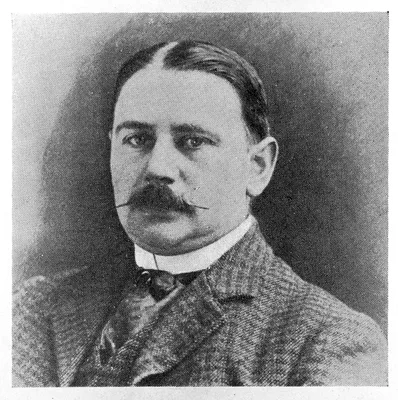
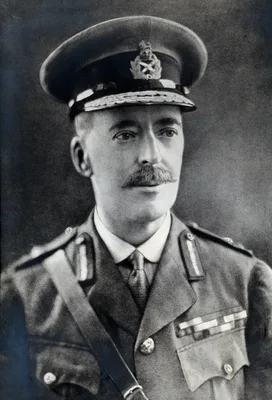
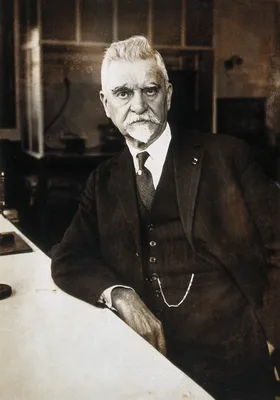
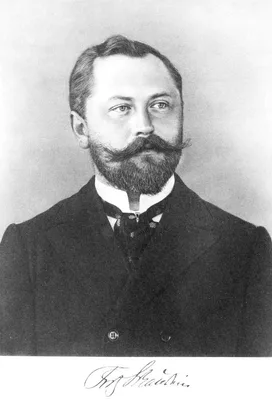
1879 POWER, John Logan (1834 – 1901)
The epidemic of 1878 in Mississippi: Report of the yellow fever relief work.
Digital facsimile from the U.S. National Library of Medicine at this link.
GMN 10524 · https://historyofmedicine.com/id/12717
1879 MANSON, Sir Patrick (1844 – 1922)
Additional notes on filaria sanguinis hominis and filiaria disease.
On p. 36 of this paper Manson first described nocturnal periodicity in Filaria Bancrofti, an adaptation to the nocturnal biting habits of their mosquito vector. (Thanks to Juan Weiss for this reference and its interpr…
GMN 11248 · https://historyofmedicine.com/id/13445
1881 –1882 FINLAY, Carlos Juan (1833 – 1915)
El mosquito hipoteticamente considerado como agente de transmisión de la fiebre amarilla.
Finlay was the first to suggest that the Aedes aegypti mosquito was the vector of yellow fever. Digital facsimile from Google Books at this link. English translation by Rudolph Matas as "The mosquito hypothetically co…
GMN 5455 · https://historyofmedicine.com/id/7549
1881 LAVERAN, Charles Louis Alphonse (1845 – 1922)
Un nouveau parasite trouvé dans le sang plusieurs malades atteints de fièvre palustre.
Laveran first saw the malaria parasite on 20 October 1880; he at once recognized its significance. He named it Oscillaria malariae. English translation in Kean (No. 2268.1). Laveran also published a monograph on the d…
GMN 5236 · https://historyofmedicine.com/id/7884
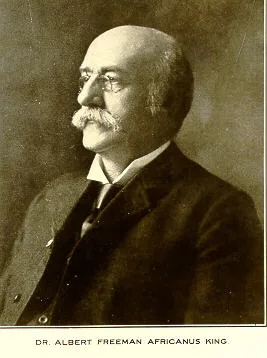
1883 KING, Albert Freeman Africanus (1841 – 1914)
Insects and disease - mosquitoes and malaria.
The first reasoned argument in support of the belief of transmission of malaria by mosquitoes. King was an English-born American physician who witnessed the assassination of Abraham Lincoln in April, 1865, and as a by…
GMN 5237 · https://historyofmedicine.com/id/7886
1885 MARCHIAFAVA, Ettore (1847 – 1935); CELLI, Angelo (1857 – 1914)
Weitere Untersuchungen über die Malariainfection.
First accurate description of the malaria Plasmodium, discovered by Laveran in 1880. These writers were the first to adopt the name P. malariae.
GMN 5238 · https://historyofmedicine.com/id/7889
1885 DANILEVSKI, Vasili Iakovlevich (1852 – 1934)
Zur Parasitologie des Blutes.
Discovery of malaria parasites in birds. See also Ann. Inst. Pasteur, 1890, 4, 427-31.
GMN 5238.1 · https://historyofmedicine.com/id/7893
1885 ESMARCH, Johann Friedrich August von (1823 – 1908); KULENKAMPFF, Diedrich (1846 – )
Die elephantiastischen Formen. Eine umfassende Darstellung der angeborenen und erworbenen Elephantiasis sowie aller verwandten Leiden.
This atlas illustrates the various changes that occur under the collective term elephantiasis, including tumors of the blood and lymphatic vessels, fibromas, neuromas, papillomas. Goldschmid 258.
GMN 9544 · https://historyofmedicine.com/id/11730
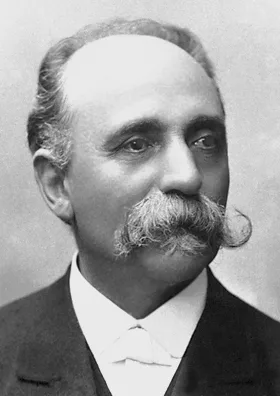
1886 GOLGI, Camillo (1844 – 1926)
Sull infezione malarica.
Description of the development of the parasite of quartan malaria. Golgi differentiated the tertian and quartan parasites by the periods of their respective developments.
GMN 5239 · https://historyofmedicine.com/id/7894
1889 GOLGI, Camillo (1844 – 1926)
Sul ciclo evolutivo dei parassiti malarica nella febbre terzana.
Golgi showed that the parasite of quartan differs from that of tertian malarial fever. English translation in Kean (No. 2268.1).
GMN 5240 · https://historyofmedicine.com/id/7895
1890 CANALIS, Pietro (1856 – 1939)
Études sur l’infection malarique. Sur la variété parasitaire des corps en croissant de Laveran et sur les fièvres palustres qui en dérivent.
Canalis demonstrated and clearly differentiated Plasmodium falciparum from the species vivax and malariae.
GMN 5240.1 · https://historyofmedicine.com/id/7896
1891 GRASSI, Giovanni Battista (1854 – 1925); FELETTI, Raimondo (1851 – 1928)
Malariaparasiten in den Vögeln.
Confirmation of the work of Laveran.
GMN 5241 · https://historyofmedicine.com/id/7897
1891 EHRLICH, Paul (1854 – 1915); GUTTMANN, Paul (1834 – 1893)
Ueber die Wirkung des Methylenblau bei Malaria.
Guttmann and Ehrlich demonstrated methylene blue to be lethal in vitro for the malaria parasite – the beginning of Ehrlich’s work on chemotherapy.
GMN 5241.1 · https://historyofmedicine.com/id/7898
1891 ROMANOWSKY, Dmitri Leonidovich (1861 – 1921)
K voprosu o parazitologii i terapii bolotnoi likhoradki. [Parasitology and treatment of malarial fever.]
Romanovsky made important studies of the malaria parasite and introduced a special stain for its demonstration. German version in St. Petersburger med. Wschr., 1891, 8, 297-302, 306-15. English translation in Kean (No…
GMN 5242 · https://historyofmedicine.com/id/7899
1892 GOLGI, Camillo (1844 – 1926)
Azione della chinina sui parasite malarici e sui corrispondente accessi febbrili.
French translation in Arch. ital. Biol., 1892, 17, 456-71.
GMN 5243 · https://historyofmedicine.com/id/7900
1892 MARCHIAFAVA, Ettore (1847 – 1935); BIGNAMI, Amico (1862 – 1929)
Sulle febbre malariche estivo-autumnali.
A summary of the Italian work on malaria. English translation, 1894.
GMN 5244 · https://historyofmedicine.com/id/7901
1894 MANSON, Sir Patrick (1844 – 1922)
On the nature and significance of the crescentic and flagellated bodies in malarial blood.
Manson’s mosquito–malaria hypothesis. See also his Gulstonian Lectures in Lancet, 1896, 1, 695-98, 751-55, 831-33.
GMN 5245 · https://historyofmedicine.com/id/7902
1897 MACCALLUM, William George (1874 – 1944)
On the flagellated form of the malarial parasite.
MacCallum reported at a meeting of the British Association his observation of the mode of fertilization of the malarial parasite of birds; two months later he announced that he had found the same to hold good for the …
GMN 5246 · https://historyofmedicine.com/id/7903
1897 ROSS, Sir Ronald (1857 – 1932)
On some peculiar pigmented cells found in two mosquitoes fed on malarial blood.
Ross proved that the mosquito was responsible for the transmission of malaria. On 20 August 1897, he found Laveran’s Plasmodium in the stomach of the Anopheles mosquito after it had fed on the blood of malaria patient…
GMN 5247 · https://historyofmedicine.com/id/7904
1898 MANSON, Sir Patrick (1844 – 1922)
Tropical diseases.
Manson has been called the “father of modern tropical medicine”. He had vast experience of disease in the Tropics and himself made many valuable contributions to the knowledge of this subject. He described tinea nigra…
GMN 2266 · https://historyofmedicine.com/id/2823
1898 KOCH, Robert Heinrich Hermann (1843 – 1910)
Reise-Bericht über Rinderpest, Bubonenpest in Indien und Afrika, Tsetse-oder Surrakrankheit, Texasfieber, tropische Malaria, Schwarzwasserfieber.
GMN 2457 · https://historyofmedicine.com/id/2986
1898 LAVERAN, Charles Louis Alphonse (1845 – 1922)
Traité du paludisme.
GMN 5248 · https://historyofmedicine.com/id/7905
1898 OPIE, Eugene Lindsay (1873 – 1971)
On the haemocytozoa of birds.
Demonstration of sexual conjugation in the malaria parasite. See also No. 5250.
GMN 5249 · https://historyofmedicine.com/id/7906
1898 MACCALLUM, William George (1874 – 1944)
Notes on the pathological changes in the organs of birds infected with haemocytozoa.
MacCallum and Opie discovered the sexual phase of malaria parasites.
GMN 5250 · https://historyofmedicine.com/id/7907
1898 ROSS, Sir Ronald (1857 – 1932)
The rôle of the mosquito in the evolution of the malarial parasite.
Ross provided the last link in the chain demonstrating the complete life-cycle of the parasite of bird malaria. He found that mosquitoes which had fed on malaria-infected birds, and which had allowed the parasites to …
GMN 5251 · https://historyofmedicine.com/id/7908
1899 BIGNAMI, Amico (1862 – 1929); GRASSI, Giovanni Battista (1854 – 1925)
Ciclo evolutivo della semilune nell’ Anopheles claviger.
Grassi and Bignami showed that the Plasmodium undergoes its sexual phase only in the Anopheles mosquito.
GMN 5252 · https://historyofmedicine.com/id/7909
1900 CARTER, Henry Rose (1852 – 1925)
A note on the interval between infecting and secondary cases of yellow fever from the records of yellow fever at Orwood and Taylor, Mississippi, in 1898.
Carter's determination of the incubation period yellow fever influenced the direction of Reed’s researches, and was instrumental in the discovery of the mode of transmission of the yellow fever virus.
GMN 5456 · https://historyofmedicine.com/id/7553
1900 REED, Walter (1851 – 1902); CARROLL, James (1854 – 1907); AGRAMONTE Y SIMONI, Aristides (1868 – 1931); LAZEAR, Jesse William (1866 – 1900)
The etiology of yellow fever. A preliminary note.
First definite proof that the organism causing yellow fever is transmitted to man by the mosquito Aëdes aegypti. During the period spent by these workers in the investigation of the disease in Cuba Lazear and Carroll …
GMN 5457 · https://historyofmedicine.com/id/7559
1900 GRASSI, Giovanni Battista (1854 – 1925)
Studi di uno zoologo sulla malaria.
Includes the best illustrations of the various stages of the malaria parasite published up to that time.
GMN 5252.1 · https://historyofmedicine.com/id/7910
1900 MANSON, Sir Patrick (1844 – 1922)
Experimental proof of the mosquito-malaria theory.
In a classic demonstration Manson allowed infected mosquitoes from Rome to bite a volunteer (his son) in London, who developed malaria 15 days later with tertian parasites in the blood, and who was cured by quinine.
GMN 5252.2 · https://historyofmedicine.com/id/7911
1900 REED, Walter (1851 – 1902); CARROLL, James (1854 – 1907)
A comparative study of the biological characters and pathogenesis of bacillus X (Sternberg), bacillus icteroides (Sanarelli), and the Hog Cholera Bacillus (Salmon and Smith).
Order of authorship in the original publication: Reed, Carroll. In this paper of monograph length the authors irrefutably proved that yellow fever was not caused by a bacterial infection, allowing them to concentrate …
GMN 12007 · https://historyofmedicine.com/id/14215
1901 –1910 THEOBALD, Frederick Vincent (1868 – 1930)
A monograph of the Culicidae, or mosquitoes. Mainly compiled from the collections received at the British Museum from various parts of the world in connection with the cause of malaria conducted by the Colonial Office and the Royal Society. 4 vols. and atlas.
Digital facsimile from the Internet Archive at this link.
GMN 346 · https://historyofmedicine.com/id/253
1901 LEISHMAN, Sir William Boog (1865 – 1926)
Note on a simple and rapid method of producing Romanowsky staining in malarial and other blood films.
“Leishman’s stain”, a modification of that introduced by Romanovsky in 1891.
GMN 5253 · https://historyofmedicine.com/id/7912
1901 REED, Walter (1851 – 1902)
The etiology of yellow fever: An additional note.
"The article describes a series of experiments conducted to explore how yellow fever is propagated from individual to individual and how the contagium is spread within households. The study was conducted in an experim…
GMN 9372 · https://historyofmedicine.com/id/11555
1902 ROSS, Sir Ronald (1857 – 1932)
Mosquito brigades and how to organise them.
Digital facsimile from the Internet Archive at this link.
GMN 9260 · https://historyofmedicine.com/id/11442
1902 REED, Walter (1851 – 1902)
Recent researches concerning the etiology, propagation, and prevention of yellow fever, by the United States Army Commission.
By 1902 Reed knew that the infectious agent of yellow fever was smaller than bacteria, though he did not specifically call it a virus. "In 1898, the passage of an animal pathogen through a Chamberland filter was repor…
GMN 11860 · https://historyofmedicine.com/id/14064
1903 MARCHOUX, Émile (1862 – 1943); ET AL
La fièvre jaune.
Yellow fever convalescent serum employed. With A. T. Salimbeni and P. L. Simond.
GMN 5459 · https://historyofmedicine.com/id/7561
1903 SCHAUDINN, Fritz Richard (1871 – 1906)
Studien über krankheitserregende Protozoen. II. Plasmodium vivax (Grassi & Feletti), der Erreger des Tertianfiebers beim Menschen.
Confirmation of the work of Ross and of Grassi.
GMN 5254 · https://historyofmedicine.com/id/7913
1903 –1929 GOLGI, Camillo (1844 – 1926)
Opera Omnia. Volume I: Istologia normale—1870-1883 (Con 21 Tavole e ritratto); Volume II: Istologia normale—1883-1902 (Con 21 tavole); Volume III: Patologia generale e isto-patologia—1868-1894 (Con 9 Tavole). Volume IV: Scritti su argomenti varii.
Limited to 325 copies, including material not previously published.
GMN 7338 · https://historyofmedicine.com/id/9509
1903 GORGAS, William Crawford (1854 – 1920)
Notes on the treatment of yellow fever at Las Animas Hospital, the hospital of the Sanitary Department, during the epidemic of 1900 at Havana, Cuba.
In 1901 Gorgas was sent to Havana to undertake a special campaign against the yellow fever mosquito Aëdes aegypti. His methods of sanitation were so successful that in three months yellow fever was practically eradica…
GMN 13923 · https://historyofmedicine.com/id/16217
1905 CRAIG, Charles Franklin (1872 – 1950)
Intracorpuscular conjugation in the malarial plasmodia and its significance.
Demonstration of the existence of malarial carriers.
GMN 5255 · https://historyofmedicine.com/id/7914
1906 BANCROFT, Thomas Lane (1860 – 1933)
On the etiology of dengue fever.
Bancroft was the first to produce evidence that Aëdes aegypti is a vector of dengue.
GMN 5472 · https://historyofmedicine.com/id/7611
1906 KELLY, Howard Atwood (1858 – 1943); REED, Walter (1851 – 1902)
Walter Reed and yellow fever.
Digital facsimile of the revised edition published in 1907 from Google Books at this link.
GMN 12820 · https://historyofmedicine.com/id/15066
1907 STIMSON, Arthur Marston (1876 – )
Note on an organism found in yellow-fever tissue.
Stimson discovered a spirochete in the organs of persons dying of (?) yellow fever. He called it Sp. interrogans, but it was almost certainly Leptospira icterohaemorrhagiae.
GMN 5333 · https://historyofmedicine.com/id/6661
1907 ASHBURN, Percy Moreau (1872 – 1940); CRAIG, Charles Franklin (1872 – 1950)
Experimental investigations regarding the aetiology of dengue fever, with a general consideration regarding the disease.
Proof that the causal organism of dengue is a filterable virus. Published also in J. infect. Dis., 1907, 4, 440-75.
GMN 5473 · https://historyofmedicine.com/id/7613
1909 GORGAS, William Crawford (1854 – 1920)
Sanitation of the tropics with special reference to malaria and yellow fever.
GMN 5460 · https://historyofmedicine.com/id/7564
1909 JONES, William Henry Samuel (1876 – 1963); WITHINGTON, Edward Theodore (1860 – 1947)
Malaria and Greek history. To which is added the history of Greek therapeutics and the malaria theory by E.T. Withington.
The view is put forward by the writer that malarial infection was the cause of the decadence of the Greeks. Digital facsimile from the Internet Archive at this link.
GMN 5263 · https://historyofmedicine.com/id/8555
1911 FRANCO, Roberto; TORO, Gabriel; MARTINEZ, Jorge
Fiebre amarilla y fiebre espiroquetal; endemias y epidemias en Muzo, de 1907 a 1910.
Franco, J. Martínez-Santamaria, and G. Toro-Villa described epidemics of yellow fever spread by mosquitoes other than Ae. aegypti. Later F. L. Soper, et al., Amer. J. Hyg., 1933, 18, 555-87, substantiated this.
GMN 5460.1 · https://historyofmedicine.com/id/7567
1911 REED, Walter (1851 – 1902); CARROLL, James (1854 – 1907)
Yellow fever: A compilation of various publications. Results of the work of Maj. Walter Reed, Medical Corps, United States Army, and the Yellow Fever Commission. Presented by Mr. Owen.
A convenient compilation of the work of Reed and his associates, including the work of James Carroll published after the death of Walter Reed. Digital facsimile from the Internet Archive at this link.
GMN 9373 · https://historyofmedicine.com/id/11556
1912 BASS, Charles Cassedy (1885 – 1975); JOHNS, Foster Matthew (1889 – 1936)
The cultivation of malaria plasmodia (Plasmodium vivax and Plasmodium falciparum) in vitro.
Cultivation of the malaria parasite.
GMN 5255.1 · https://historyofmedicine.com/id/7915