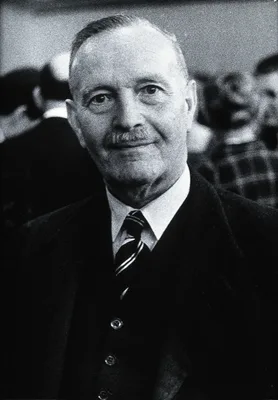
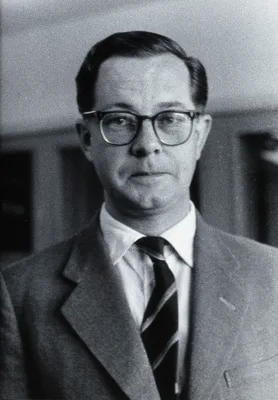
1932 KIKUTH, Walter (1896 – 1968)
Zur Weiterentwicklung synthetisch dargestellter Malariamittel. I. Ueber die chemotherapeutische Wirkung des Atebrin.
Introduction of atebrin (mepacrine, quinacrine).
GMN 5257 · https://historyofmedicine.com/id/7919
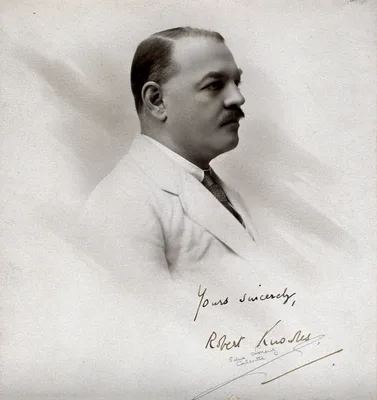
1932 KNOWLES, Robert (1883 – 1936); DAS GUPTA, Biraj Mohan (Dasgupta) (1889 – 1945)
A study of monkey-malaria, and its experimental transmission to man.
Das Gupta and his supervisor Robert Knowles first described Plasmodium knowlesi as a distinct species, and as a potential cause of human malaria in 1932 when they described the morphology of the parasite in macaque bl…
GMN 12586 · https://historyofmedicine.com/id/14825
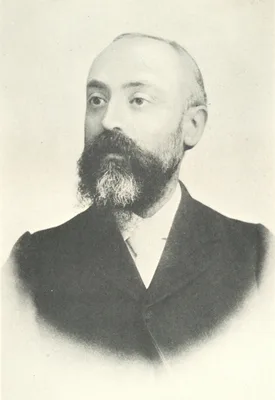
1933 CELLI, Angelo (1857 – 1914)
The history of malaria in the Roman Campagna from ancient times. Edited and enlarged by Anna Celli-Fraentzel.
Reprinted New York, 1977.
GMN 5264 · https://historyofmedicine.com/id/8556
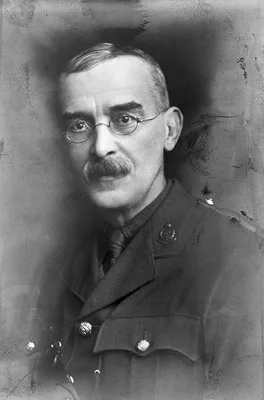
1937 STEPHENS, John William Watson (1865 – 1946)
Blackwater fever, a historical survey and summary of observations made over a century.
GMN 5264.1 · https://historyofmedicine.com/id/8557
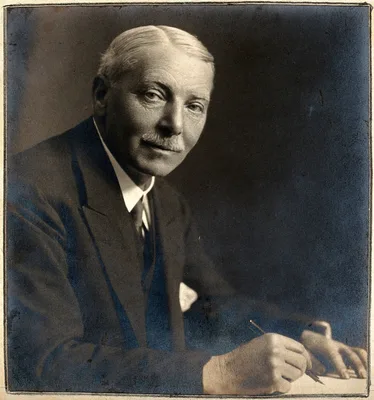
1938 JAMES, Sydney Price (1870 – 1946); TAIT, P
Exo-erythrocytic schizogony in Plasmodium gallinaceum Brumpt, 1935.
The term “exo-erythrocytic stage” introduced to describe the unpigmented schizonts found in tissue cells. The parasite Plasmodium gallincaceum described by Alexandre Joseph Emile Brumpt causes malaria in poultry.
GMN 5258 · https://historyofmedicine.com/id/8541
1940 MUDROW, Lilly (1908 – 1957)
Klinische und parasitologische Befunde und chemotherapeutische Ergebnisse bei der Hühnermalaria.
Discovery of the developmental forms of P. gallinaceum in the incubation period.
GMN 5259 · https://historyofmedicine.com/id/8542
1940 SHORTT, Henry Edward (1887 – 1987); ET AL
The form of Plasmodium, gallinaceum present in the incubation period of the infection.
Independently of Mudrow, H. E. Shortt, K. P. Menon, and P. V. Seetharama Iyer found pre-erythrocytic forms of P. gallinaceum in the tissues.
GMN 5259.1 · https://historyofmedicine.com/id/8543
1944 HUFF, Clay G. (1900 – ); COULSTON, Frederick (1914 – 2003)
The development of Plasmodium gallinaceum from sporozoite to erythrocytic trophozoite.
First detailed account of the full cycle of development of the avian malaria parasite P. gallinaceum.
GMN 5259.2 · https://historyofmedicine.com/id/8544
1945 CURD, Francis Henry Swinton (1909 – 1948); ET AL
Studies on synthetic antimalarial drugs.
F. H. S. Curd, D. G. Davey, and F. L. Rose synthesized proguanil (“paludrine”) and first tested it in avian malaria.
GMN 5260 · https://historyofmedicine.com/id/8545
1945 ADAMS, Alfred Robert Davies (1901 – 1992)
Studies on synthetic antimalarial drugs. XIII. Results of a preliminary investigation of the therapeutic action of 4888 (paludrine) on acute attacks of benign tertian malaria.
First use of proguanil in human malaria. With B. G. Maegraith, J. D. King, R. H. Townsend, T. H. Davey, and R. E. Havard.
GMN 5261 · https://historyofmedicine.com/id/8546
1946 MOST, Harry (1907 – 1994); LONDON, Irving M. (1918 – 2018); LAVIETES, Paul Harold (1907 – 1990)
Chloroquine for treatment of acute attacks of vivax malaria.
Harry Most led the development of chloroquine for use in treating American troops suffering from malaria. At the beginning of the American involvement in the war there were more American casualties from malaria than f…
GMN 5261.1 · https://historyofmedicine.com/id/8547
1948 ALVING, Alf Sven (1902 – 1965)
Pentaquine (Sn-13,276), a therapeutic agent effective in reducing the relapse rate in vivax malaria.
Clinical trials of pentaquine. With B. Craige, R. Jones, C. M. Whorton, T. N. Pullman, and L. Eichelberger.
GMN 5261.2 · https://historyofmedicine.com/id/8548
1948 SHORTT, Henry Edward (1887 – 1987); ET AL
The pre-erythrocytic stage of mammalian malaria.
Demonstration of the pre-erythrocytic stage of P. cynomolgi in the monkey. With P. C. C. Garnham and B. Malamos. Preliminary communication in Nature (Lond.), 1948, 161, 126.
GMN 5262 · https://historyofmedicine.com/id/8549
1948 SHORTT, Henry Edward (1887 – 1987)
The pre-erythrocytic stage of human malaria Plasmodium vivax.
With P. C. C. Garnham, G. Covell, and P. G. Shute.
GMN 5262.1 · https://historyofmedicine.com/id/8550
1949 SHORTT, Henry Edward (1887 – 1987)
The pre-erythrocytic stage of Plasmodium falciparum. A preliminary note.
With N. H. Fairley, G. Covell, P. G. Shute, and P. C. C. Garnham. See also Trans. roy. Soc. trop. Med. Hyg., 1951, 44, 405-19.
GMN 5262.2 · https://historyofmedicine.com/id/8551
1950 EDGCOMB, John Harold (1924 – 2007); ET AL
Primaquine, S.N. 13,272, a new curative agent in vivax malaria: a preliminary report.
Introduction of primaquine.
GMN 5262.3 · https://historyofmedicine.com/id/8552
1950 JARAMILLO-ARANGO, Jaime (1897 – 1962)
The conquest of malaria.
GMN 5264.2 · https://historyofmedicine.com/id/8558
1951 FALCO, E. A.
2:4-Diaminopyrimidines – a new series of antimalarials.
Preparation and laboratory tests of pyrimethamine. With L. G. Goodwin, G. H. Hutchings, I. M. Rollo, and P. B. Russell.
GMN 5262.4 · https://historyofmedicine.com/id/8553
1951 ROLLO, Ian McIntosh (1926 – 2015)
A 2:4-diamino pyrimidine in the treatment of proguanil-resistant laboratory malarial strains.
Pyrimethamine (daraprim).
GMN 5262.5 · https://historyofmedicine.com/id/8554
1954 ALLISON, Anthony Clifford (1925 – 2014)
Protection afforded by sickle-cell trait against subtertian malarial infection.
Allison was the first to connect a hereditary disease (sickle cell disease) to an infectious disease (malaria). He proved that heterozygous and homozygous individuals to the sickle cell trait or disease respectively s…
GMN 11887 · https://historyofmedicine.com/id/14091
1955 RUSSELL, Paul Farr (1894 – 1983)
Man’s mastery of malaria.
Heath Clark Lectures, 1953.
GMN 5264.3 · https://historyofmedicine.com/id/8559
1976 MILLER, Louis Howard (1935 – ); MASON, Steven J.; CLYDE, David Francis (1925 – 2002); ET AL
The resistance factor to Plasmodium vivax in blacks.
The authors showed that the Plasmodium vivax parasite requires the Fya/Fyb Duffy antigen/chemokine receptor on the surface of red blood cells for penetration of human red blood cells. Because most African and American…
GMN 11888 · https://historyofmedicine.com/id/14093
1999 BRUYN, George Willem (1928 – 2002); POSER, Charles Marcel (1923 – 2010)
An illustrated history of malaria.
Concentrates on 19th century developments.
GMN 10579 · https://historyofmedicine.com/id/12772
2001 HUMPHREYS, Margaret Ellen
Malaria: Poverty, race, and public health in the United States.
GMN 10799 · https://historyofmedicine.com/id/12995
2002 GARDNER, Malcolm J.; HALL, Neil; FUNG, Eula; ET AL
Genome sequence of the human malaria parasite Plasmodium falciparum.
Order of authorship in the original paper: Gardner, Hall, Fung.... Genome of the Plasmodium falciparum parasite carried by the mosquito that causes malaria in humans. (Thanks to Juan Weiss for this reference and its i…
GMN 11336 · https://historyofmedicine.com/id/13534
2002 HOLT, Robert A.; SUBRAMANIAN, G. Mani; HALPERN, Aaron L.; ET AL
The genome sequence of the malaria mosquito Anopheles gambiae.
Order of authorship in the original publication: Holt, Subramanian, Halpern.... Sequence of the genome of Anopheles gambiae, the mosquito that carries the malaria parasite, Plasmodium falciparum. (Thanks to Juan Weiss…
GMN 11337 · https://historyofmedicine.com/id/13535
2007 PACKARD, Randall M. (1945 – )
The making of a tropical disease: A short history of malaria.
GMN 13290 · https://historyofmedicine.com/id/15556
2009 SLATER, Leo B.
War and Disease: Biomedical research on malaria in the twentieth century.
GMN 9391 · https://historyofmedicine.com/id/11574
2010 MCNEILL, John Robert (1954 – )
Mosquito empires: Ecology and war in the Greater Caribbean, 1620-1914.
"explores the links among ecology, disease, and international politics in the context of the Greater Caribbean - the landscapes lying between Surinam and the Chesapeake - in the seventeenth through early twentieth cen…
GMN 9389 · https://historyofmedicine.com/id/11572
2010 CAREY, Allison F.; WANG, Guirong; CARLSON, John R.; ET AL
Odorant reception in the malaria mosquito Anopheles gambiae.
Order of authorship in the original publication: Carey, Wang, ... Carlson. The authors showed that besides CO2, the odorant receptors in the malaria mosquistoes Anopheles gambiae are sensitive to other "mostly sweat" …
GMN 11076 · https://historyofmedicine.com/id/13272
2014 MASTERSON, Karen M.
The malaria project: The U.S. government's secret mission to find a miracle cure.
"....the story of America's secret mission to combat malaria during World War II—a campaign modeled after a German project which tested experimental drugs on men gone mad from syphilis. "American war planners, foresee…
GMN 12799 · https://historyofmedicine.com/id/15045
2015 MCCANN, James C. (1950 – )
The historical ecology of malaria in Ethiopia: Deposing the spirits.
GMN 10800 · https://historyofmedicine.com/id/12996
2020 INGHAM, Victoria A.; ANTHOUSI, Amalia; DOURIS, Vassilis; ET AL
A sensory appendage protein protects malaria vectors from pyrethroids.
Researching how the malarial mosquito A. gambiae developed resistance to common pyrethroid insecticides, the authors discovered how natural selection had enabled this insect population to develop resistance. They anal…
GMN 12596 · https://historyofmedicine.com/id/14836