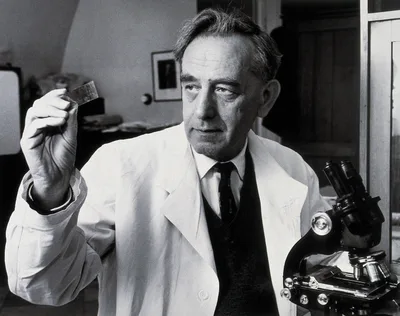
1756 RUSSELL, Alexander (1715 – 1768)
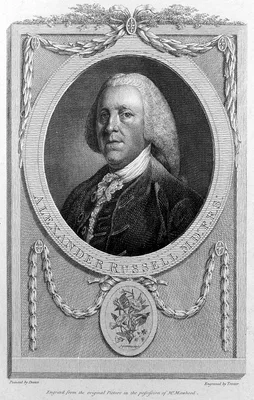
Natural history of Aleppo and parts adjacent.
Includes (Chap, iv) a good account of “Aleppo boil”, which Russell found to be endemic in Aleppo. Digital facsimile from the Internet Archive at this link.
GMN 5290 · https://historyofmedicine.com/id/6404
1829 ALIBERT, Jean Louis Marc (1768 – 1837)
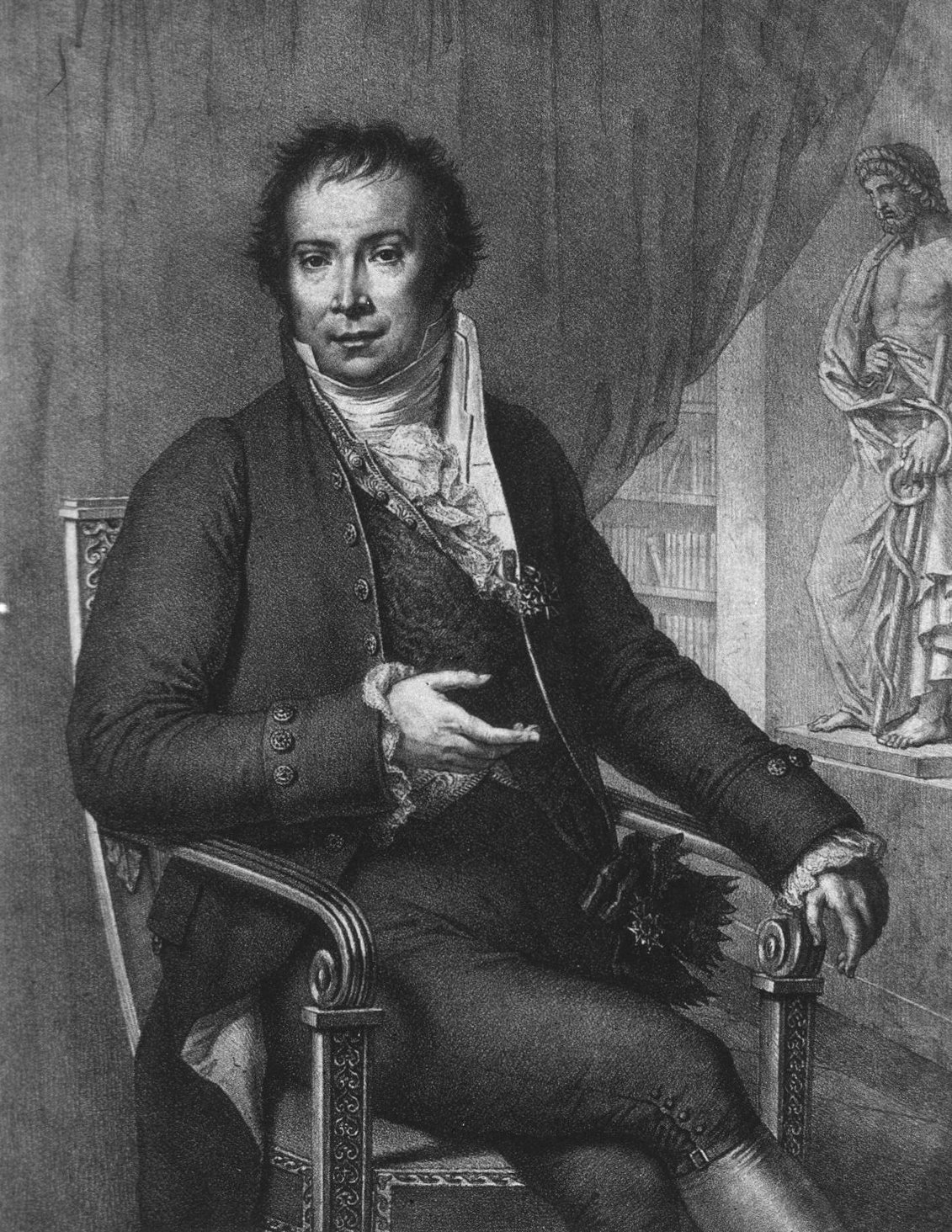
Sur la pyrophlyctide endémique, ou pustule d’Aleppo.
Important description of “Aleppo boil”, furunculosis orientalis.
GMN 5291 · https://historyofmedicine.com/id/6412
1870 BRISCOE, Thomas Benjamin
Kala azar.
Kala azar is mentioned briefly in the Proceedings in 1869 (No. 34, p. 19) but the above is the first full description, given by Briscoe in a report dated 1 Dec 1869.
GMN 5292 · https://historyofmedicine.com/id/8609
1885 CUNNINGHAM, David Douglas (1843 – 1914)
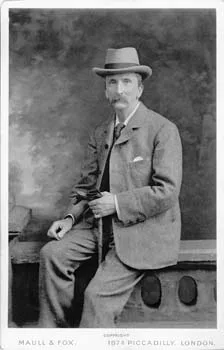
On the presence of peculiar parasitic organisms in the tissue of a specimen of Delhi boil.
Cunningham saw and described bodies in Delhi boil; these were almost certainly Leishman–Donovan bodies.
GMN 5293 · https://historyofmedicine.com/id/6419
1895 BREDA, Achille (1850 – 1933)
Beitrag zum klinischen und bacteriologischen Studium der brasilianischen Framboesie oder “Boubas”.
“Breda’s disease” – Brazilian yaws. English translation New Sydenham Society, 1897.
GMN 5293.1 · https://historyofmedicine.com/id/6435
1898 BOROVSKII, Petr Fokich (1863 – 1932)
On sart sore.
First description of the protozoon later named Leishmania tropica. The paper is in Russian; for a translation, see C. A. Hoare, in Trans. roy. Soc. trop. Med. Hyg., 1938, 32, 78-90.
GMN 5294 · https://historyofmedicine.com/id/6438
1903 LEISHMAN, Sir William Boog (1865 – 1926)
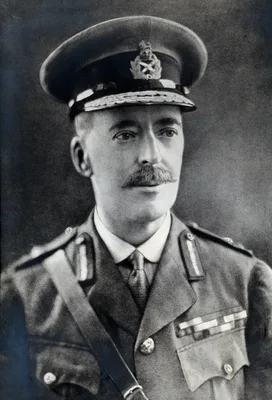
On the possibility of the occurrence of trypanosomiasis in India.
An organism found by Leishman in 1900 was later described by him as possibly a trypanosome. C. Donovan found the same organism in blood in July 1903. The name Leishmania donovani (Leishman-Donovan bodies) was later at…
GMN 5295 · https://historyofmedicine.com/id/6442
1903 WRIGHT, James Homer (1871 – 1928)
Protozoa in a case of tropical ulcer (Delhi sore).
Wright found Leishmania tropica in Delhi sore. He was unaware of Borovskii’s paper (No. 5294).
GMN 5297 · https://historyofmedicine.com/id/8607
1903 DONOVAN, Charles (1863 – 1951)
On the possibility of the occurrence of typanosomiasis in India.
Leishimania donovani, independently discovered by two British medical officers William Boog Leishman in Netley, England, and Donovan in Madras, India, in 1903. However, the correct taxonomy was provided by Ronald Ross…
GMN 5296 · https://historyofmedicine.com/id/8972
1904 LEISHMAN, Sir William Boog (1865 – 1926)
Note on the nature of the parasitic bodies found in tropical splenomegaly.
GMN 5298 · https://historyofmedicine.com/id/6473
1904 ROGERS, Sir Leonard (1868 – 1962)
Note on the occurrence of Leishman–Donovan bodies in “cachexial fevers” including kala-azar.
Rogers demonstrated the Leishman–Donovan bodies in kala-azar. See also the same journal, 1904, 2, 645-50. At about the same time Bentley reported similar findings in India.
GMN 5299 · https://historyofmedicine.com/id/6478
1909 LINDENBERG, Adolfo Carlos (1872 – 1944)
L’ulcère de Bauru ou le bouton d’orientau Brésil.
Muco-cutaneous leishmaniasis of South America. English translation in Kean (No. 2268.1).
GMN 5299.1 · https://historyofmedicine.com/id/6483
1909 NICOLLE, Charles Jules Henri (1866 – 1936)
Le kala azar infantile.
Nicolle considered infantile kala-azar to be caused by a distinct species of Leishmania; to this he gave the name L. infantum.
GMN 5300 · https://historyofmedicine.com/id/6488
1913 MIGONE, Luis Enrique (1876 – 1954)
Un cas de kala-azar à Asuncion (Paraguay).
Migone first noted the existence of visceral leishmaniasis in the Americas (Paraguay).
GMN 5300.1 · https://historyofmedicine.com/id/6490
1914 VIANNA, Gaspar Oliviera (1885 – 1914)
Sobre o tratemento de leishmaniose tegumentar.
Vianna introduced tartar emetic in the treatment of S. American leishmaniasis. His preliminary announcement on this form of treatment was made to the Brazilian Dermatological Society and appears in Arch. brasil. Med.,…
GMN 5301 · https://historyofmedicine.com/id/6525
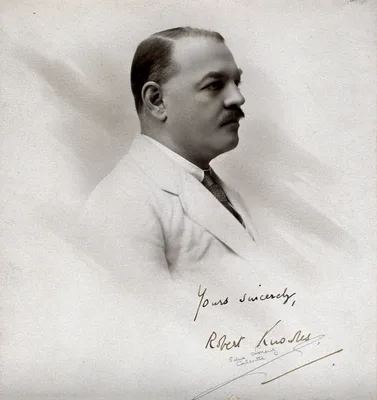
1924 KNOWLES, Robert (1883 – 1936); NAPIER, Lionel Everard (1888 – 1957); ET AL
On a Herpetomonas found in the gut of the sandfly, Phlebotomus argentipes, fed on kala-azar patients.
Demonstration that L. donovani is capable of reproduction in Phlebotomus. With R. O. Smith.
GMN 5301.1 · https://historyofmedicine.com/id/6532
1941 ADLER, Saul (1895 – 1956); BER, Mordechai ( – 1952)
The transmission of Leishmania tropica by the bite of Phlebotomus papatasii.
Proof of the transmission of L. tropica by P. papatasii.
GMN 5301.2 · https://historyofmedicine.com/id/6543
1942 SWAMINATH, C. S.
Transmission of Indian kala-azar to man by the bites of Phlebotomus argentipes, Ann. and Brun.
Successful transmission of kala-azar to man by the bite of Phlebotomus argentipes reported, showing it to be the vector of Leishmania. With H. E. Shortt and L. A. P. Anderson.
GMN 5302 · https://historyofmedicine.com/id/6545