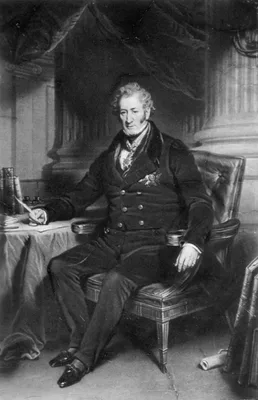
1816 BURNETT, William Sir (1779 – 1861)
A practical account of the Mediterranean fever, as it appeared in the ships and hospitals of His Majesty's fleet on that station: With cases and dissections. To which are added facts and observations, illustrative of the causes, symptoms and treatment comprehending the history of the fever in the fleet, during the years 1810, 1811, 1813, and of the Gibraltar and Carthagena fevers.
"Burnett in 1816 described an epidemic of a short term fever occurring among the Naval Forces engaged in the Siege of Malta in 1799, and this fever was almost certainly phlebotomus" (Coulter, The Royal Naval Medical S…
GMN 11143 · https://historyofmedicine.com/id/13340
1886 PICK, Alois (1859 – 1945)
Zur Pathologie und Therapie einer eigenthümlichen endemischen Krankheitsform.
This is generally regarded as the first description of pappataci fever.
GMN 5476 · https://historyofmedicine.com/id/7628
1908 DOERR, Robert (1871 – 1952)
Ueber ein neues invisibles Virus.
Doerr showed the relation of phlebotomus fever to the sandfly, Phlebotomus.
GMN 5477 · https://historyofmedicine.com/id/6363
1909 DOERR, Robert (1871 – 1952); RUSS, Viktor Karl (1879 – )
Weitere Untersuchungen über das Pappatacifieber.
Doerr and Russ suggested that the virus of phlebotomus fever may be transmitted from one generation of infected Phlebotomus papatasii to another.
GMN 5478 · https://historyofmedicine.com/id/6366
1909 DOERR, Robert (1871 – 1952); ET AL
Das Pappatacifieber.
An Austrian military commission consisting of R. Doerr, K. Franz, and S. Taussig proved that the causal organism of pappataci fever was a virus and that Phlebotomus papatasii was the vector.

GMN 5479 · https://historyofmedicine.com/id/6367
1936 SHORTT, Henry Edward (1887 – 1987); ET AL
Cultivation of the viruses of sandfly fever and dengue fever on the chorioallantoic membrane of the chick-embryo.
Cultivation of the virus of phlebotomus fever. With R. S. Rao and C. S. Swaminath.
GMN 5480 · https://historyofmedicine.com/id/6369